Industry Knowledge
Sizing a Generator Radiator by Heat Rejection, Not kW Nameplate
A common pitfall is selecting a generator cooling radiator only from genset kW. What actually governs radiator capacity is the engine’s heat rejection into coolant (and charge air, if integrated). Two engines with the same kW can reject very different heat depending on displacement, turbocharging, combustion calibration, and emissions aftertreatment.
What to request from the engine/genset data sheet
- Coolant heat rejection at rated load and at the most common operating load
- Coolant flow rate and allowable coolant-side pressure drop
- Thermostat outlet temperature and maximum allowable coolant temperature
- Ambient design temperature and altitude correction requirements
In our production, we typically validate sizing against test curves rather than relying on a single “capacity” number—this reduces oversizing cost while avoiding under-cooling risk at high ambient or restricted airflow.
Fin Density vs. Fouling: Choosing Tube-and-Fin Geometry for Your Site
Higher fin density can boost heat transfer, but it also increases air-side resistance and becomes more sensitive to dust, oil mist, and insects. For generators in mining, cement, agriculture, or roadside installations, “more fins” often means faster performance decay unless filtration and cleaning are disciplined.
Practical selection cues
- Dusty environments: prefer more open fin spacing to extend cleaning intervals
- Coastal/high-salt air: prioritize corrosion protection strategy (material/coating) over aggressive fin density
- Compact enclosures: balance fin density with fan capability—don’t “solve heat” by creating an airflow bottleneck
Rule of thumb: if your team can’t realistically maintain frequent coil cleaning, select geometry that tolerates fouling instead of chasing maximum clean-coil performance.
Why Fan Static Pressure and Shroud Design Decide Real Cooling Performance
Radiator performance in the field is often limited by airflow, not core efficiency. A fan that looks “big enough” at free-blowing conditions can underperform once you add a core, grille, enclosure bends, and sound attenuation. What matters is the fan curve at the system’s required static pressure.
Shroud details that buyers should check
- Fan-to-core distance and tip clearance (too large increases recirculation and noise)
- Uniform airflow distribution across the core (avoids hot spots and tube fatigue)
- Sealing between shroud and core perimeter (prevents bypass air)
When we test assemblies, we watch for localized temperature rise—often a sign of bypass leakage or uneven velocity profile rather than “insufficient radiator size.”
Coolant-Side Pressure Drop: The Hidden Spec That Can Break an Engine
Even a well-sized core can cause problems if coolant-side pressure drop is too high. Excess restriction can reduce flow through the engine, raise localized metal temperature, and trigger chronic overheating under transient loads. It can also stress water pump seals and bearings.
What “good” looks like in procurement documents
- Stated allowable radiator pressure drop at a defined coolant flow rate
- Core model and tube design matched to engine pump curve
- Validation data showing stable coolant outlet temperature without pump cavitation symptoms
Buyer tip: if a supplier can’t provide pressure drop information, you’re taking on integration risk that will surface at commissioning time.
Material selection is not just about thermal conductivity. It’s also about repairability, vibration tolerance, corrosion environment, and lifecycle cost. Copper/brass is often favored where field repair is common; aluminum can excel for weight-sensitive designs and modern manufacturing consistency when corrosion control is engineered correctly.
| Decision Factor |
Copper/Brass Core |
Aluminum Core |
| Field repair |
Generally easier to repair in many regions |
May require specialized processes |
| Weight |
Heavier |
Lighter |
| Vibration strategy |
Robust with proper mounting |
Needs careful design of joints/mounts |
| Corrosion control |
Depends on coolant chemistry and stray current |
Often requires stricter coolant discipline |
A practical comparison to align radiator material with maintenance realities and site environment.
In our own manufacturing, we see the best outcomes when buyers choose material based on maintenance capability and environment rather than a single “best” assumption.
Coolant Chemistry: Cavitation, Scaling, and Why Mixing Coolants Is Expensive
Many radiator “failures” are chemistry failures: scaling reduces heat transfer, cavitation damages metal surfaces near high-velocity zones, and incompatible additive packages create sludge that blocks tubes. For diesel generators, the cost of poor coolant practice shows up as overheating during load acceptance and premature component wear.
Site habits that protect the radiator core
- Use deionized/distilled water when blending concentrates (prevents mineral scaling)
- Avoid mixing coolant technologies unless the engine OEM explicitly allows it
- Maintain inhibitor levels and pH with periodic testing rather than “top-off only”
- Grounding and electrical checks to reduce stray-current corrosion risk
Practical takeaway: a clean core cannot compensate for degraded coolant; treat coolant as a consumable with specifications, not just a liquid fill.
Altitude and Ambient Derating: What Changes Above 1,000 m
As altitude rises, air density drops. Lower density means less mass airflow for the same fan speed, which reduces radiator heat rejection. At the same time, engines may derate, but not always enough to offset cooling losses—especially in compact silent enclosures.
How to specify correctly
- State design ambient temperature and site altitude on the purchase order
- Require performance confirmation at those conditions, not only at “standard” sea-level assumptions
- If enclosure is used, include intake/exhaust ducting details (they drive system pressure)
Because we ship to 30+ countries with diverse climates, we’re used to engineering for these site-specific constraints without overcomplicating procurement.
Radiator Mounting and Vibration Isolation: Reducing Cracks and Leaks
Diesel generators produce continuous vibration and torsional excitation, and transport adds shock loads. Many leaks originate at joints, headers, or mounting interfaces when isolation is insufficient or misaligned. The best radiator can still fail if the support strategy is wrong.
Mounting practices that extend service life
- Use isolation mounts sized for radiator mass and expected vibration spectrum
- Allow thermal expansion without binding (slotted brackets or compliant supports)
- Avoid hose pre-load and misalignment; use proper bend radius and support clamps
- Control resonance by checking fan, shroud, and frame stiffness
Buyer insight: ask for vibration considerations as part of the radiator assembly, not as an afterthought during installation.
Leak Testing and Quality Signals That Matter in a Radiator Supplier
Not all “pressure tests” are equal. A brief hydro test may miss pinholes that become leaks after thermal cycling. For buyer-side due diligence, look for a process that ties manufacturing controls to repeatable acceptance testing.
Quality checkpoints worth requesting
- Documented leak test pressure, hold time, and acceptance criteria
- Traceability for core batches and brazing/soldering parameters
- Thermal cycling or validation testing for new designs
- Clear packaging and transport protection plan to prevent fin and header damage
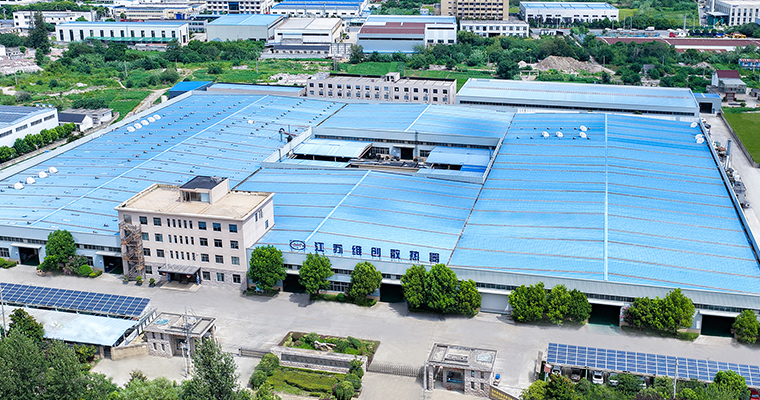
With 60,000 m² of standardized production space and a technical team of 50+ core engineers, we’ve found that disciplined testing is the easiest way to make field outcomes predictable—especially on large-volume programs.
Field Troubleshooting Map: What the Symptoms Usually Point To
When a generator runs hot, the radiator is often blamed first. In practice, symptoms frequently indicate airflow, coolant flow, or control issues. A simple symptom-to-cause map helps buyers and service teams reduce downtime.
| Observed Symptom |
Most Likely Direction |
Quick Check |
| Overheats mainly at high ambient |
Airflow margin is insufficient |
Check grille clogging, fan speed, enclosure pressure drop |
| Temperature spikes during load acceptance |
Coolant flow or control lag |
Verify thermostat operation, pump condition, trapped air |
| Normal coolant temp, high engine metal temp |
Flow distribution issue |
Inspect restrictions, hose collapse, internal blockage |
| Gradual performance decline over weeks/months |
Fouling or scaling |
Check air-side contamination and coolant quality |
A troubleshooting shortcut to narrow causes before replacing the radiator core.
Efficiency tip: measure actual air inlet temperature and fan RPM before changing hardware—many “radiator issues” are operational.
Specifying for Silent Enclosures: Managing Recirculation and Hot-Air Short Cycling
Silent (acoustic) canopies introduce flow resistance and can create recirculation where hot discharge air returns to the radiator inlet. This “short cycling” can raise inlet temperature dramatically, making a correctly-sized core appear undersized.
Design details buyers should lock in early
- Separation of intake and discharge paths (distance and barriers)
- Louver/grille free area and cleanliness strategy (filters, access panels)
- Ducting geometry that avoids sharp turns immediately after the fan
- Service access for coil cleaning without dismantling the enclosure
For large programs, we often align radiator selection with canopy airflow modeling and then validate by testing—this reduces surprises at commissioning.
What to Put in a Procurement Spec to Avoid “Like-for-Like” Confusion
Buyers sometimes request a “replacement radiator” by external dimensions alone. That leads to “like-for-like” quotes that may not match performance, pressure drop, or durability. A better spec makes evaluation fair and prevents hidden downgrades.
Procurement items that close the gaps
- Required heat rejection (kW) at specified ambient and airflow/static pressure
- Coolant flow rate and maximum allowable pressure drop
- Core construction details (tube type, fin type, rows, material) where critical
- Test requirements (leak test parameters, optional thermal validation)
- Packaging, corrosion protection, and documentation deliverables
With an annual production capacity of 150,000 units/sets, we’ve learned that clear specs are the fastest way to get consistent quality across multi-site fleets—without inflating cost.



 English
  русский
  Français
  Indonesia
  عربى
عربى  中文简体
中文简体