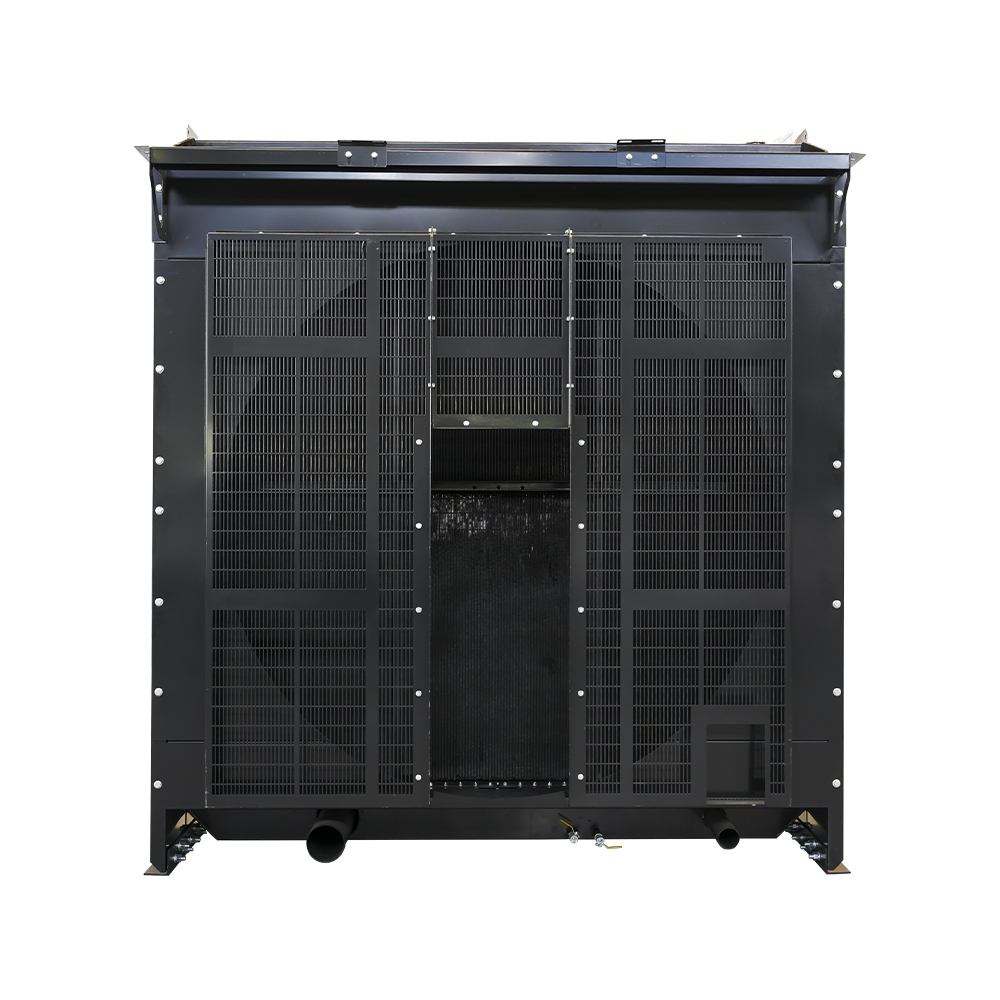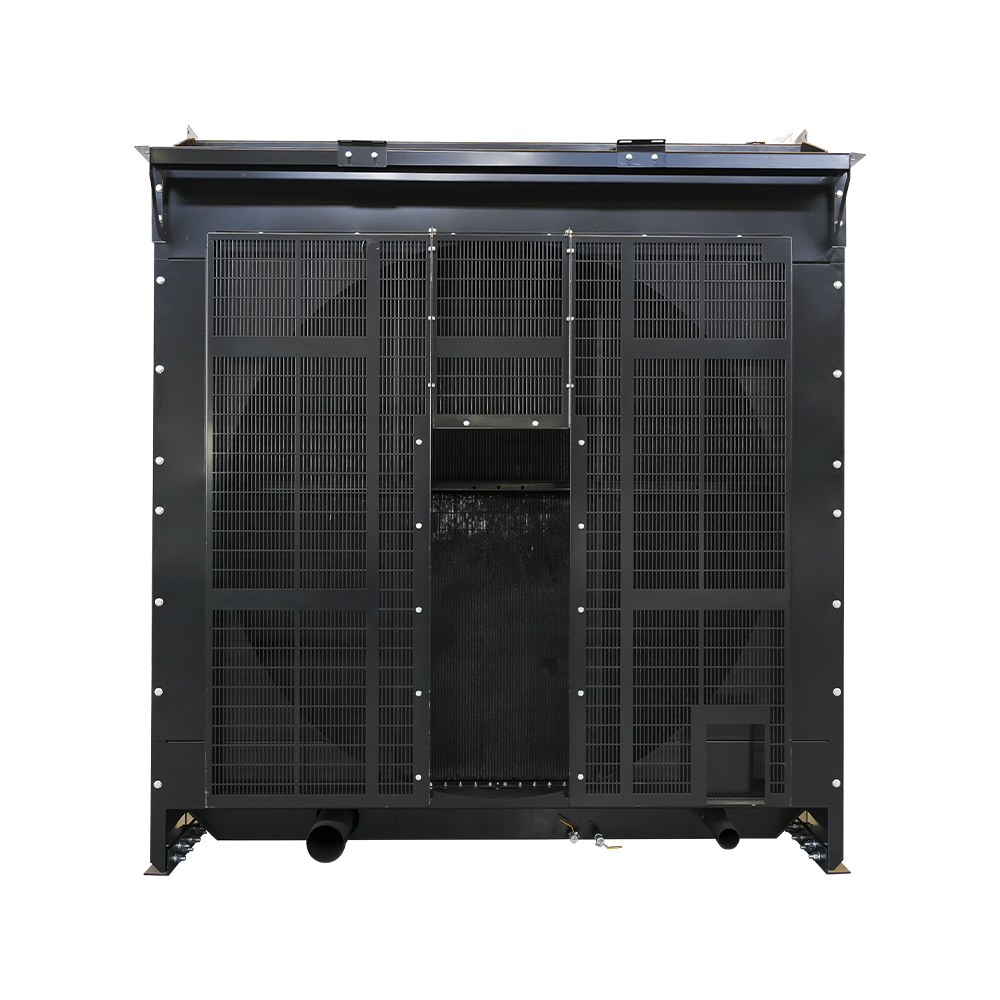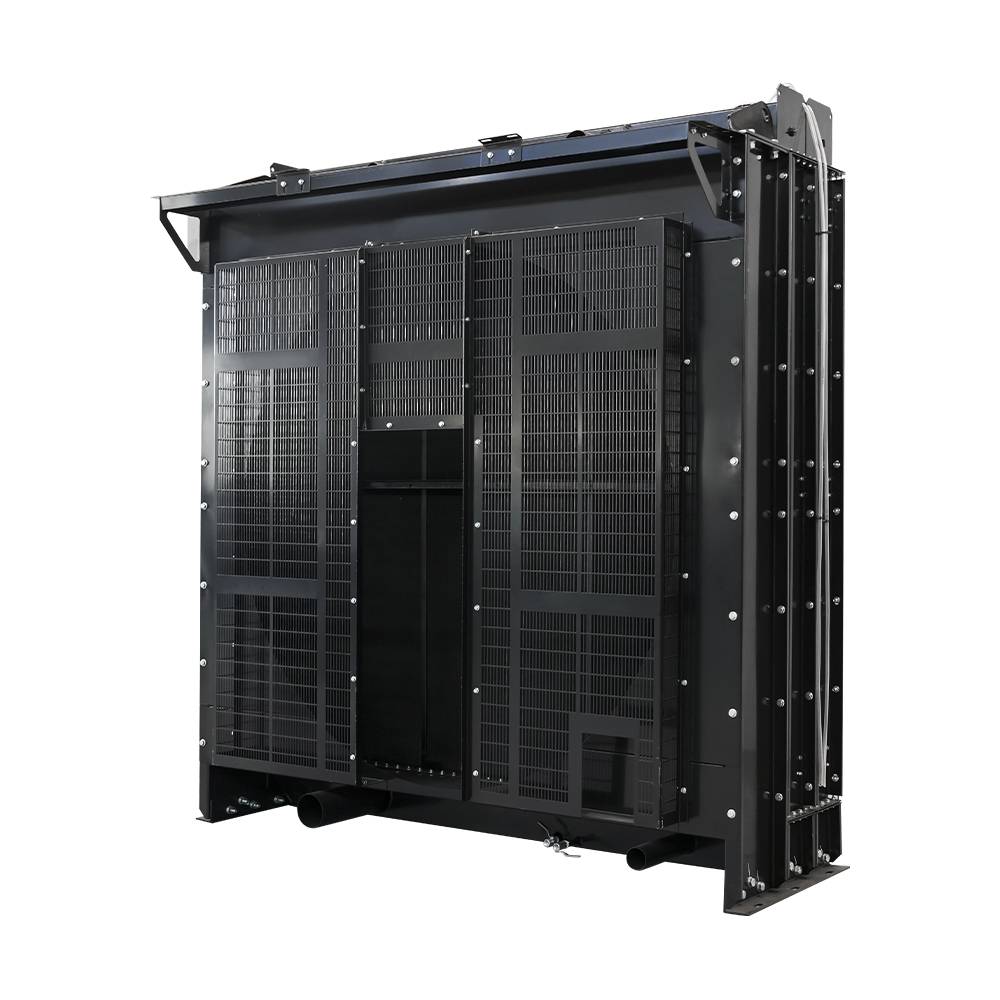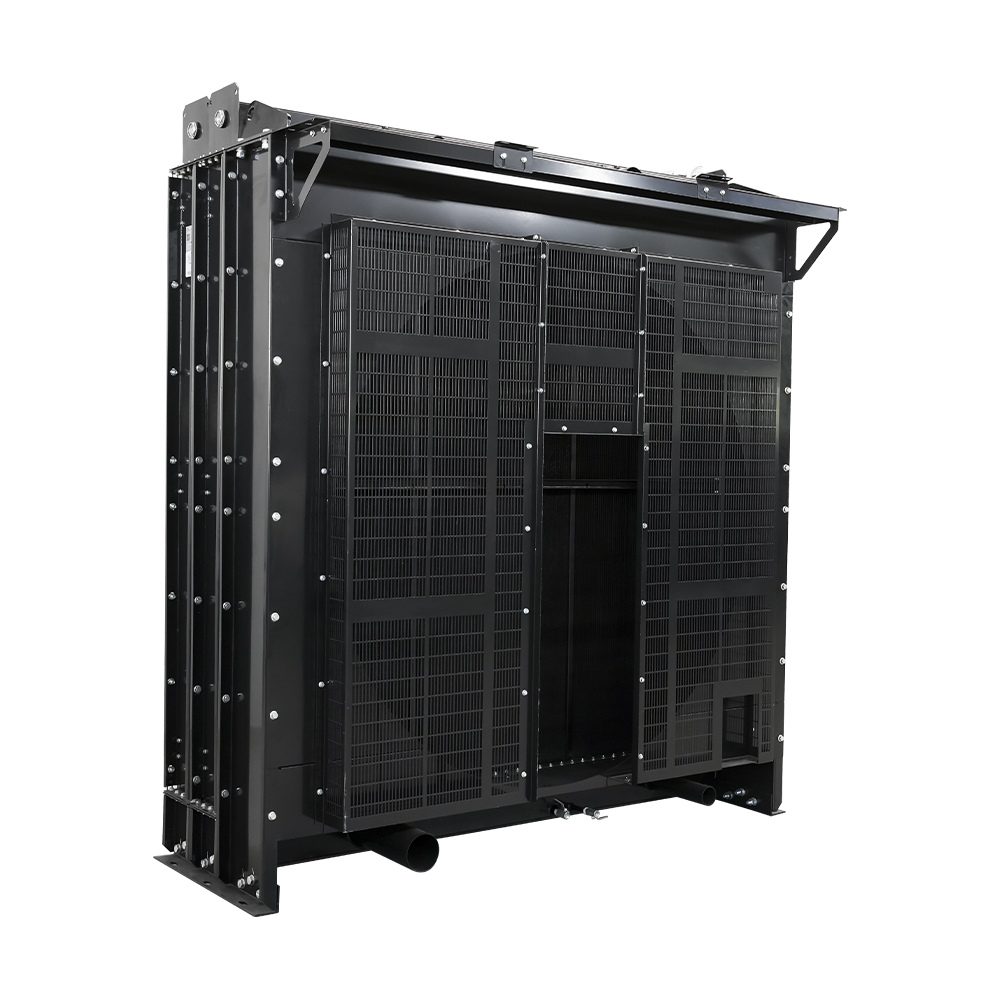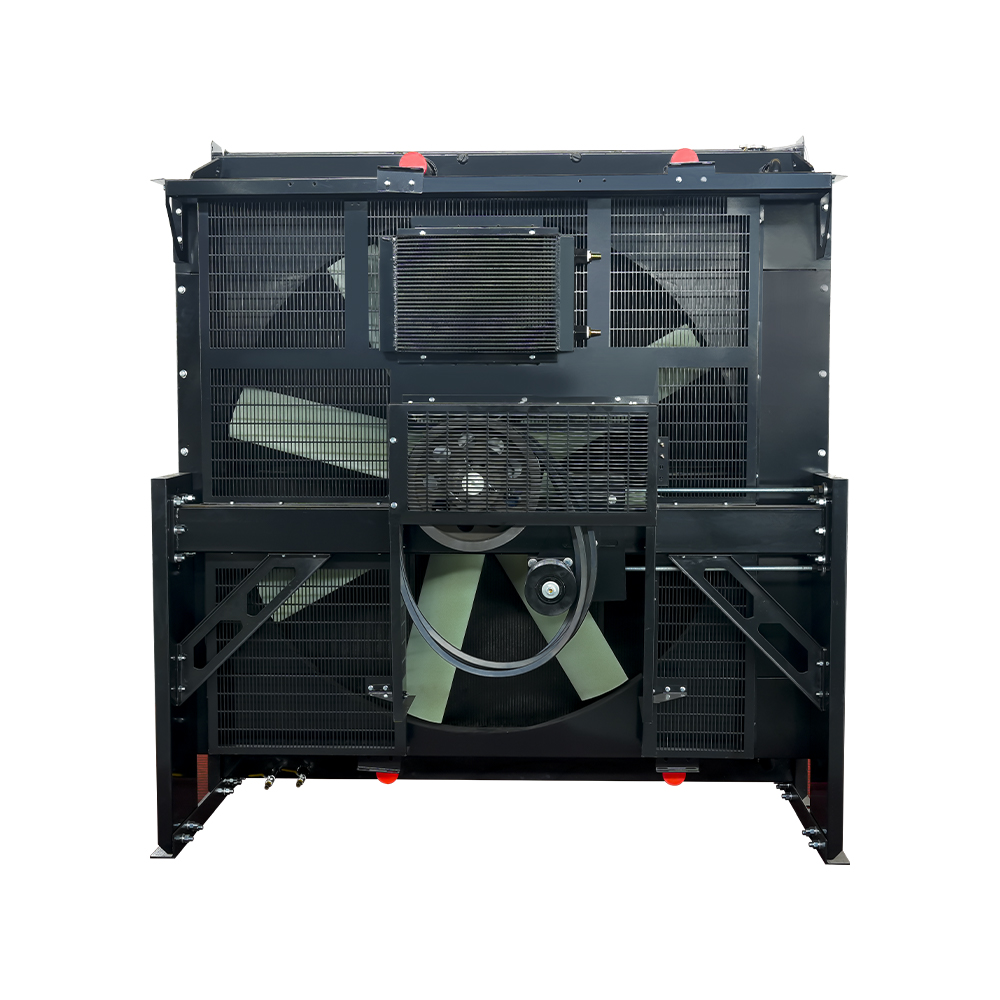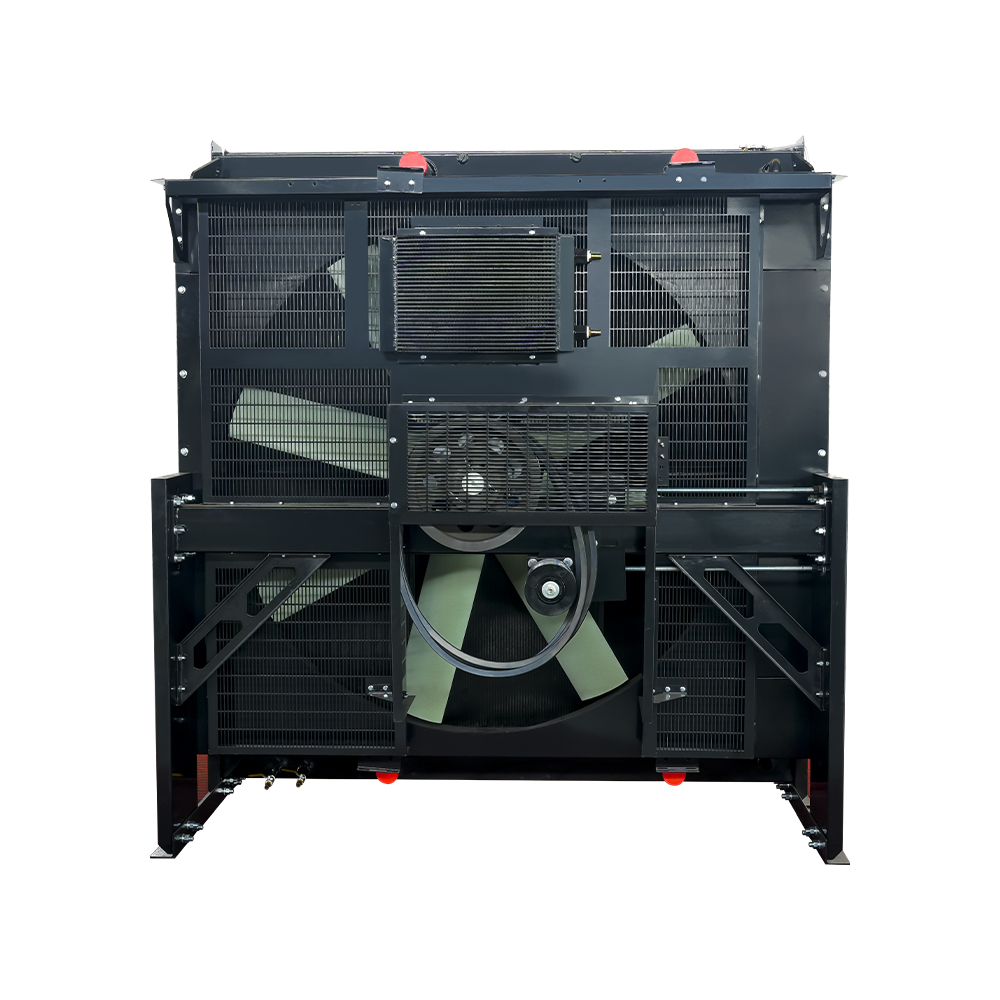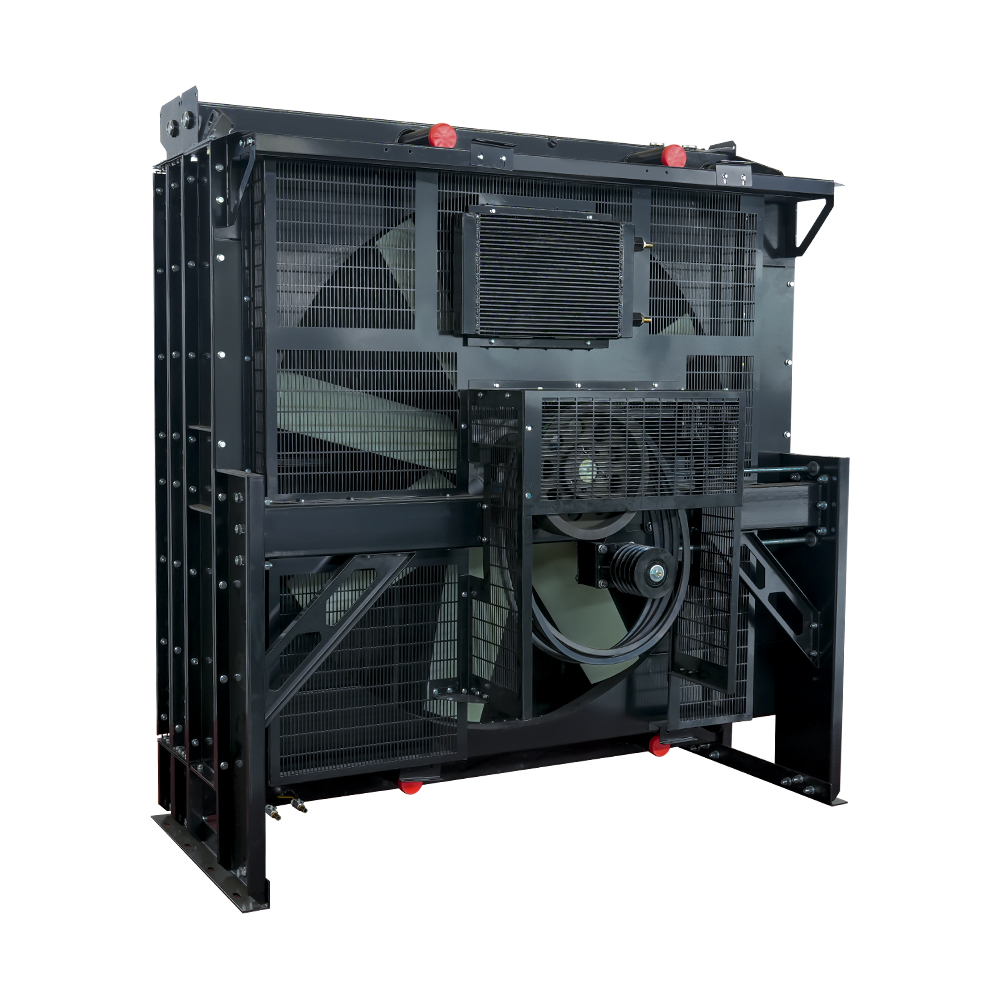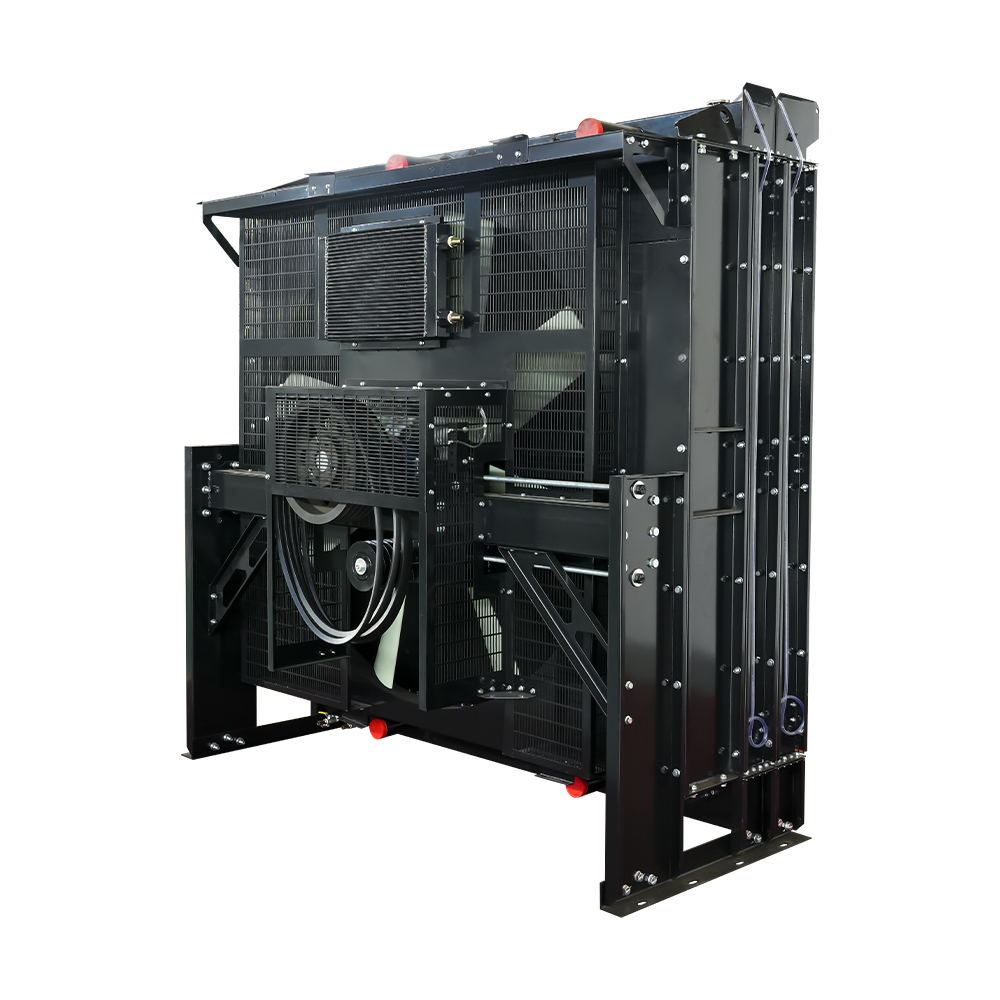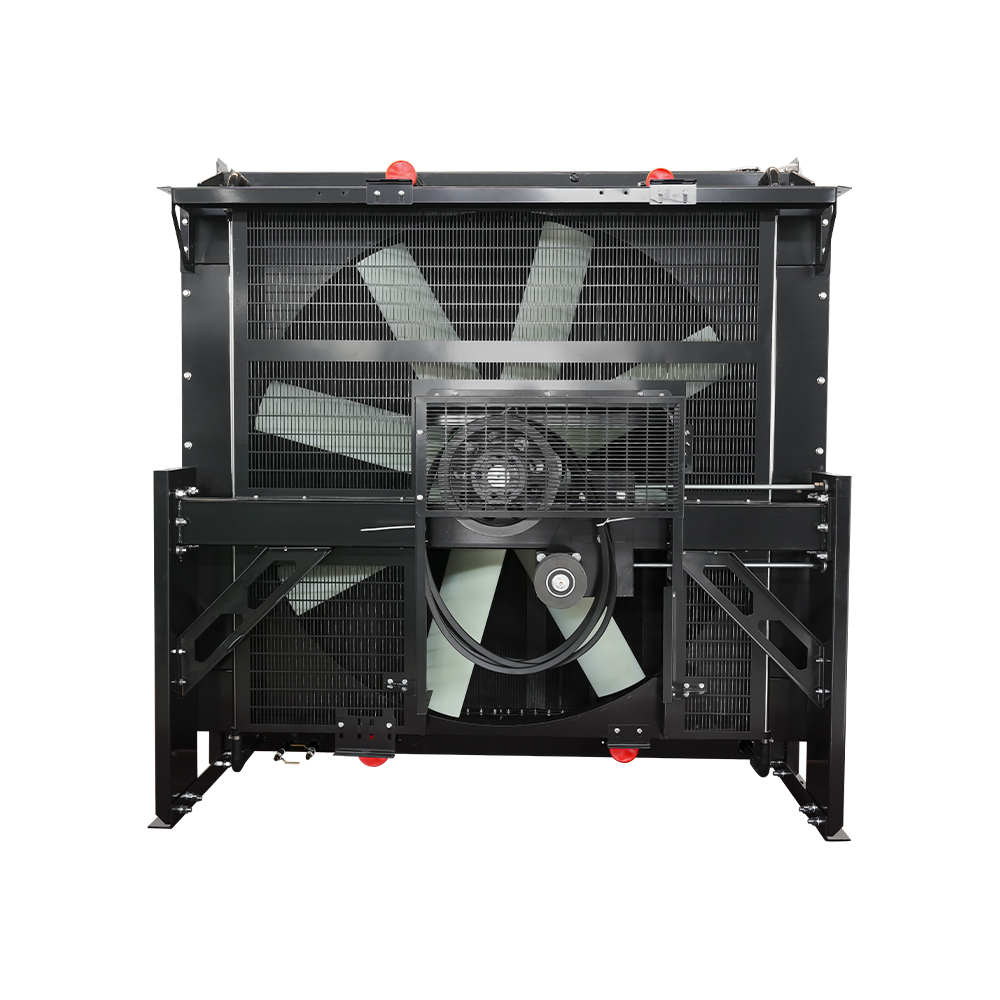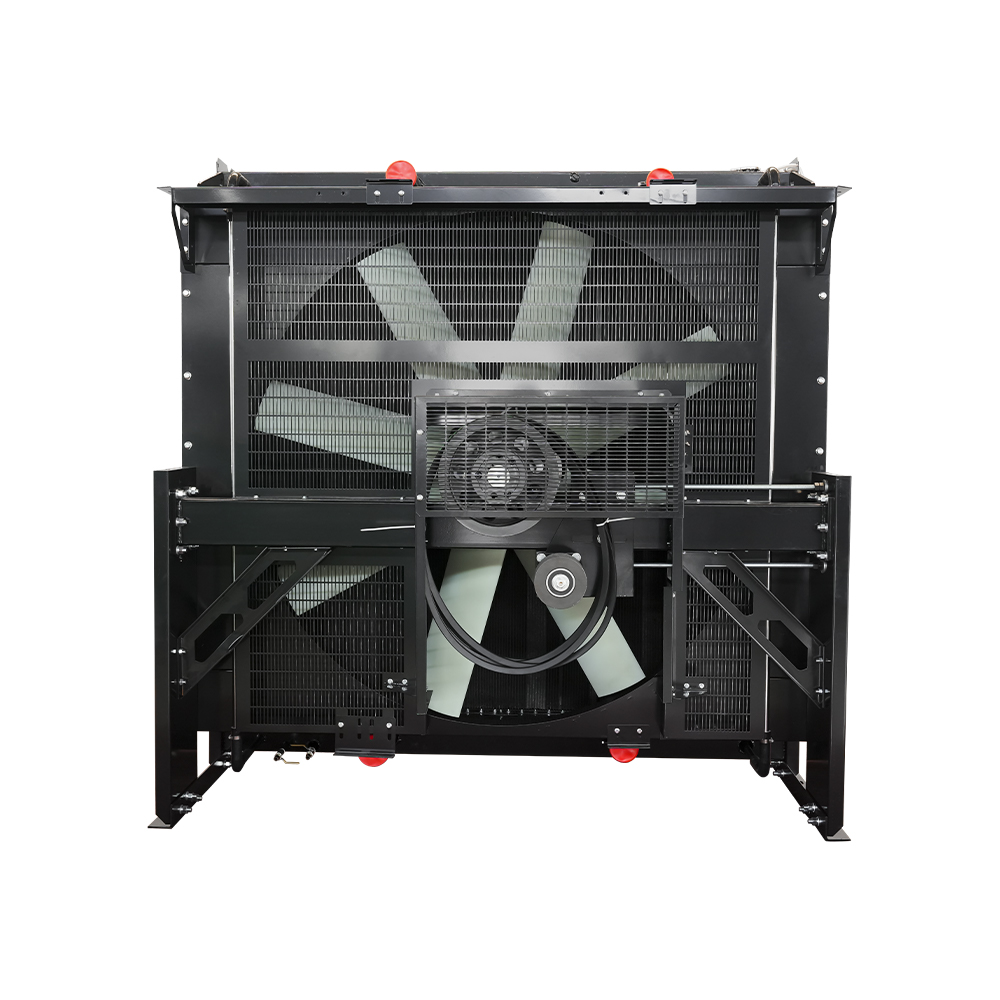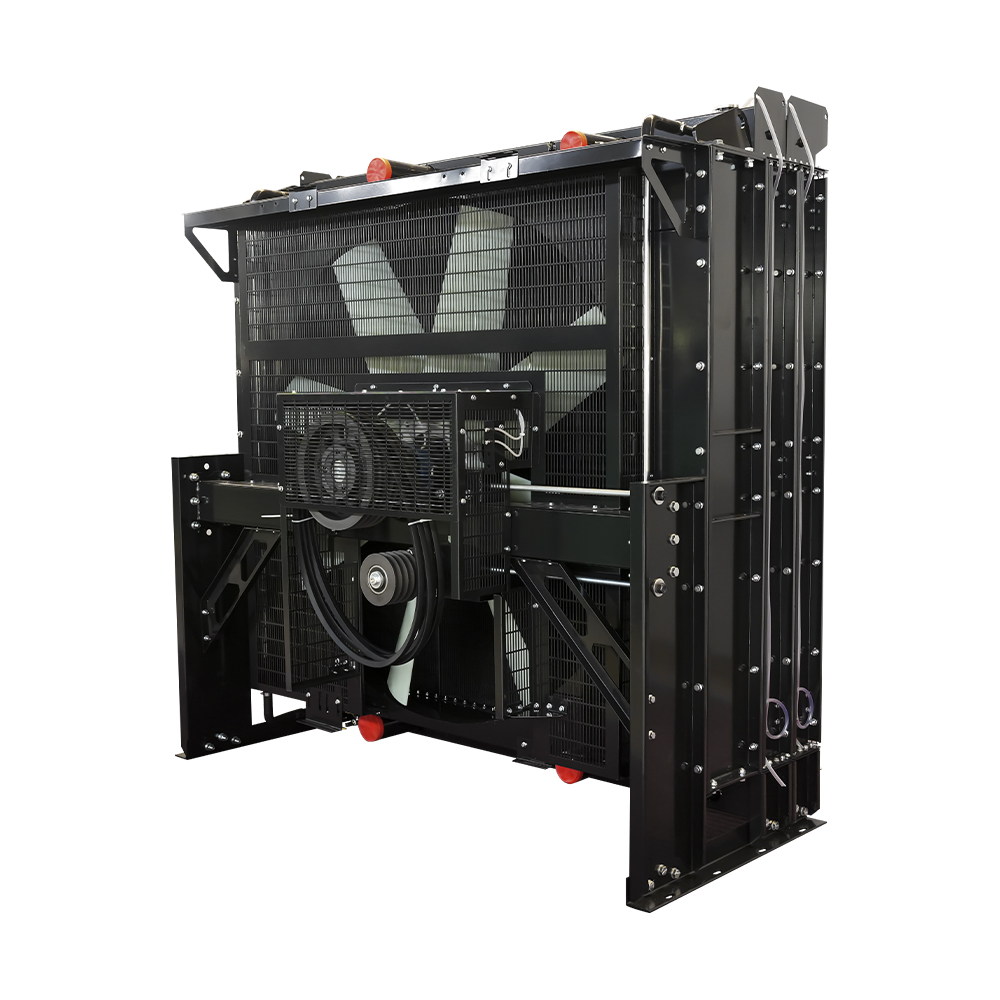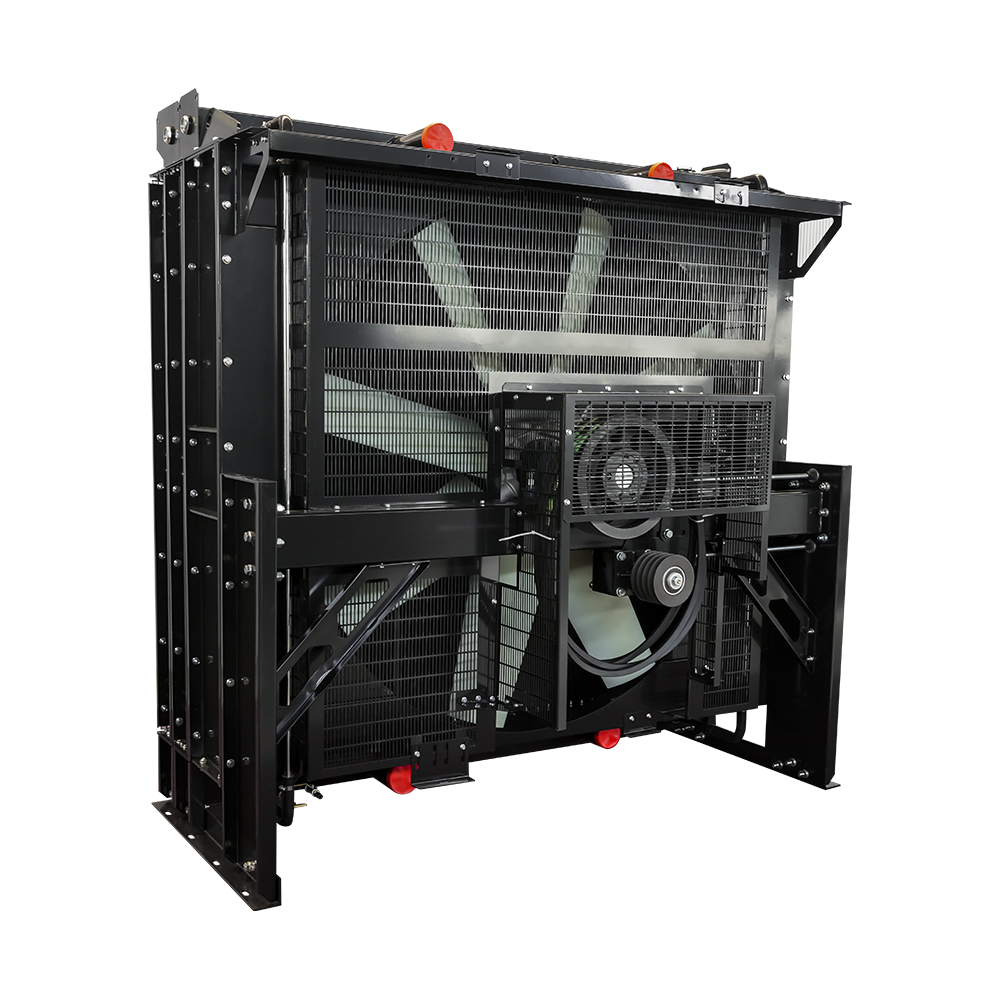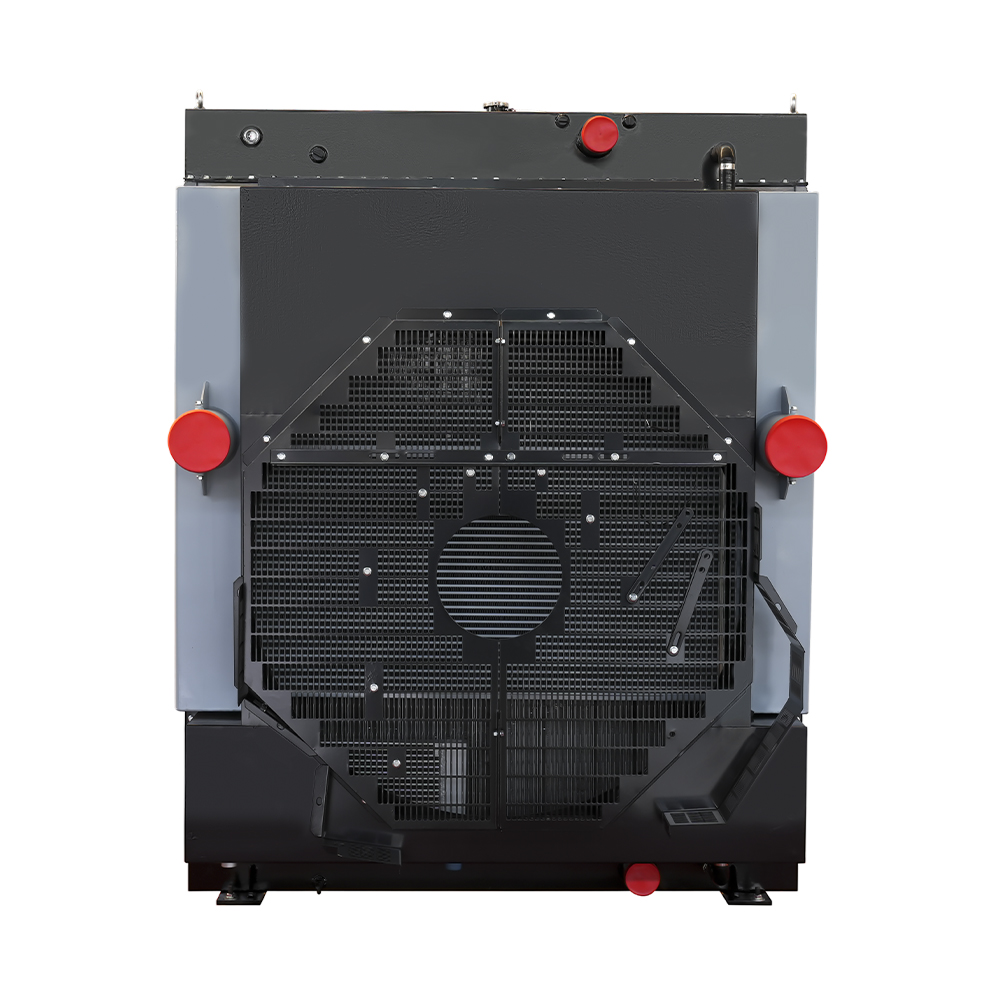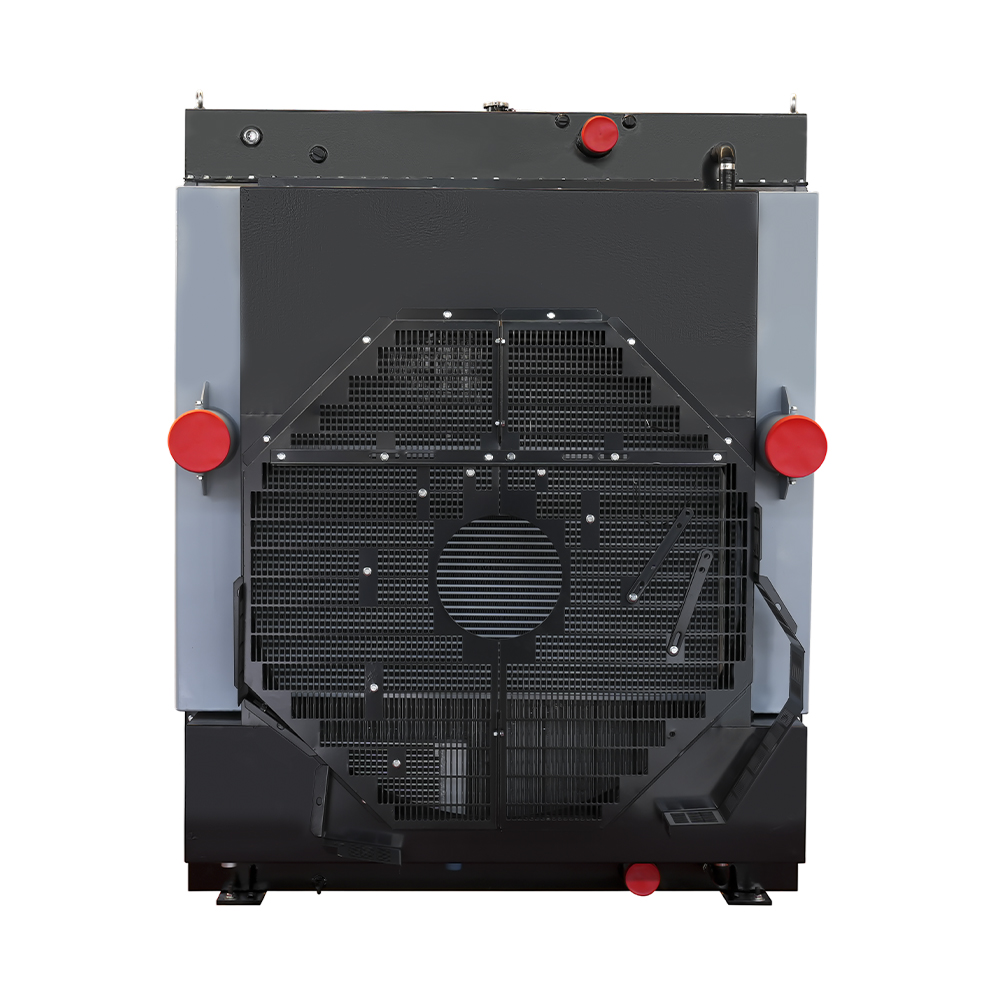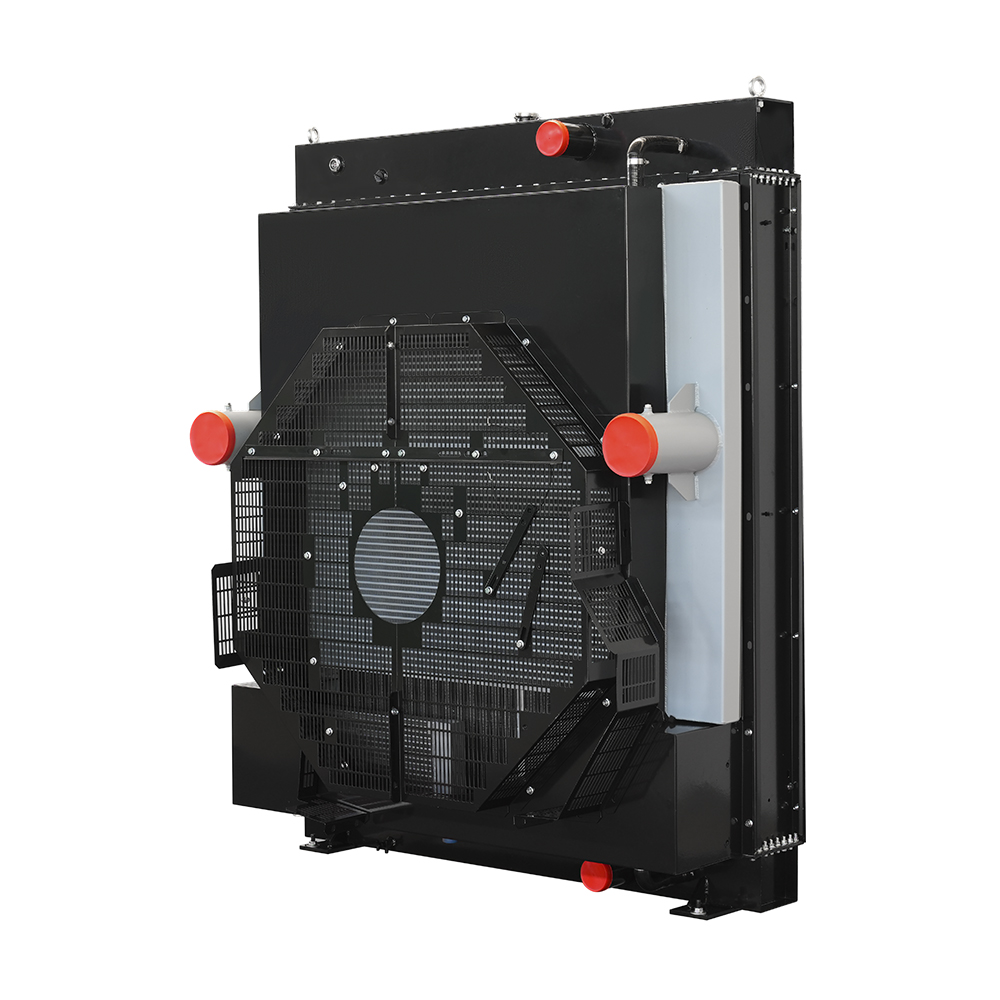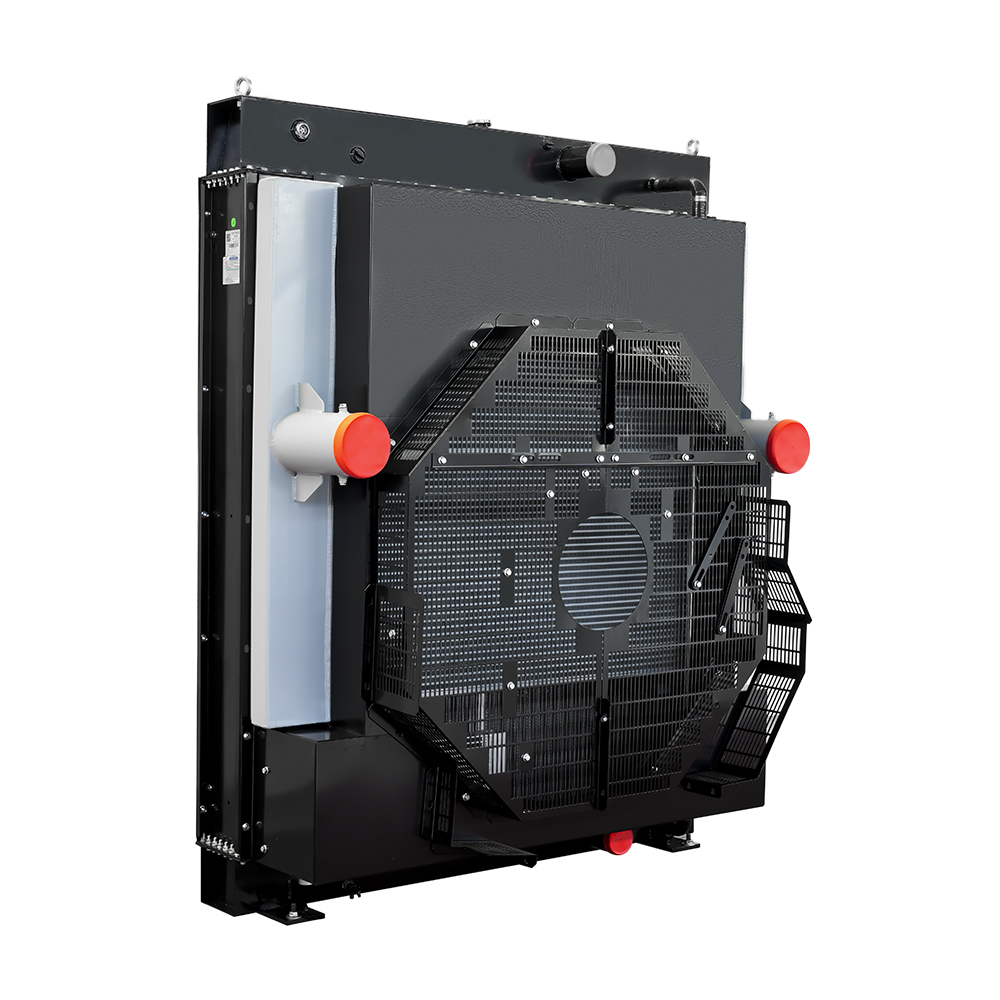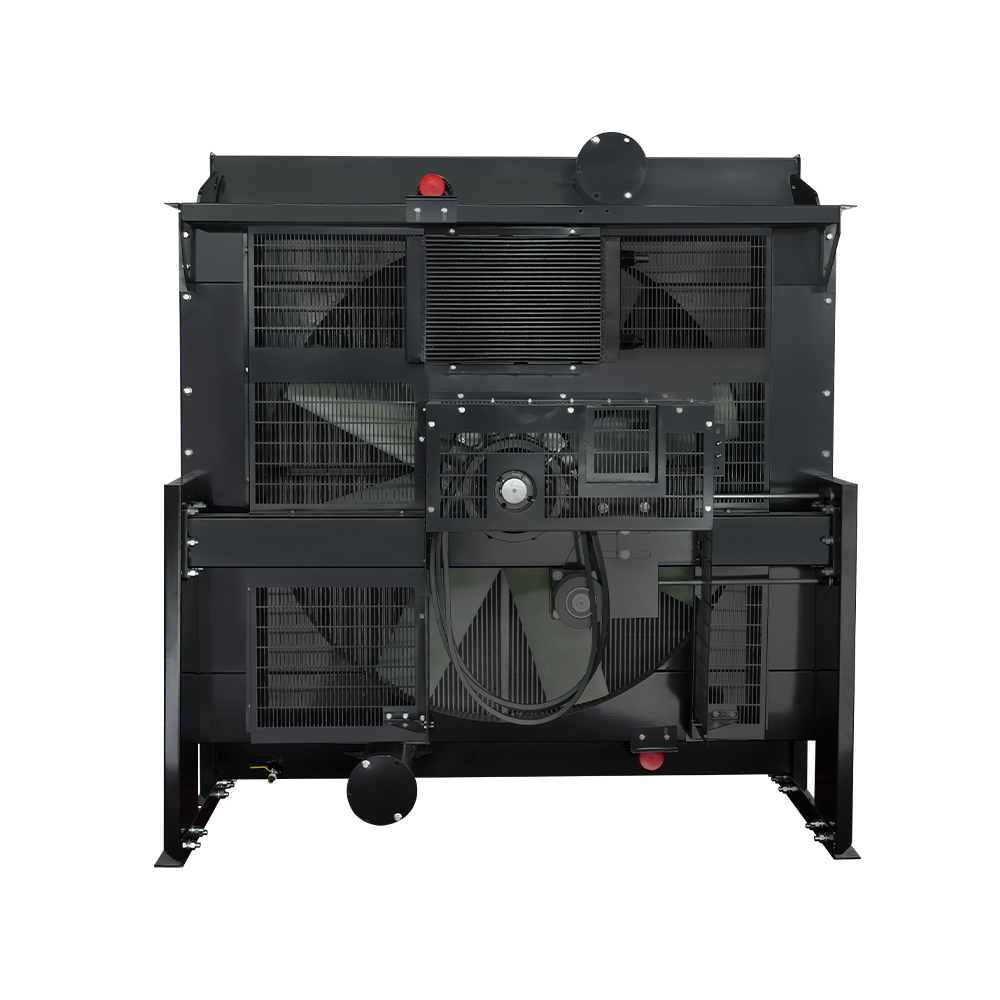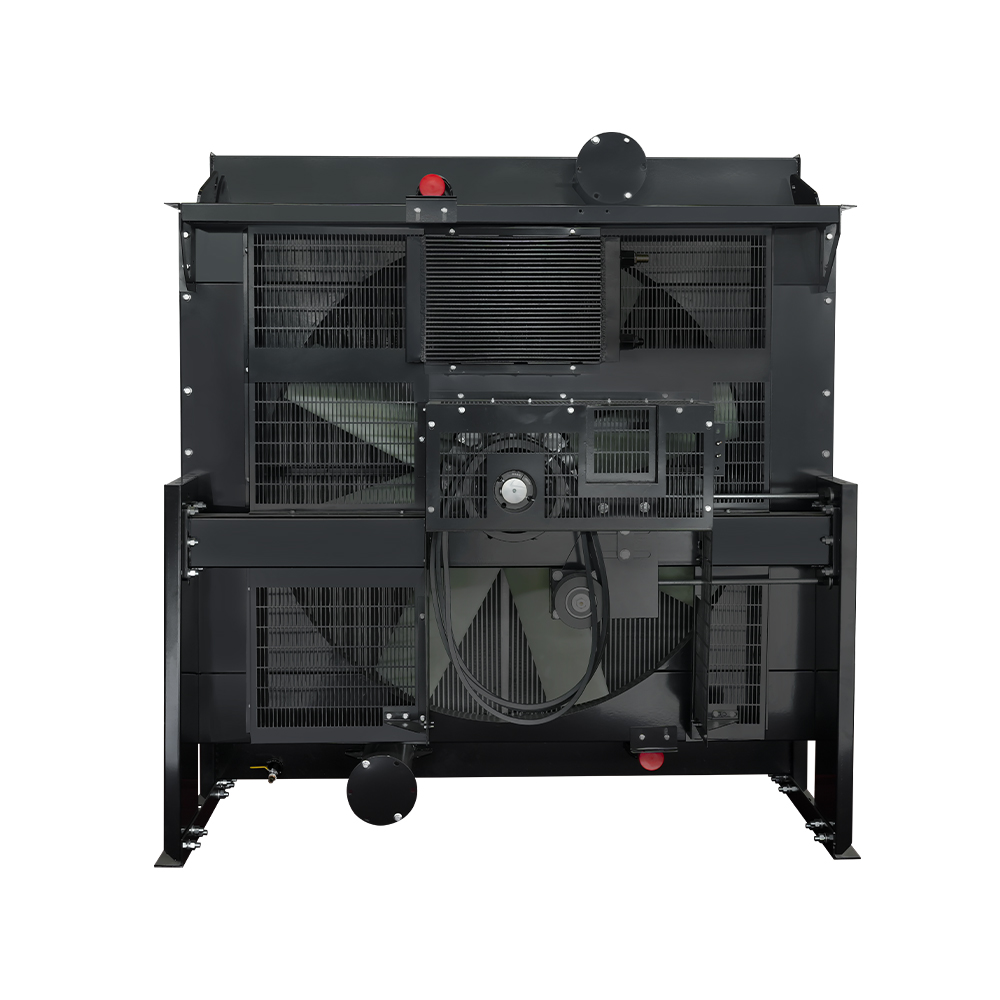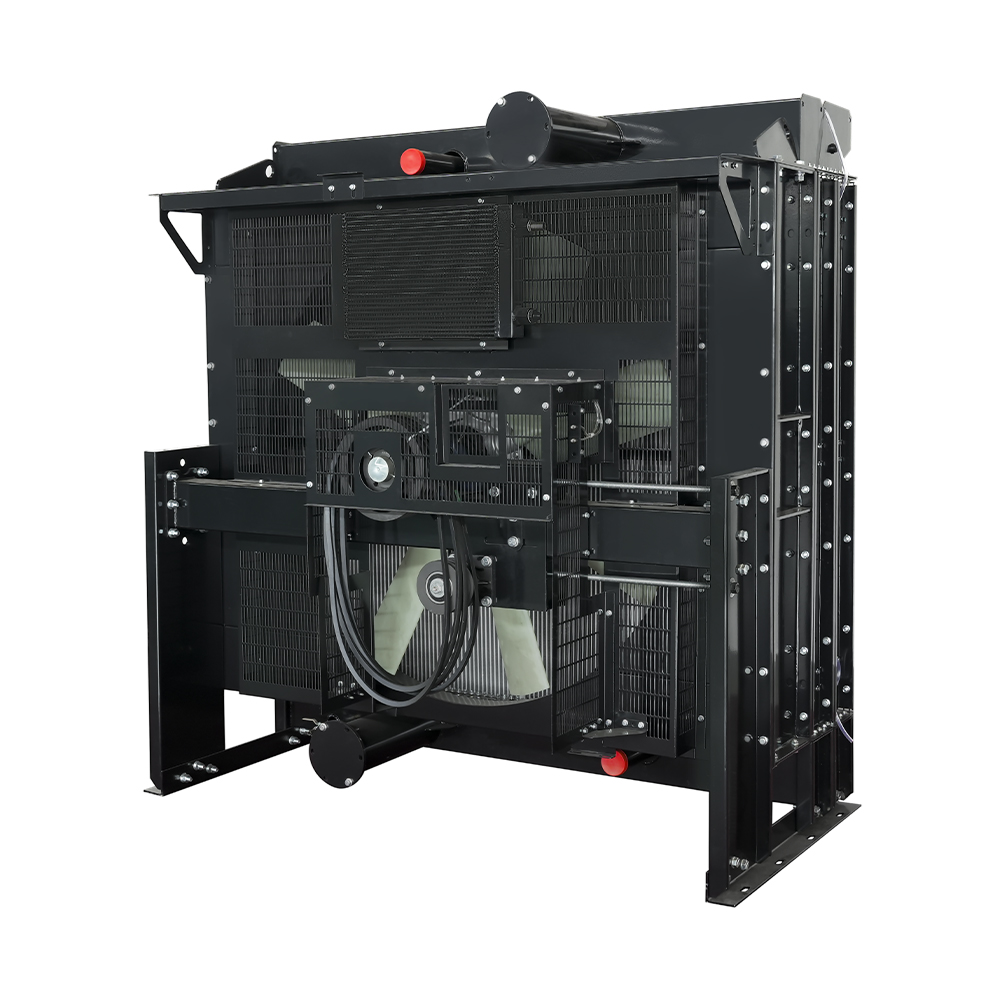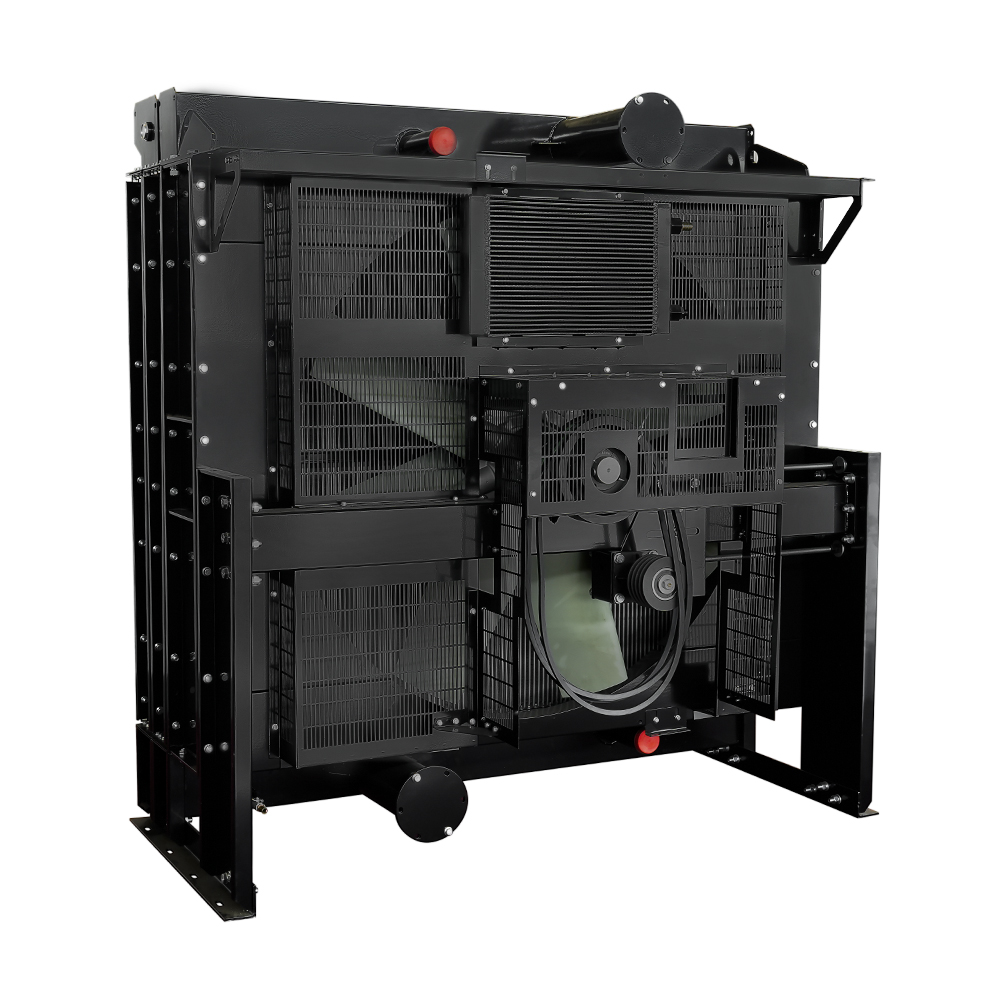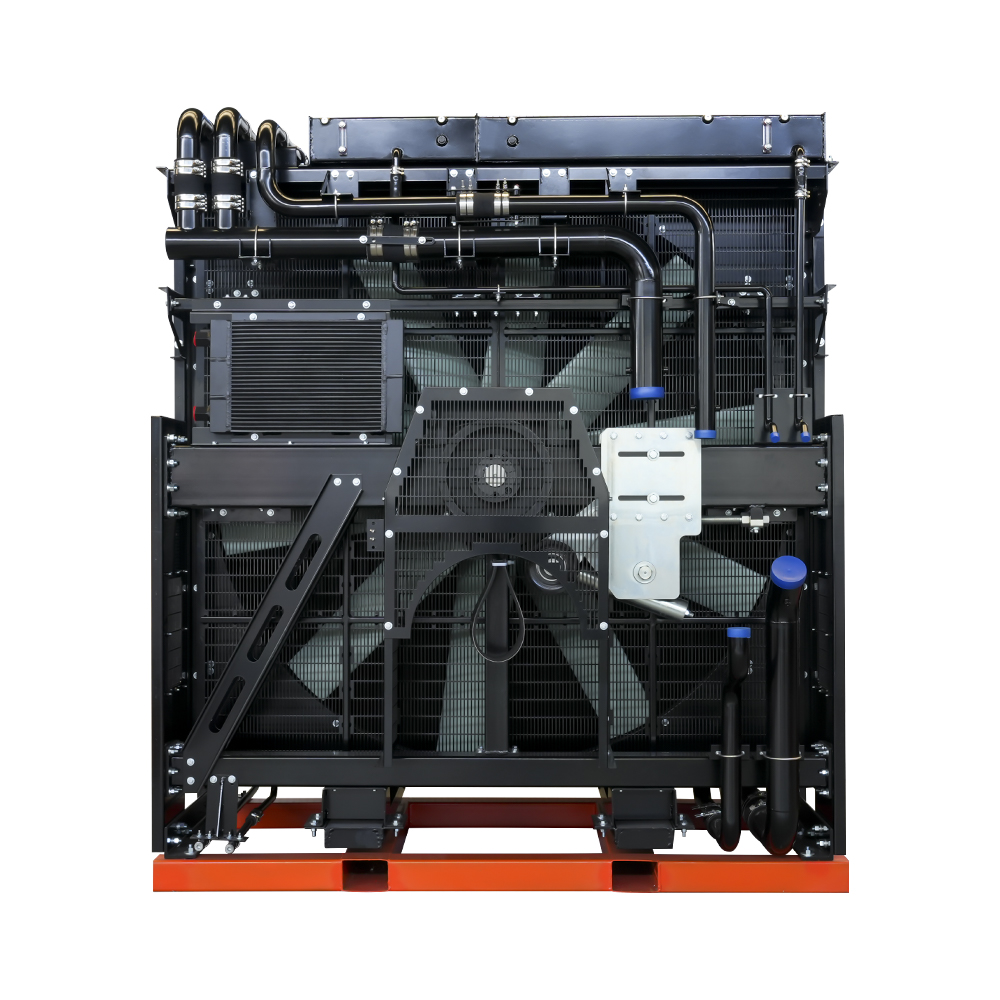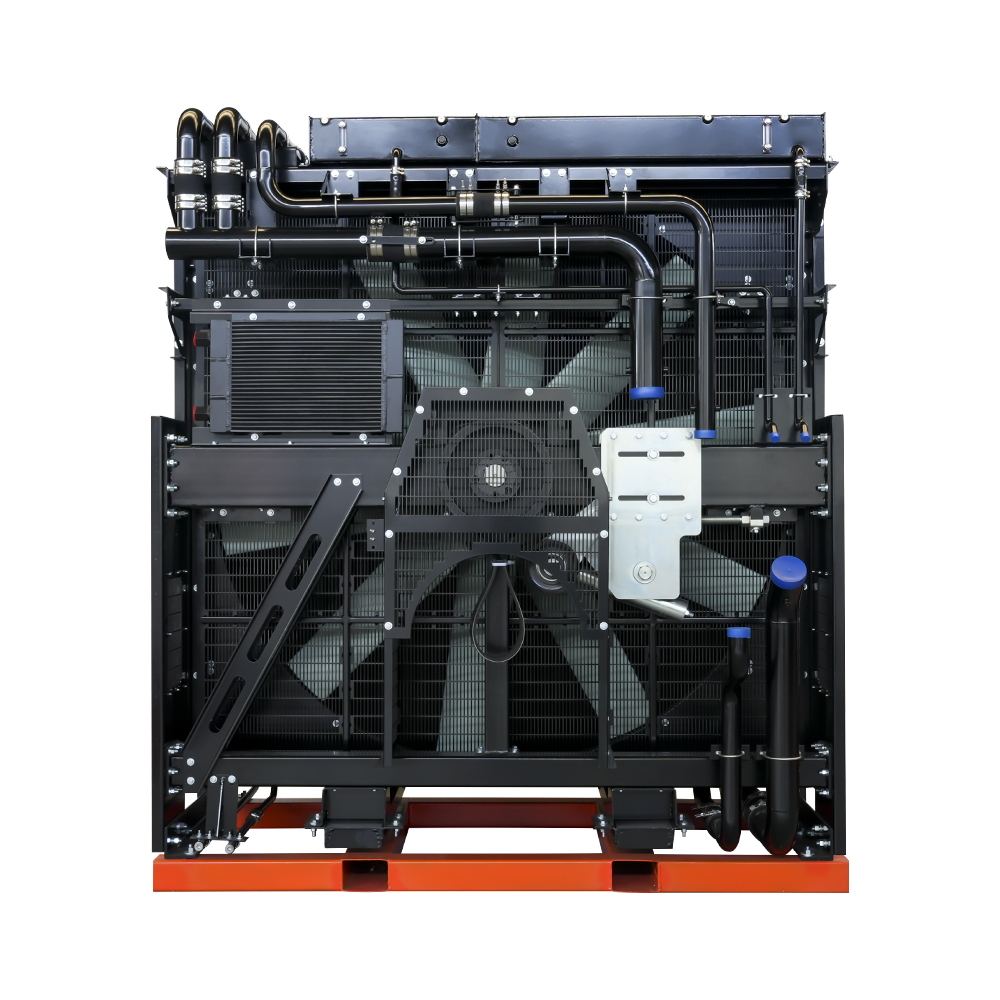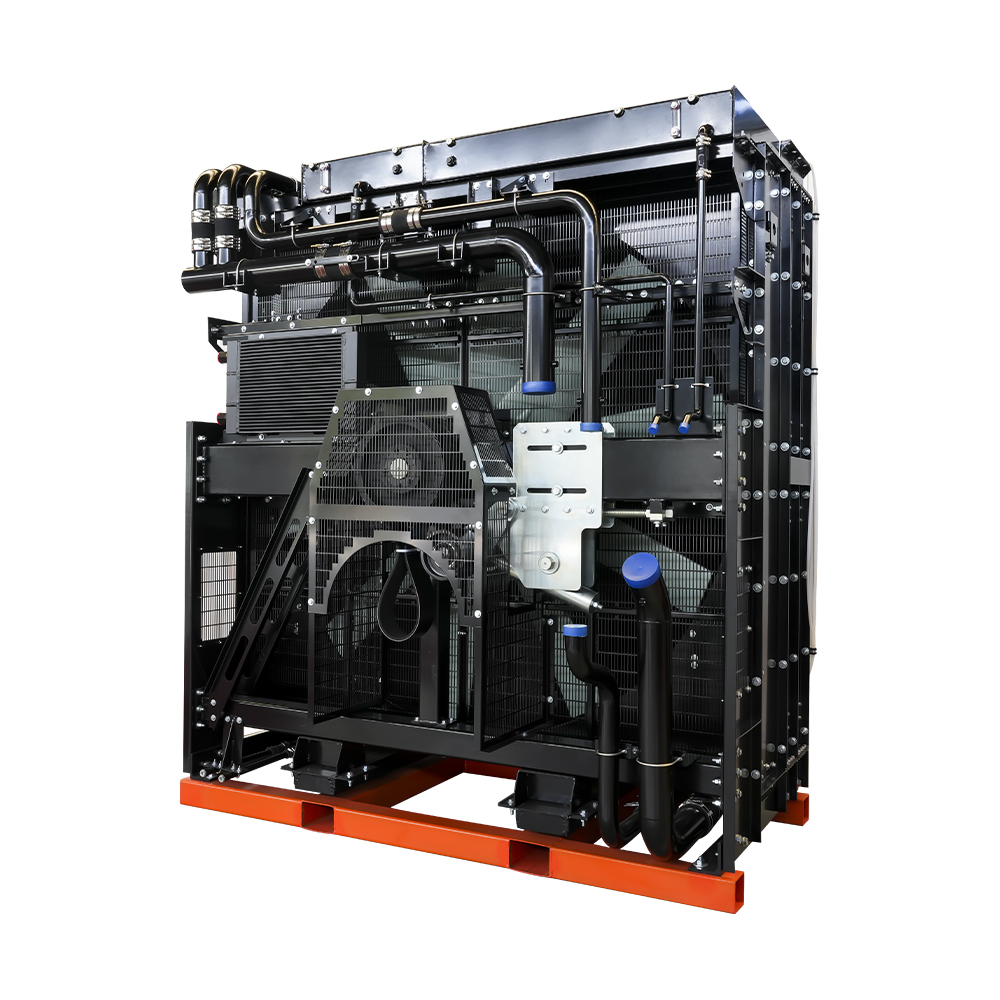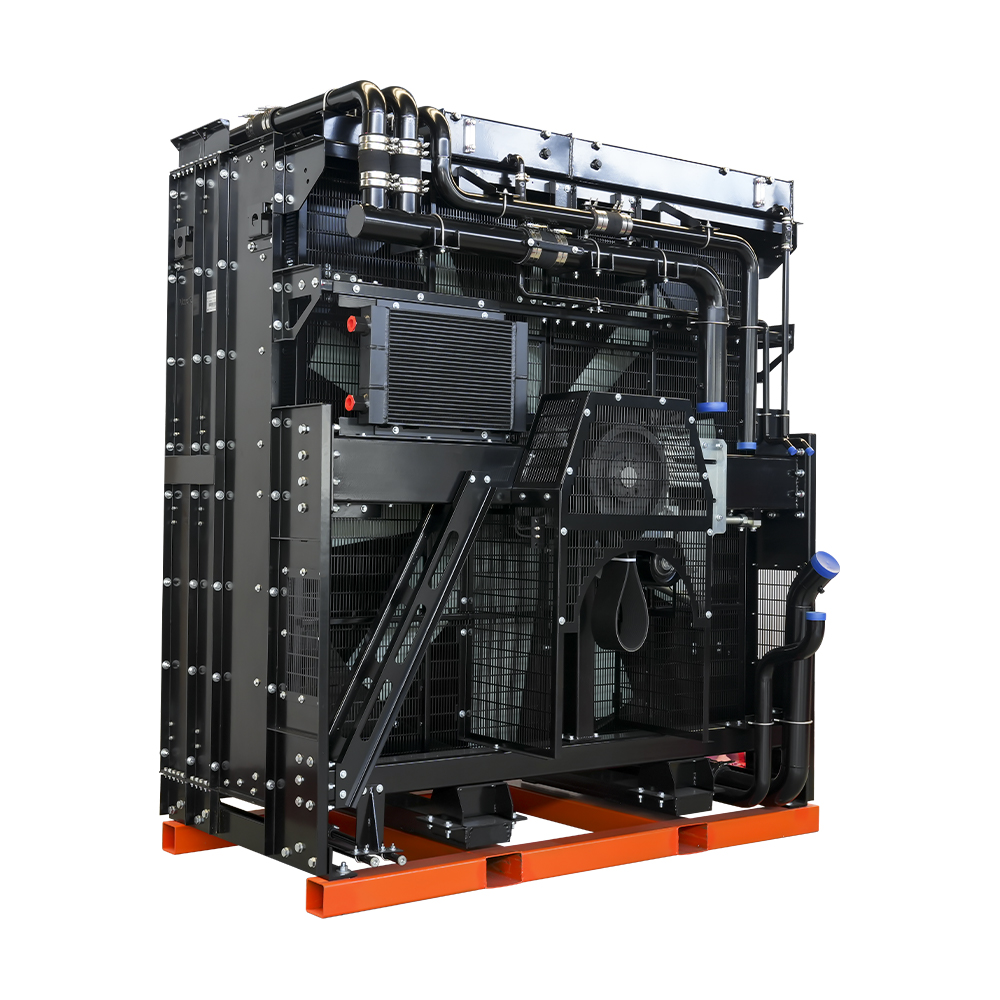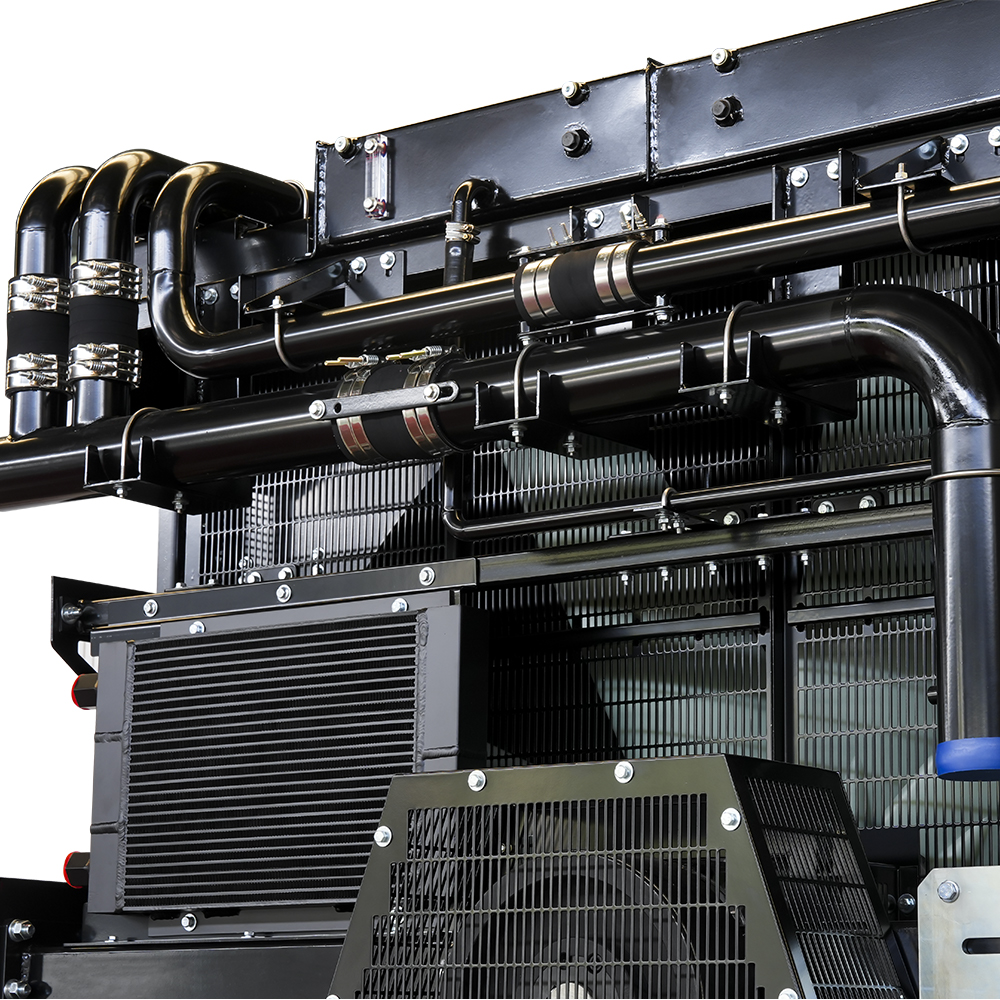

Engineered for large-capacity generator sets, these radiators provide massive heat dissipation to handle engines above 1MW output. Reinforced cores, high-capacity fans, and heavy-duty frames ensure reliable cooling during prolonged heavy loads. Perfect for data centers, industrial plants, and utility-scale backup systems.
| Core Material | Heavy-duty Aluminum / Copper |
| Cooling Capacity | 1500 kW – 5000 kW |
| Core Dimensions | 1500–3000 mm (H) × 1200–2500 mm (W) |
| Fin Structure | Reinforced plate-and-fin |
| Operating Temperature Range | -25°C to +55°C |
| Pressure Rating | 3.0–4.0 bar |
| Surface Treatment | Industrial-grade anti-rust coating |
| Mounting Options | Skid-mounted or integrated into large generator frame |
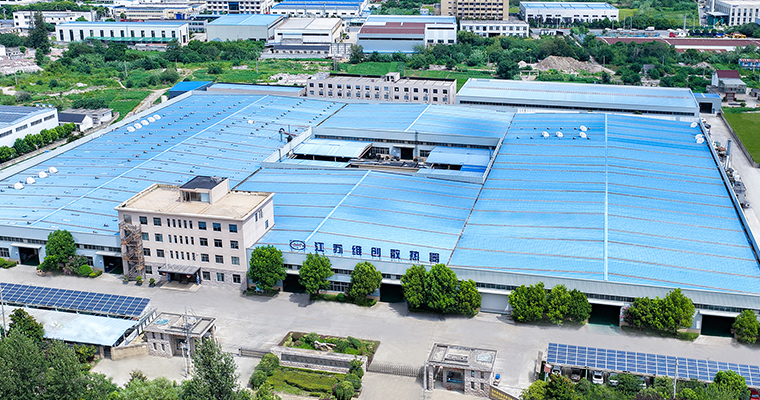
From our beginnings in generator set and radiator manufacturing in 2003, we've now expanded our business to over 30 countries with a workforce of more than 250 employees. As an established R&D and manufacturing enterprise for generator set radiators, OEM High Power Generator Radiators Manufacturers and High Power Generator Radiators Suppliers, operates two standardized production bases spanning over 60,000 square meters. With a technical team of 50+ core engineers, we have built a comprehensive industrial system covering R&D, production, and testing, achieving an annual production capacity of 150,000 units/sets. As High Power Generator Radiators Factory, Professional advanced sheet metal radiator manufacturing equipment to ensure the quality of the products, high efficiency and delivery guarantee.
News and Information
Industry Knowledge
High power generator radiators operate at heat rejection levels that push conventional core designs to their limits. In multi-megawatt applications, localized hot spots often form near inlet headers where coolant velocity is highest. If tube distribution is uneven, these zones accelerate material fatigue and gradually reduce effective cooling area. Practical field data shows that wider header chambers and optimized tube layouts significantly improve temperature uniformity across the core.
Since starting our radiator manufacturing journey in 2003, we’ve learned—through projects delivered to more than 30 countries—that thermal balance matters just as much as total surface area. From my perspective on the factory floor, investing in proper flow distribution always pays back in long-term stability.
As generator output increases, radiator frames must withstand not only thermal expansion but also fan-induced vibration and wind loading. Large frontal areas can experience measurable deflection if side supports are undersized. In outdoor installations, this deflection gradually stresses tube-to-header joints and shortens service life.
Working alongside a team of over 250 employees, we routinely integrate cross-bracing, reinforced lifting points, and segmented cores into high power designs. Personally, I’ve seen how these structural details prevent alignment issues after years of continuous operation—quiet engineering that customers often only notice when problems don’t occur.
High power generator radiators magnify every material choice. Aluminum cores offer weight savings for rooftop or modular plants, while copper-brass remains preferred in heavy industrial environments where repairability and maximum thermal conductivity are essential. Fin thickness and tube wall gauge become critical, especially when operating in dusty mines or coastal climates with high salinity.
Having grown from a small generator radiator workshop into a global supplier serving more than 30 markets, we’ve learned that material decisions should be driven by site reality, not catalog defaults. In several export projects, we customized fin geometry specifically to slow fouling rates—an approach that reflects our long-standing commitment to practical performance.
| Material Type | Typical High Power Site | Key Benefit |
| Copper-Brass | Power plants, mining | High heat transfer, repairable |
| Aluminum | Modular energy stations | Lightweight, corrosion resistant |
At high power levels, airflow scaling becomes a system-level challenge. Multiple fan arrays must operate in harmony to avoid uneven loading across the radiator face. Poor synchronization leads to stagnant zones where heat accumulates. Variable-frequency drives are increasingly used to balance airflow while reducing energy consumption during partial load operation.
Across international projects we’ve supported since 2003, I’ve noticed that properly tuned fan staging often lowers average coolant temperature by several degrees without increasing total fan capacity. From our side as a manufacturer, these control refinements are just as valuable as larger cores.
High power generator radiators are long-term assets, and service access must be engineered from the beginning. Walkway platforms, removable side panels, and online fin-cleaning systems reduce downtime during inspections. For continuous-duty installations, infrared scanning of core surfaces helps identify blocked sections before they affect overall performance.
Supported by a workforce of more than 250 people, we always encourage operators to integrate radiator checks into routine generator maintenance. In my experience across multiple continents, simple practices—like scheduled airflow cleaning and keeping spare fan motors on site—do more to protect megawatt-scale output than any single upgrade. These are the practical lessons behind the innovative spirit and core values that have guided our growth since 2003.



 English
  русский
  Français
  Indonesia
  عربى
عربى  中文简体
中文简体