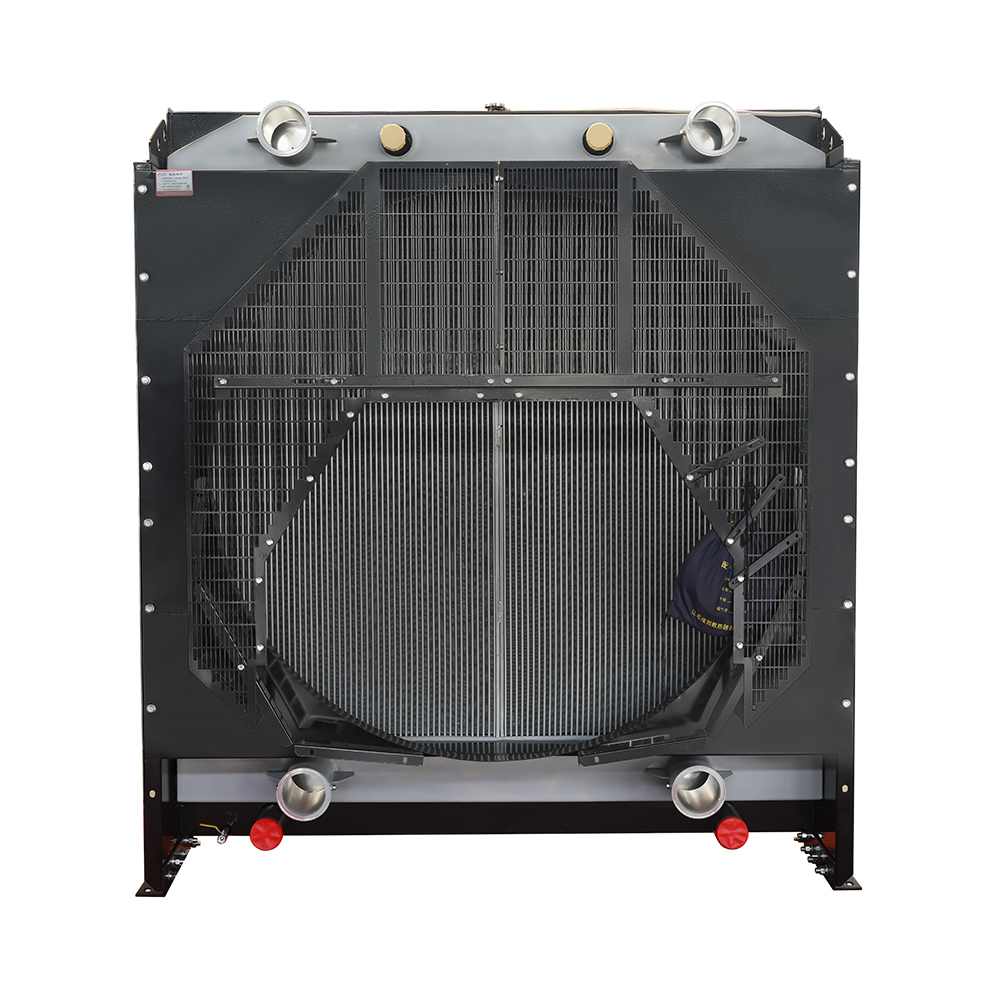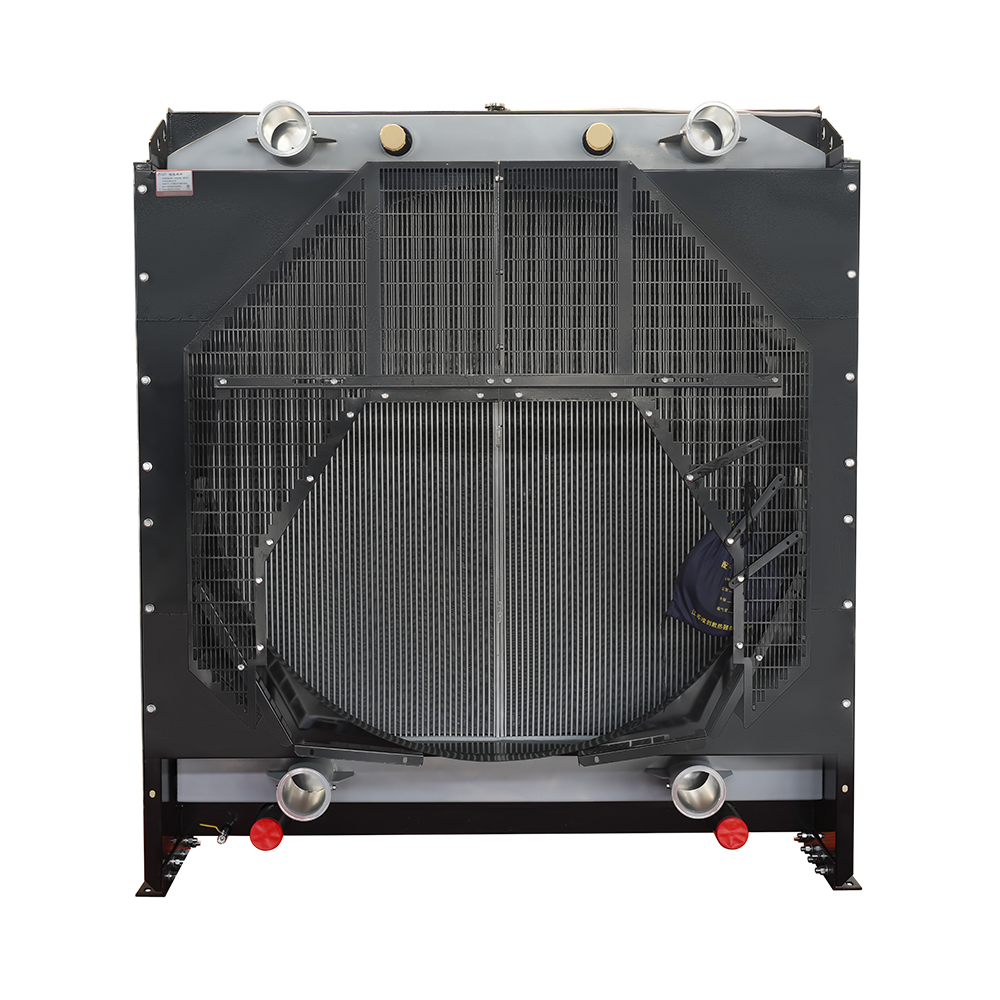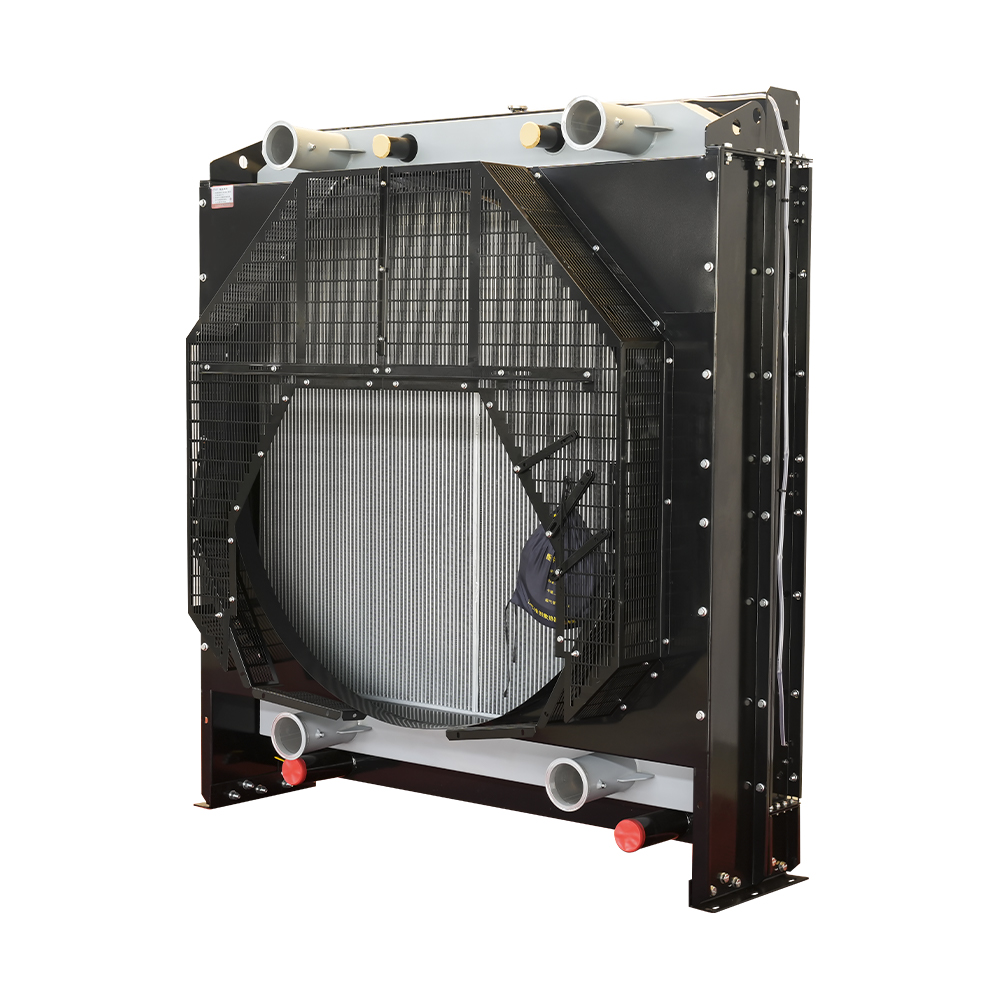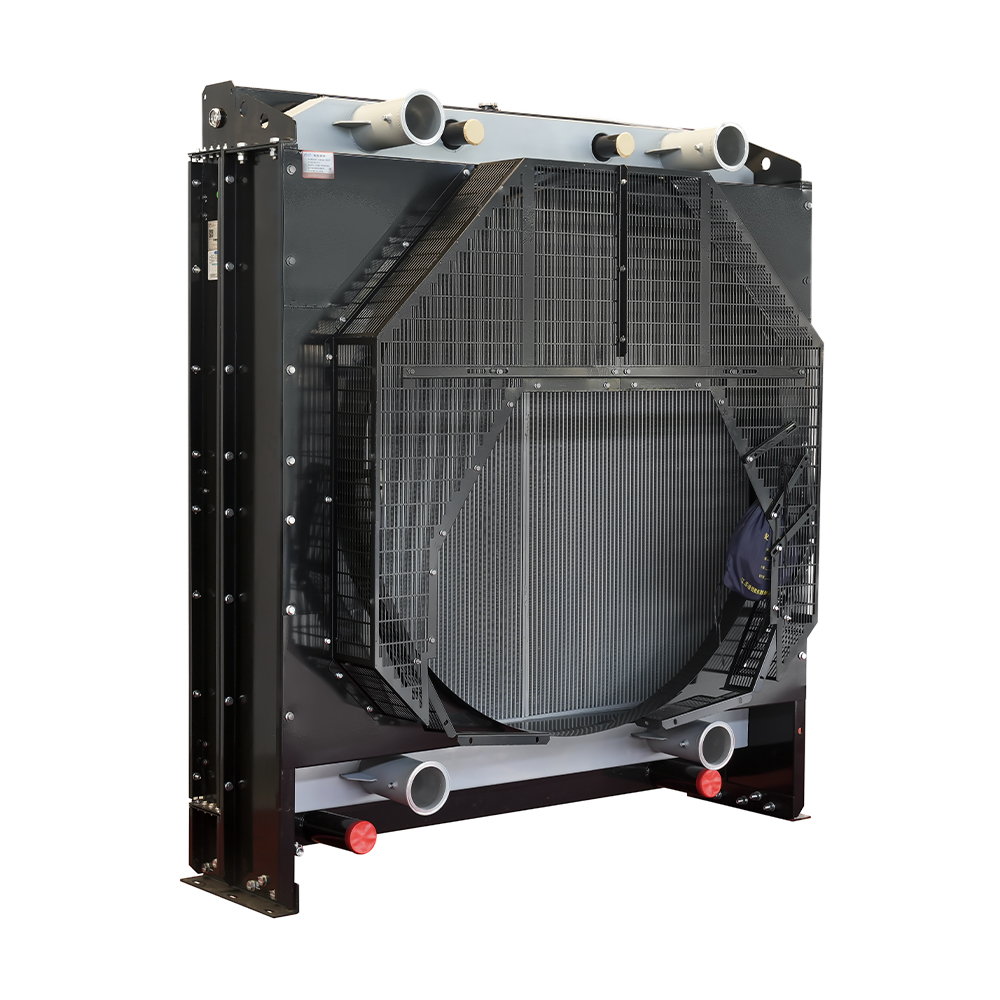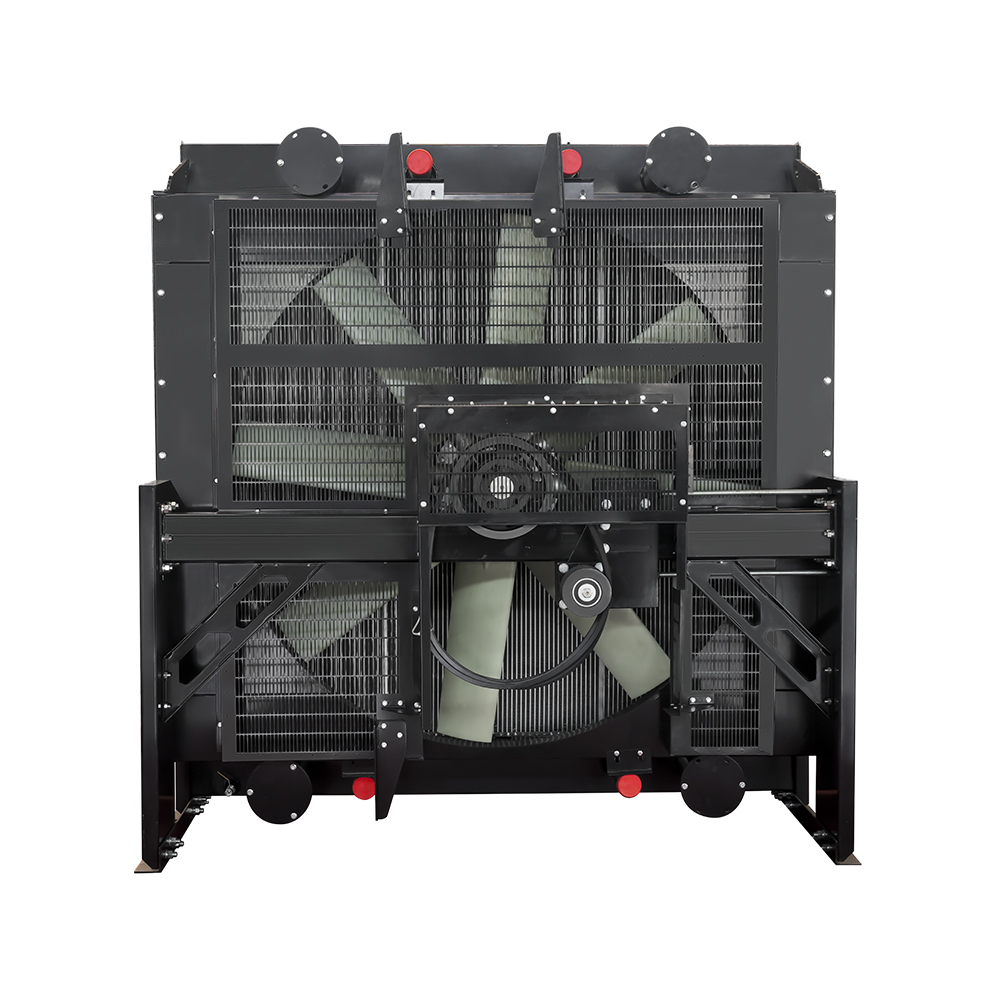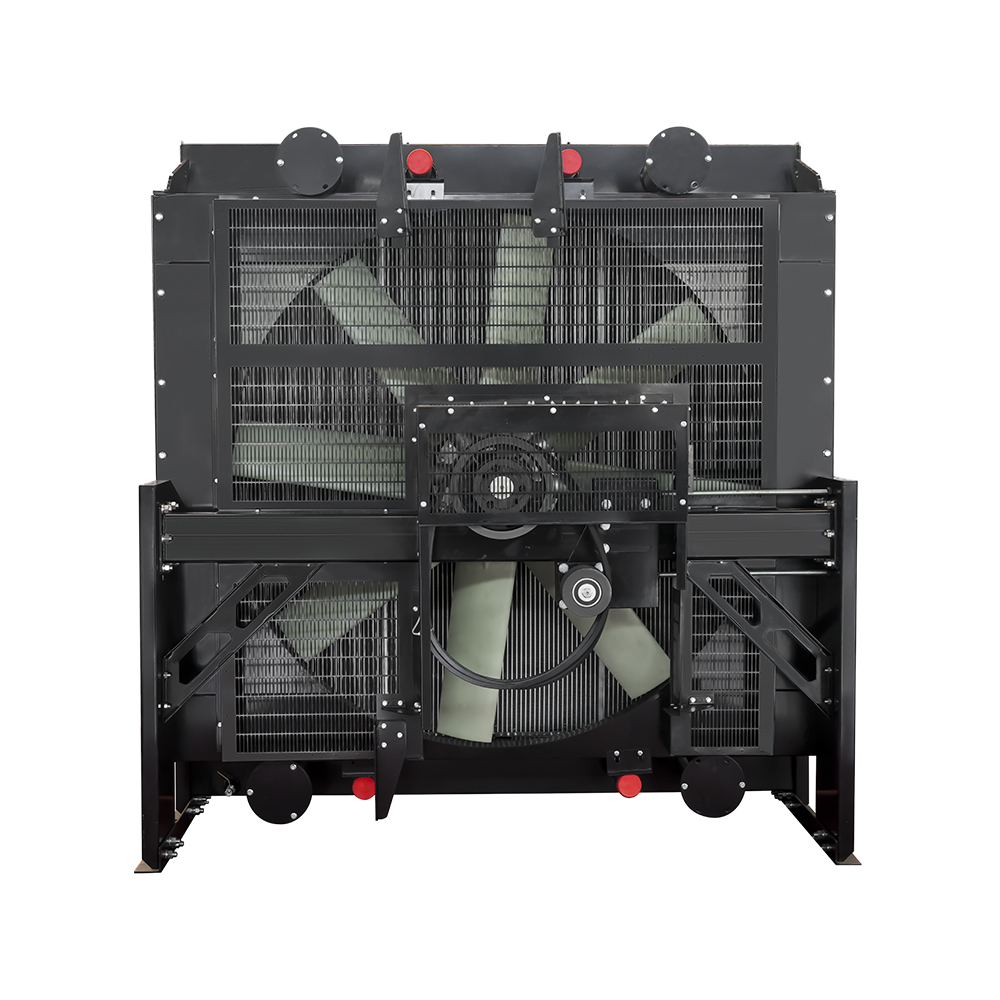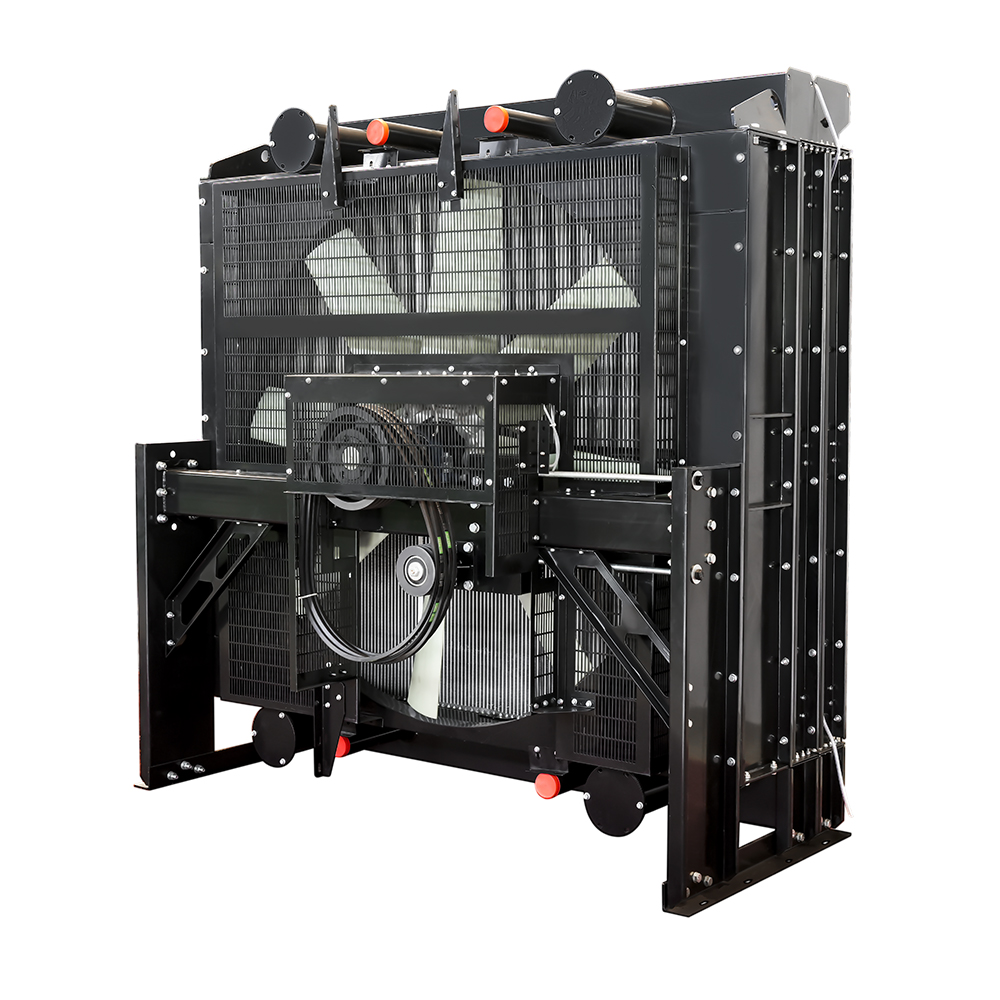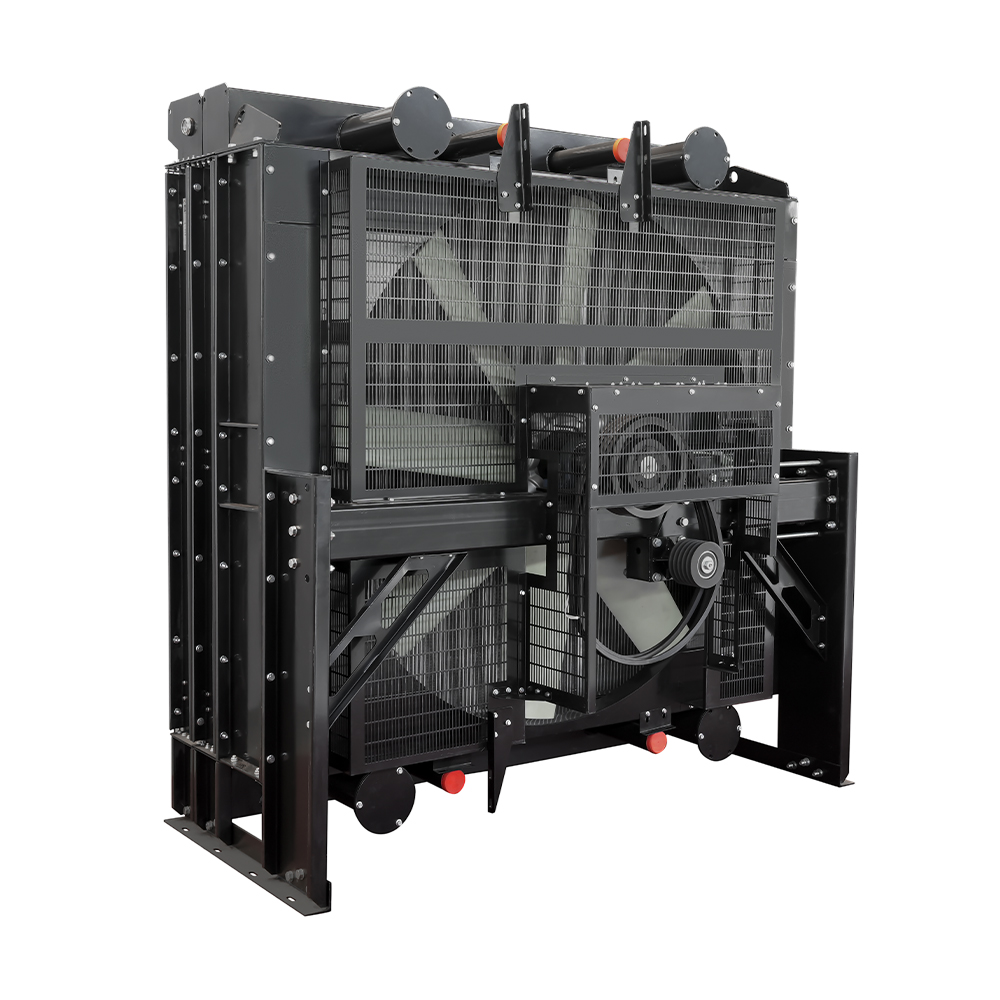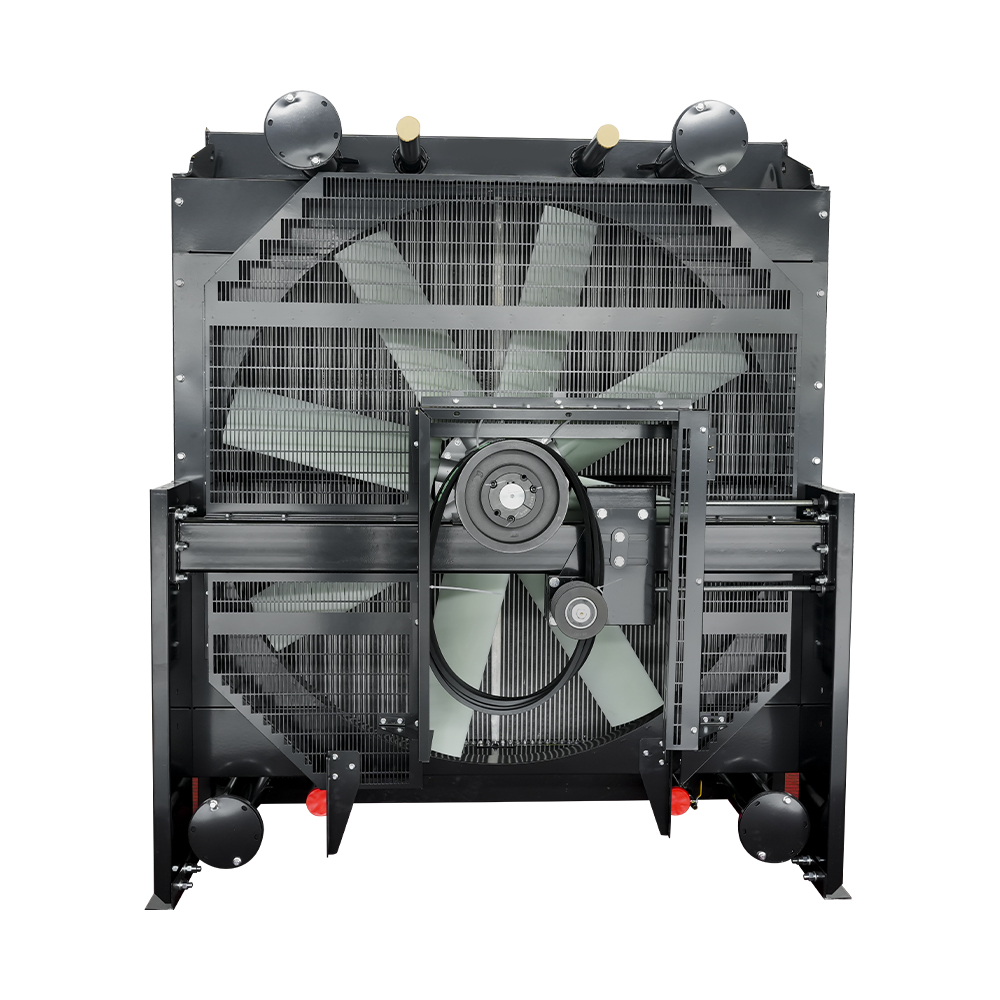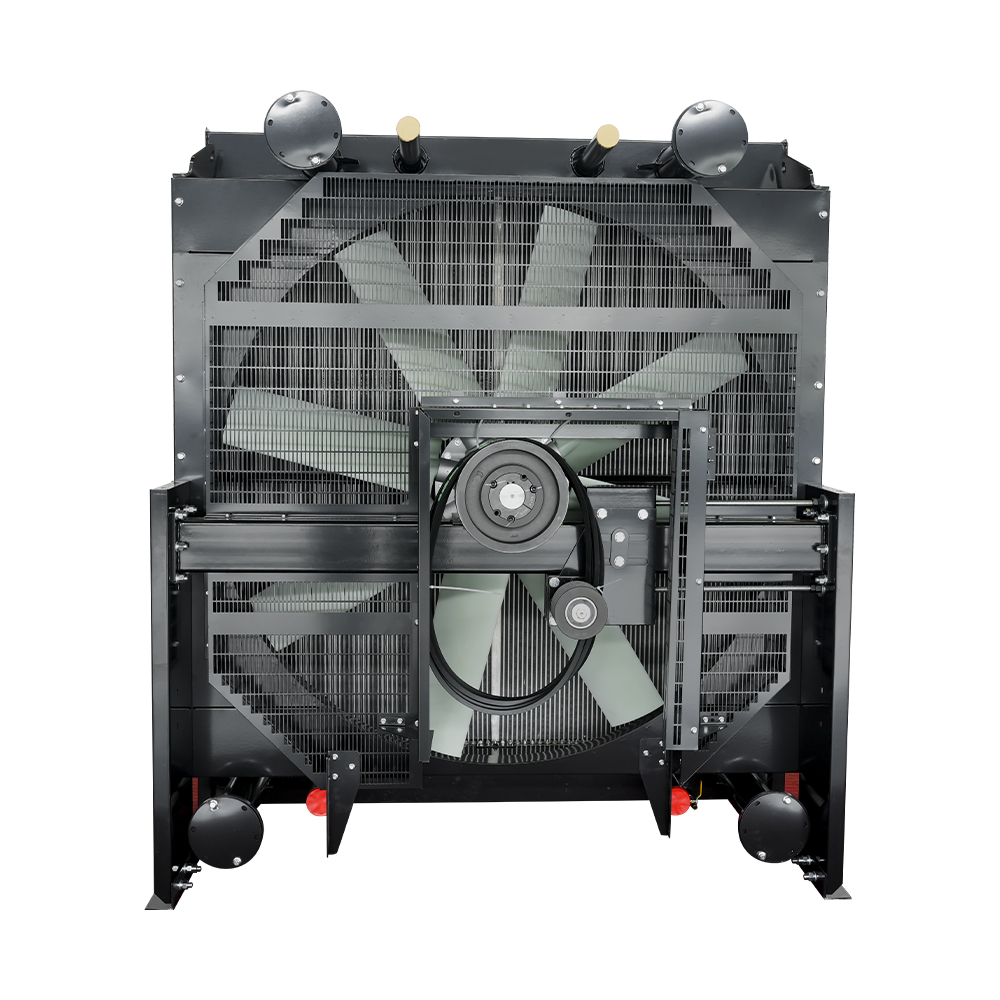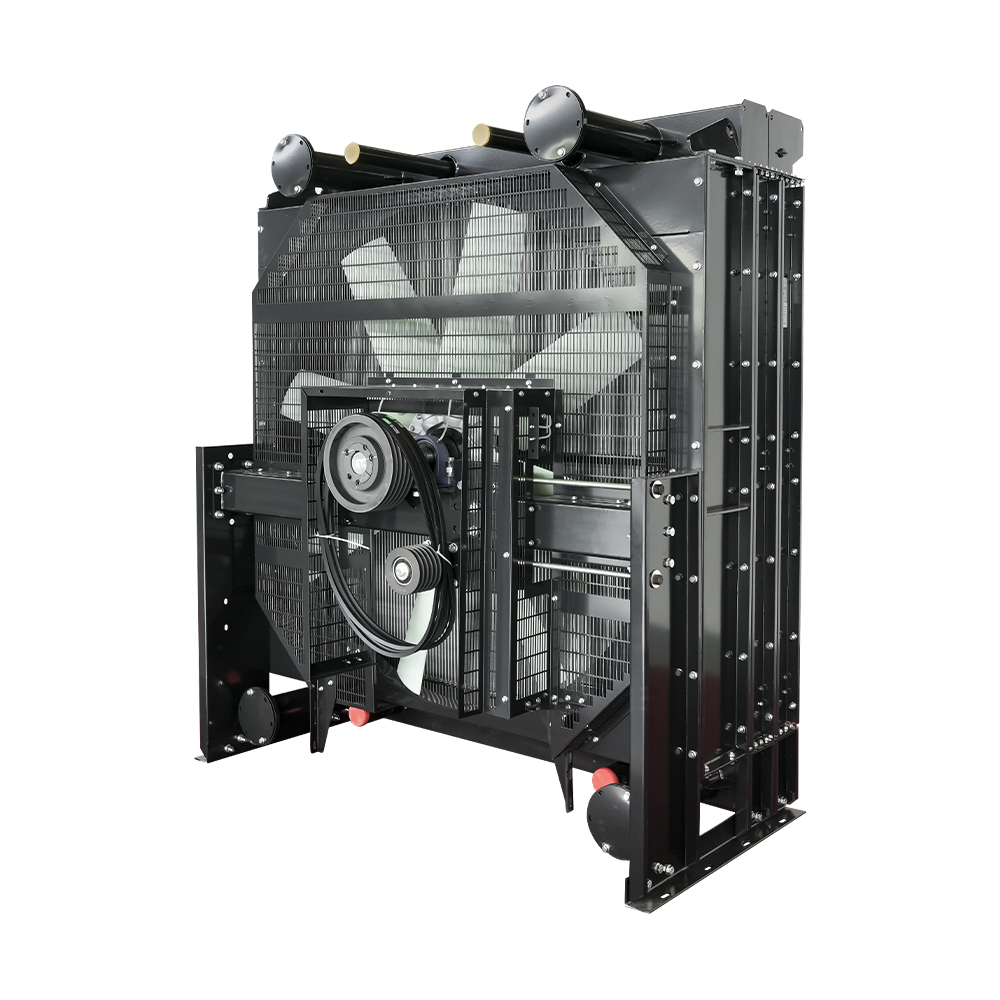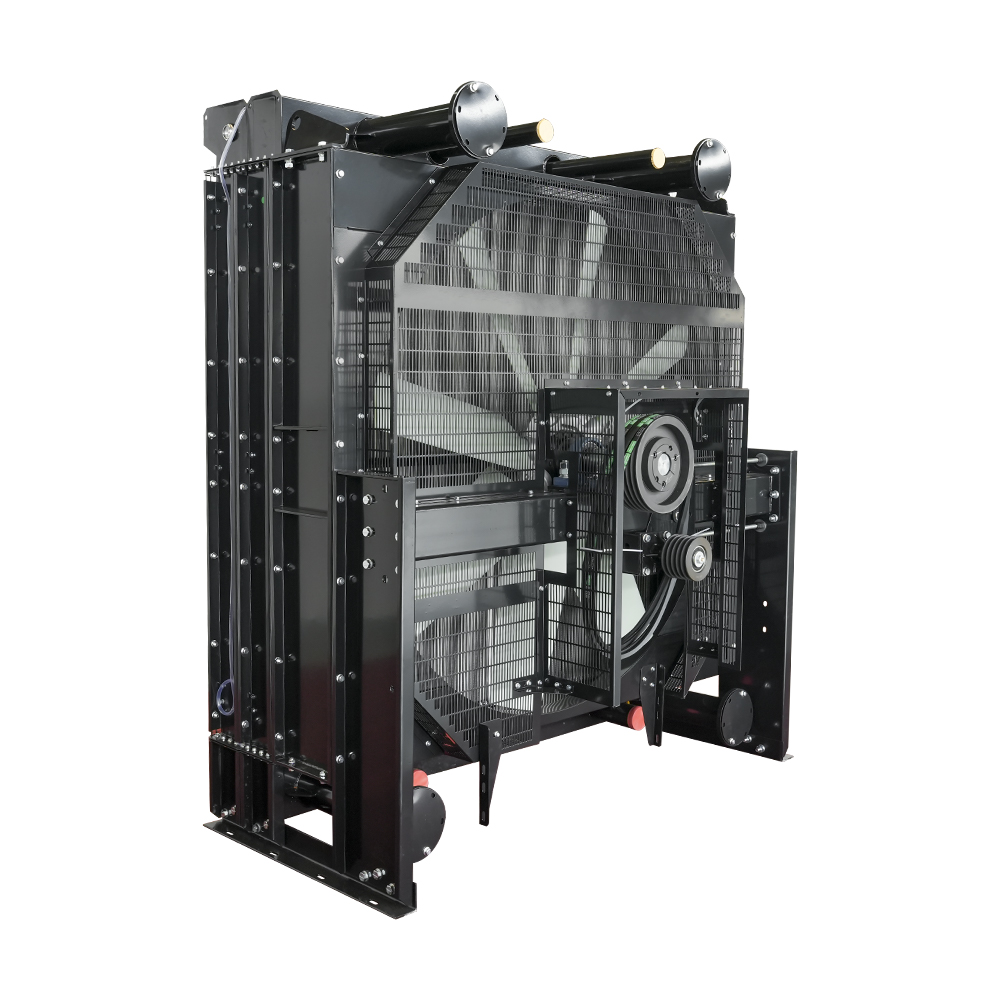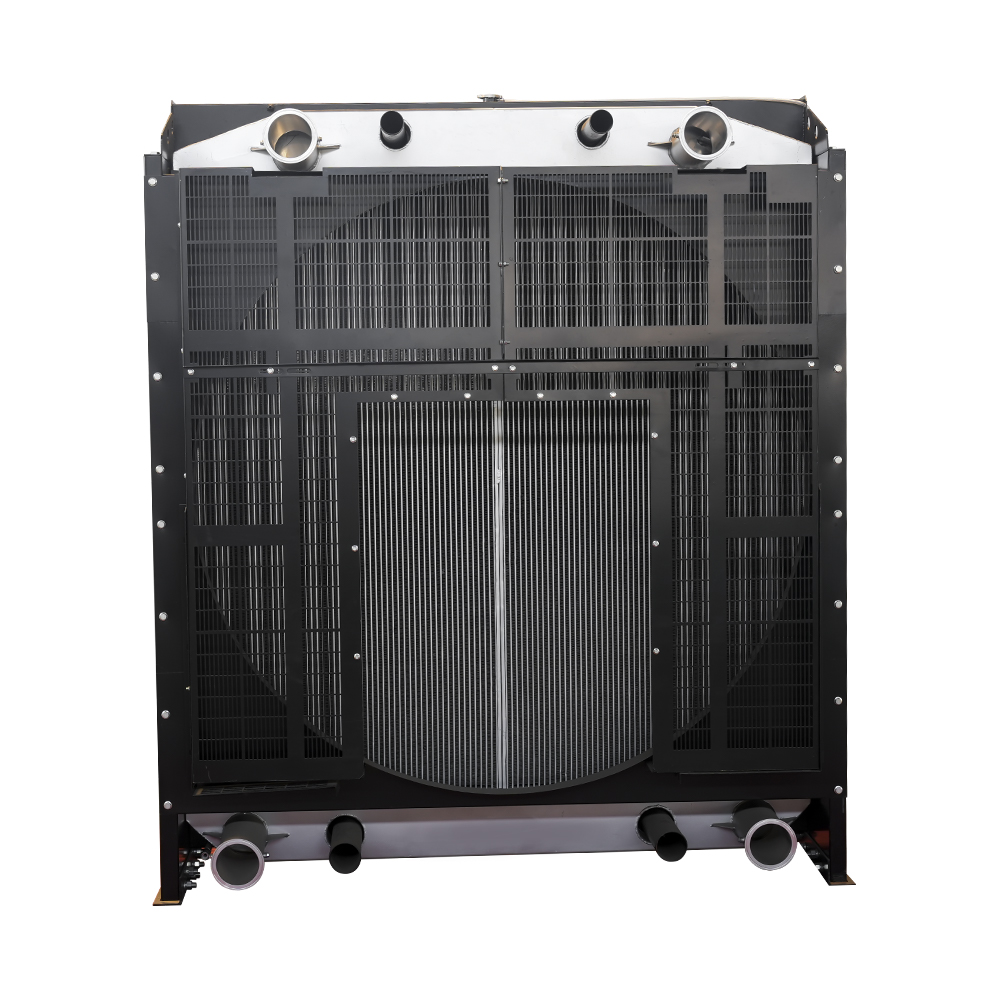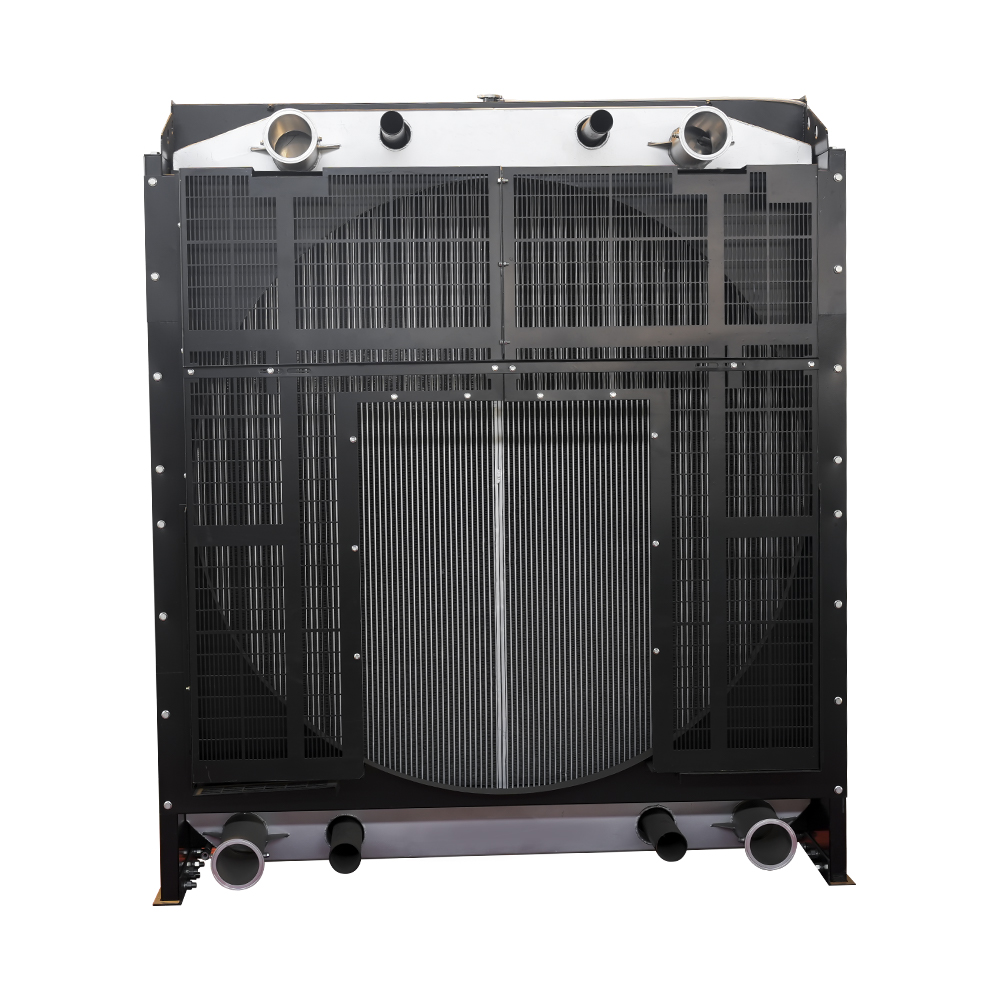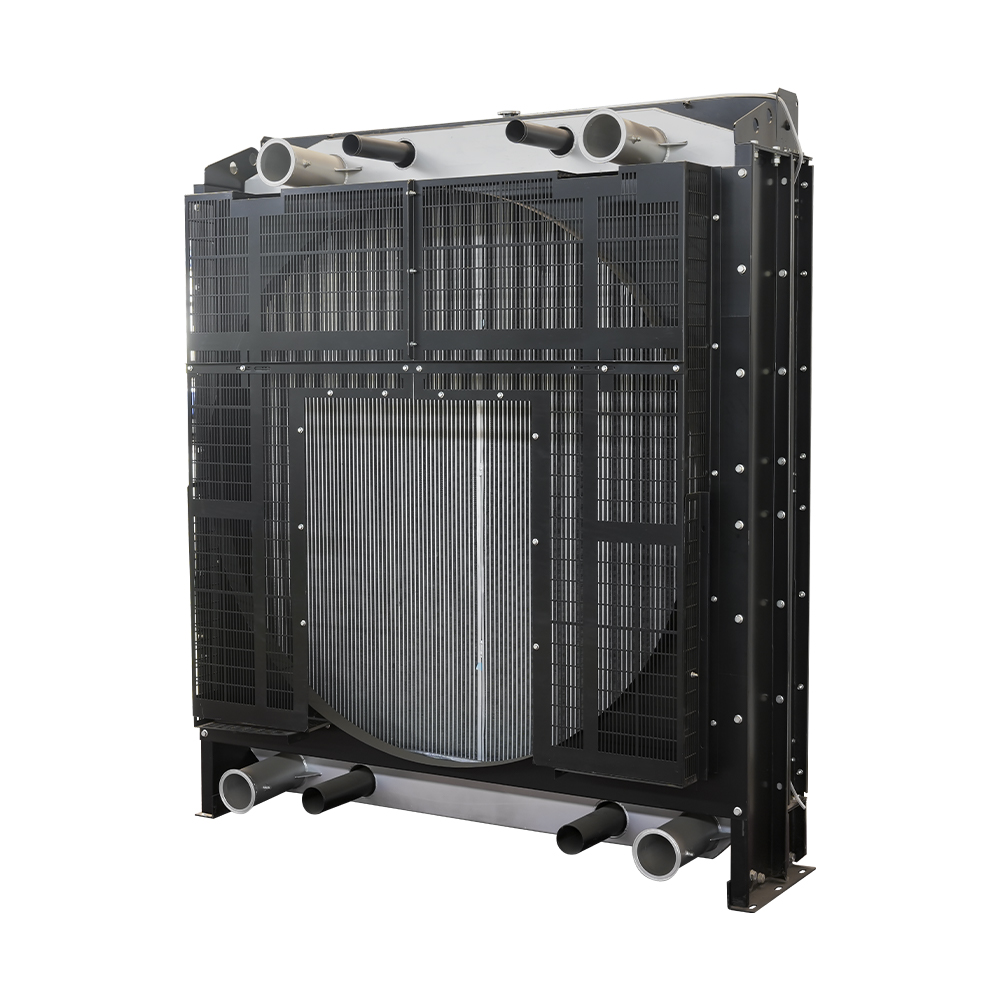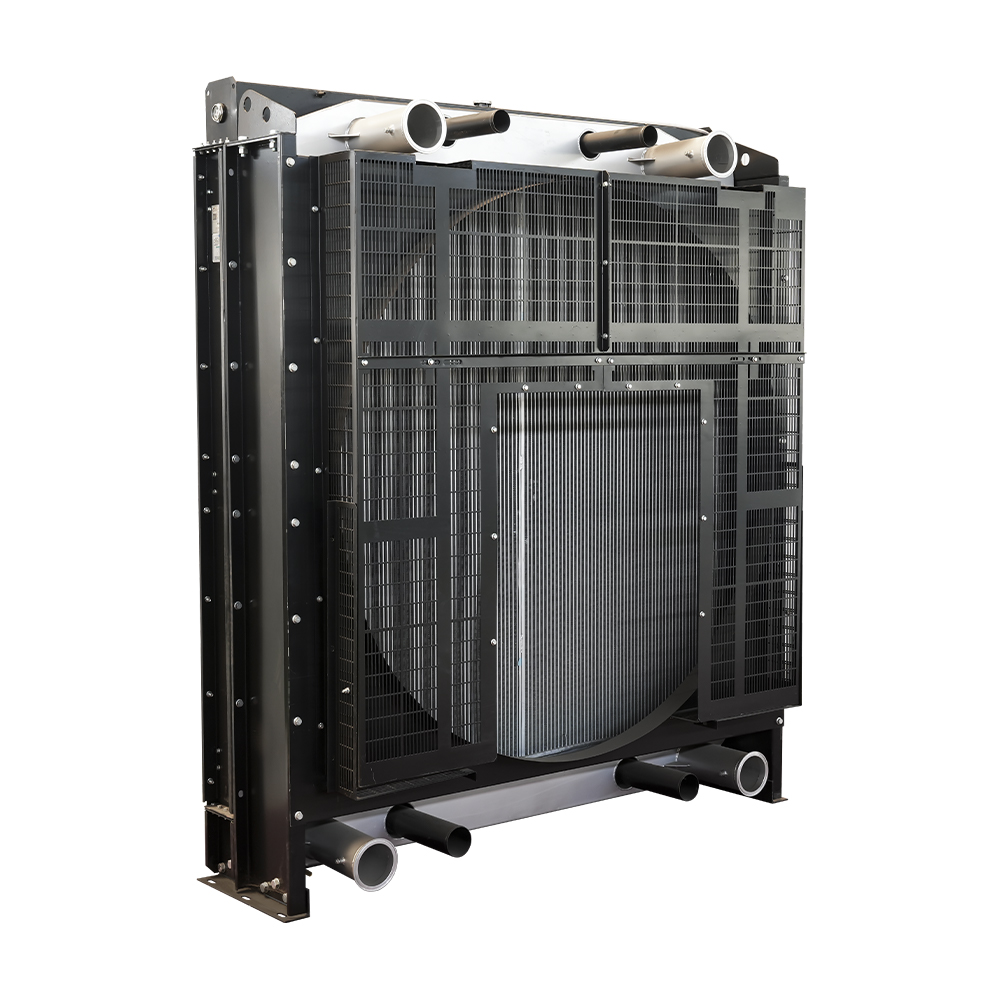
Optimized for Baudouin diesel engines, this radiator delivers exceptional cooling capacity for marine, industrial, and prime power uses. Constructed with reinforced cores and weather-resistant coatings, it withstands harsh conditions including high humidity and salty air. The design ensures quick installation, easy cleaning, and dependable performance.
| No. | Model | Installation Dimensions Diameter* Center Height |
Radiator Dimensions Height*Width*Thickness |
Water Capacity (L) |
Weight (KG) |
Heat Dissipation Area (M²) |
| 1 | 12M26D792E200 | φ1565*1170mm | 2235*2020*836*591mm | 89.3 | 356.5 | 227.8 |
| 2 | 12M26D902E200 | Φ1565*1170mm | 2230*2020*836*591mm | 94.3 | 357.5 | 276.9 |
| 4 | 12M33B1510E200-D | Motor drive | 2335*2119*1684mm | 120.7 | 299.8 | |
| 5 | 12M33D1108E200-P | Φ1730*1190mm | 2335*2019*1154mm | 114.5 | 738 | 283.8 |
| 6 | 12M33D1108E310 | Φ1730*1185mm | 2324*2019*781*710mm | 95.7 | 419 | 292.3 |
| 8 | 12M33D1210E200-P | Φ1730*1190mm | 2335*2019*1154mm | 114.5 | 748.5 | 283.8 |
| 11 | 12M33D1265E201-P | Φ1730*1190mm | 2335*2019*1154mm | 114.5 | 0 | 283.8 |
| 13 | 12M33D1320E310-P | Φ1730*1192mm | 2324*2219*1169mm | 107.2 | 725.5 | 253.5 |
| 15 | 12M33D1500E310-P | Φ1730*1192mm | 2324*2219*1169mm | 112.7 | 0 | 315.8 |
| 17 | 12M33D792E310 | Φ1730*1185mm | 2324*2019*781*591mm | 90.5 | 0 | 240.6 |
| 18 | 12M33D902E310 | Φ1730*1185mm | 2324*2019*781*591mm | 90.5 | 0 | 240.6 |
| 19 | 12M33D968E310 | Φ1730*1185mm | 2324*2019*781*591mm | 90.5 | 0 | 240.6 |
| 21 | 12M55D2450E310-P | φ2020*1370mm | 2694*2619*1194mm | 303.6 | 886 | 464.5 |
| 24 | 12WH17B1200-5-P | Φ1730*1150mm | 2274*2219*1169mm | 223.5 | 348.7 | |
| 25 | 16M33D1680E310(D0838)-D | Motor drive | 2500*2219*1422mm | 229.1 | 0 | 351 |
| 26 | 16M33D1680E310 | Φ1790*1220mm | 2394*2219*942mm | 237 | 515.5 | 276.5 |
| 28 | 16M33D1980E310 | Φ1790*1220mm | 2395*2219*942*872mm | 243.9 | 510 | 325.3 |
| 30 | 16M33G8D3/5-D | Motor drive | 2699*2619*1441mm | 312.3 | 0 | 570.7 |
| 31 | 20M33D2210E310-P | Φ2150*1370mm | 2749*2745*1331mm | 341.8 | 0 | 506.1 |
| 32 | 4M09G3D4-5 | Φ565*414mm | 842*716*496*336mm | 11.6 | 18.3 | |
| 33 | 4M10G2D3/5 | Φ575*414mm | 842*716*413mm | 11.6 | 18.3 | |
| 34 | 4M10G6D3/5 | Φ575*459mm | 913*766*496*336mm | 12.2 | 25.3 | |
| 35 | 6M11G188 | Φ630*511mm | 1035*805*480mm | 21.4 | 0 | 26.5 |
| 37 | 6M12G8D3/5 | Φ730*511mm | 1175*906*600510mm | 28.5 | 0 | 61.3 |
| 38 | 6M26D484E200 | Φ1166*901mm | 1735*1526*745*687mm | 66.3 | 194.5 | 131.3 |
| 40 | 6M33D572E200 | Φ1150*992mm | 1920*1576*685*450mm | 77 | 0 | 131.9 |
| 41 | 6M33D633E200 | Φ1150*992mm | 1920*1576*685*450mm | 77 | 214.5 | 131.9 |
| 43 | 6M33D725E310 | Φ1150*992mm | 1920*1576*685*450mm | 80.2 | 217 | 181.5 |
| 45 | 8M21D580E310 | φ1050*786mm | 1545*1356*620*460mm | 57.7 | 0 | 99.5 |
| 46 | 8M21D615E310 | φ1050*786mm | 1545*1356*620*460mm | 59.9 | 151 | 123.9 |
| 47 | 8M33D895E310 | Φ1560*1031mm | 2065*1726*740*470mm | 73.4 | 235.5 | 191.1 |
| 50 | 8M33D975E310 | Φ1560*1030mm | 2065*1725*740*470mm | 77.5 | 251.5 | 238 |
| 51 | HBJ---12M33D1240E310-2110 | Heat exchanger | 2320*1830*675mm | Heat exchanger | Heat exchanger | |
| 52 | HBJ---16M33D1530E310-2110 | Heat exchanger | 1860*1850*600mm | Heat exchanger | 0 | Heat exchanger |
| 53 | HBJ---16M33D1980E310-2110 | Heat exchanger | 1806*1830*600mm | Heat exchanger | 15 | |
| 54 | HGPBJ---12M26D902E200-100 | Heat exchanger | 2000*1600*560mm | Heat exchanger | Heat exchanger | |
| 55 | HGPBJ---12M33D1210E200-10 | 296*640mm | 2270*1830*675mm | 171 | 0 | 11.25 |
| 56 | HGPBJ---670KW-6M33D670E31 | Heat exchanger | 1600*1200*552mm | Heat exchanger | Heat exchanger | |
| 57 | HGPGK---633KW-6M33B860E20 | Heat exchanger | 1790*1480*555mm | Heat exchanger | Heat exchanger | |
| 58 | WS---12M26D902E200-000211 | Horizontal water tank | 1468*2436*2065mm | Horizontal water tank | Horizontal water tank |
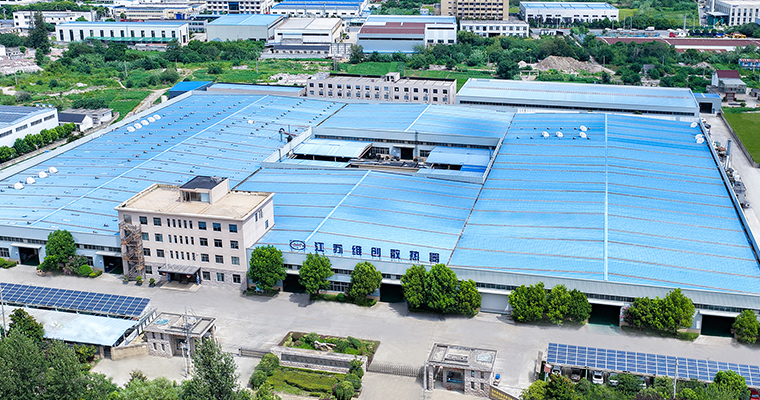
From our beginnings in generator set and radiator manufacturing in 2003, we've now expanded our business to over 30 countries with a workforce of more than 250 employees. As an established R&D and manufacturing enterprise for generator set radiators, OEM Suitable for Baudouin Generator Radiators Manufacturers and Suitable for Baudouin Generator Radiators Suppliers, operates two standardized production bases spanning over 60,000 square meters. With a technical team of 50+ core engineers, we have built a comprehensive industrial system covering R&D, production, and testing, achieving an annual production capacity of 150,000 units/sets. As Suitable for Baudouin Generator Radiators Factory, Professional advanced sheet metal radiator manufacturing equipment to ensure the quality of the products, high efficiency and delivery guarantee.
News and Information
Industry Knowledge
When buyers compare Baudouin generator radiators, the practical question isn’t “is it compatible,” but whether the core can reject heat at your actual ambient temperature, not the brochure condition. A fast screening method is to look at the radiator’s heat dissipation area (m²) together with airflow and site conditions (dust, salt, enclosure restriction).
I keep the marketing simple: if you tell me your ambient, enclosure, and duty profile, I’ll steer you to a core that won’t “just barely pass” on day one.
For Baudouin sets, installation dimensions (fan ring diameter and center height) are not cosmetic—they control fan-to-shroud alignment and recirculation. Even a “fits in the frame” radiator can underperform if the fan sits off-center or the shroud gap is wrong.
| Model | Installation Dimensions | Water Capacity (L) | Heat Dissipation Area (m²) |
|---|---|---|---|
| 12M26D792E200 | φ1565*1170mm | 89.3 | 227.8 |
| 12M26D902E200 | Φ1565*1170mm | 94.3 | 276.9 |
| 12M33D1108E310 | Φ1730*1185mm | 95.7 | 292.3 |
| 12M55D2450E310-P | φ2020*1370mm | 303.6 | 464.5 |
Key takeaway: if two options “fit,” pick the one that preserves fan alignment + airflow path—that combination decides real operating temperature.
Core construction choice is usually a maintenance decision in disguise. Dusty mines, cement plants, and rental fleets tend to punish high-density fins unless cleaning is disciplined. Meanwhile, low-density fins with better wash-through can keep performance stable over time even if peak “new” performance looks slightly lower.
This is where I’m a little opinionated: I’d rather sell you a radiator that stays cleanable than one that looks great on day one and struggles after a season.
Salt and humidity don’t just corrode externally; they accelerate galvanic activity when dissimilar metals, poor grounding, or stray electrical currents exist. In coastal deployments, you should treat the radiator as part of a corrosion system, not a standalone part.
If you’re building near sea wind, choosing the right corrosion approach up front is one of the cheapest reliability upgrades you can make.
A radiator that cools well but can’t hold pressure is a downtime generator. Buyers should ask about leak testing, joint integrity, and how the assembly handles vibration and thermal cycling—especially on gensets that see frequent start/stop or transport.
If you’re sourcing a replacement Baudouin generator radiator, I recommend you treat pressure integrity as a first-class spec—right alongside dimensions and heat rejection.



 English
  русский
  Français
  Indonesia
  عربى
عربى  中文简体
中文简体