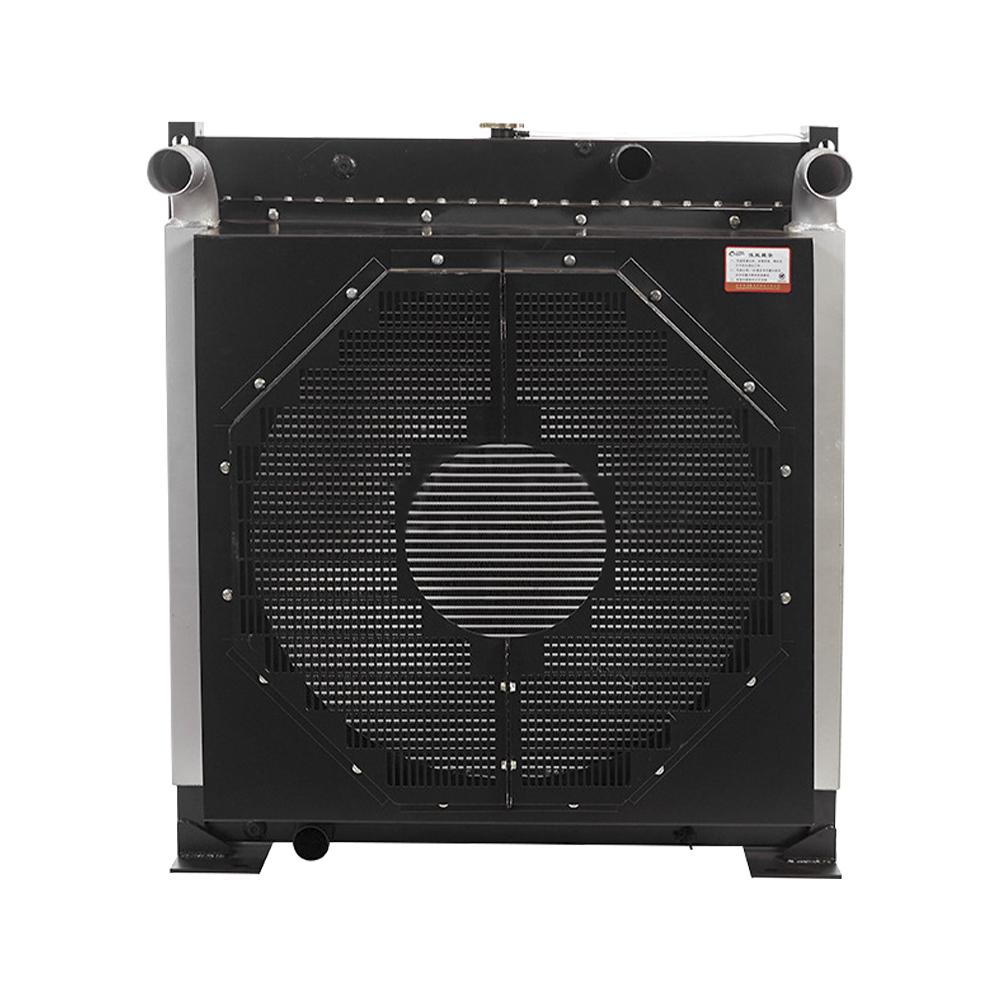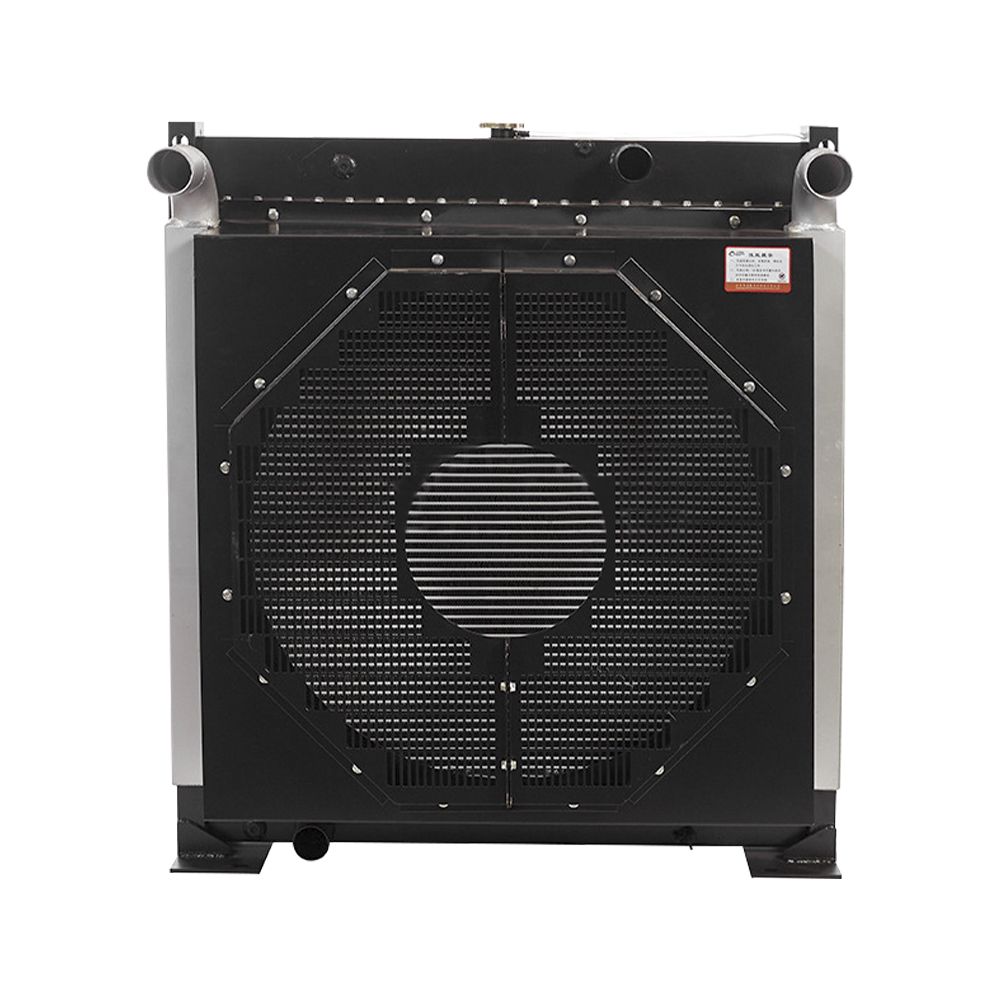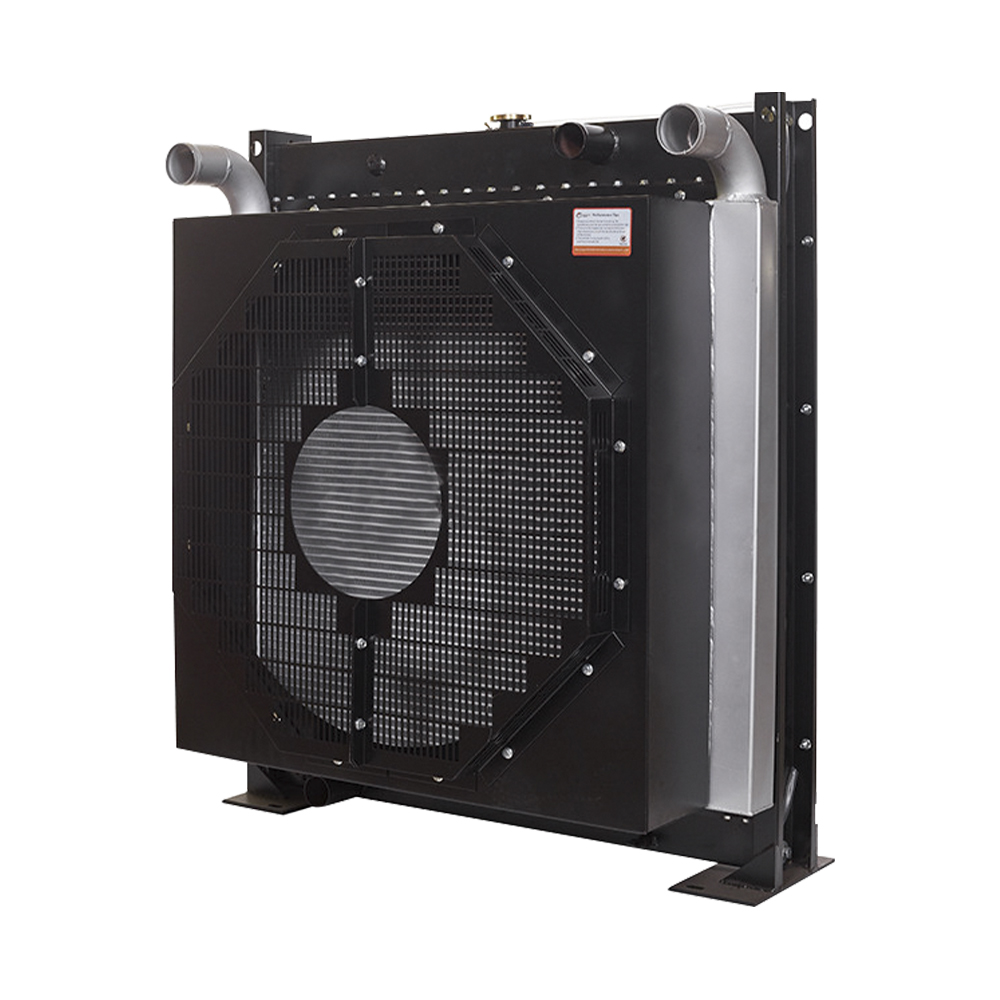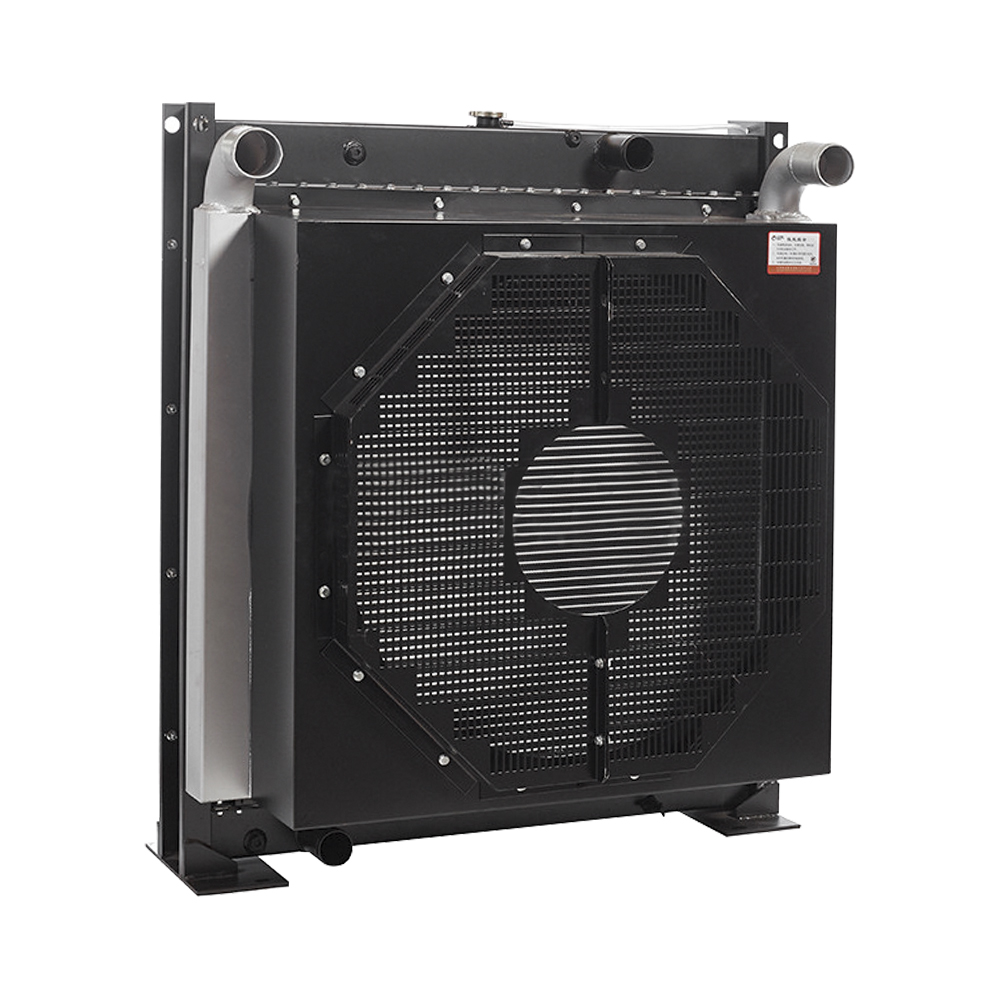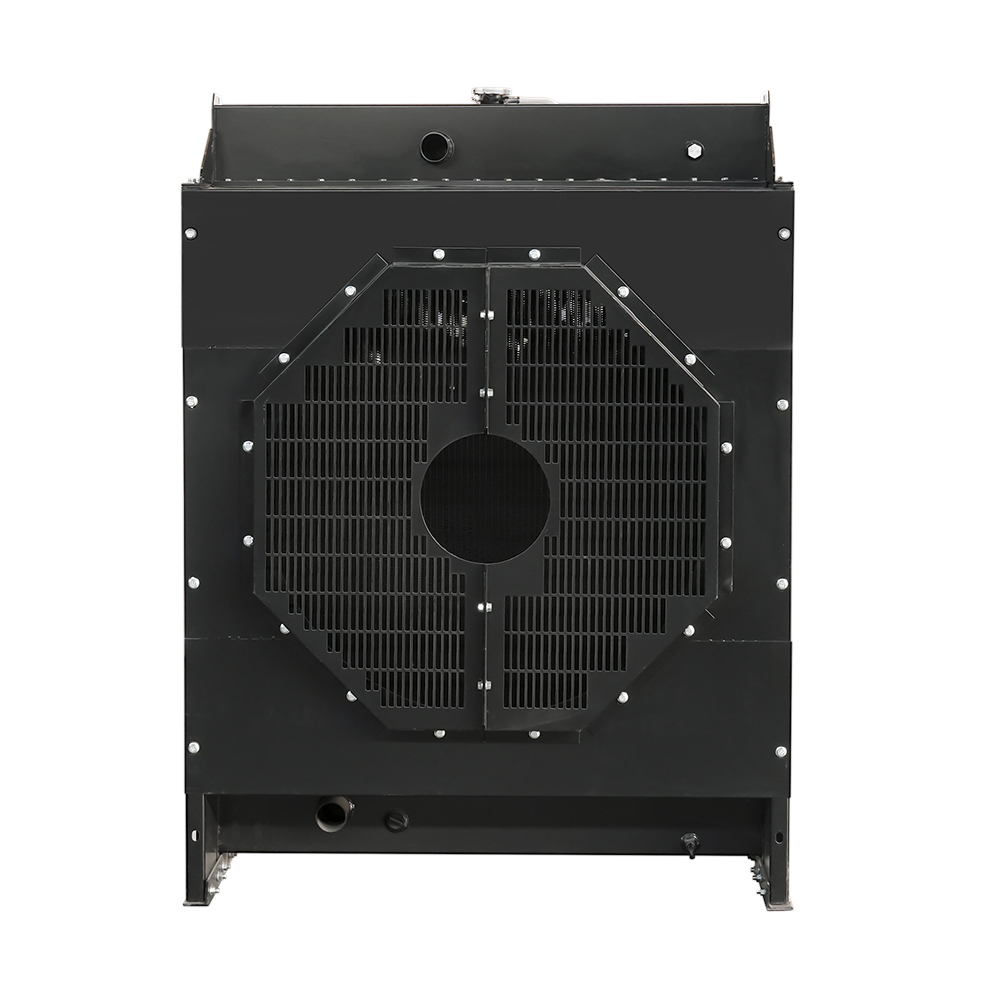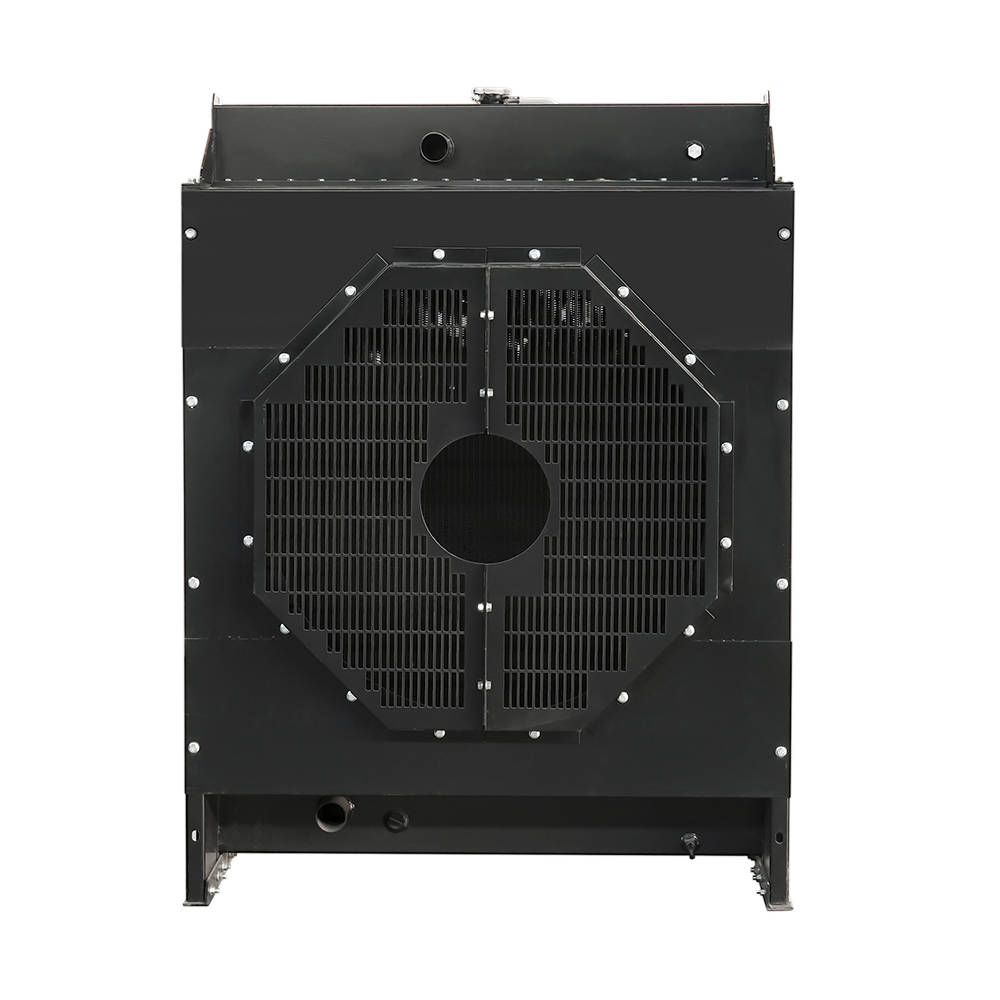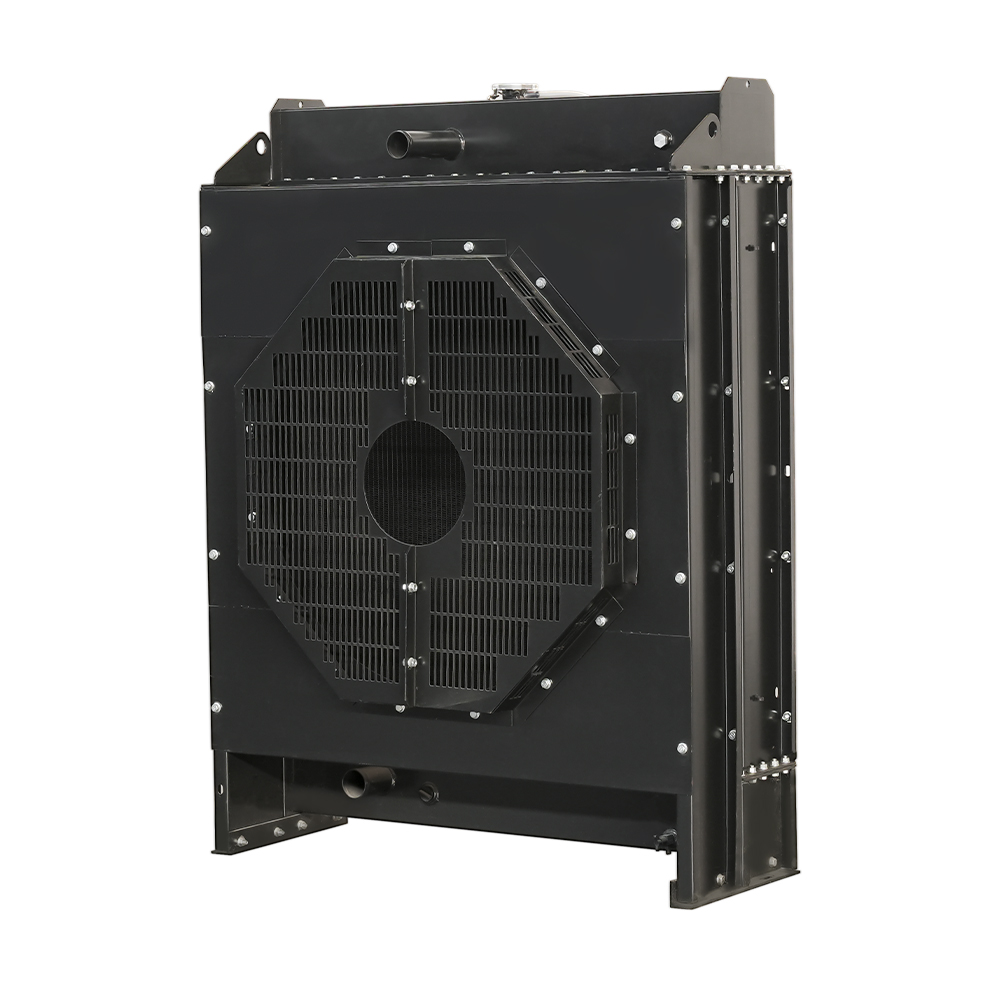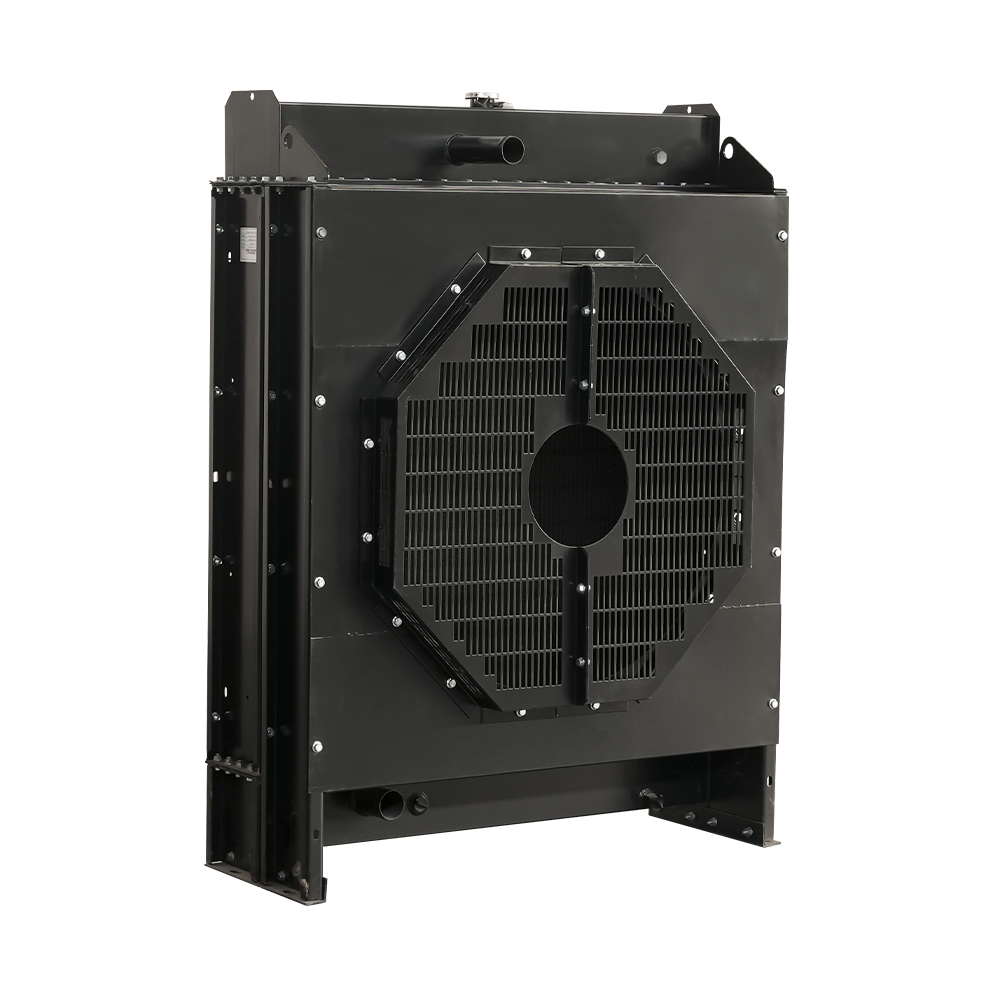
Specially developed for Doosan generator sets, this radiator features high thermal conductivity fins and large surface area cores to ensure rapid heat dissipation. Built to handle heavy-duty continuous operations, it offers long-term corrosion protection and low maintenance, making it suitable for construction, mining, and offshore projects.
| No. | Model | Installation Dimensions Diameter*Center Height |
Radiator Dimensions Height*Width*Thickness |
Water Capacity (L) |
Weight (KG) |
Heat Dissipation Area (M²) |
| 1 | DB58- | Φ545*428mm | 975*756*406mm | 19.7 | 22.6 | |
| 2 | DP086LA | φ740*579mm | 1191*916*595mm | 30.3 | 112 | 50.5 |
| 3 | DP126LB | φ840*731mm | 1465*1256*665*405mm | 48.6 | 165 | 87.3 |
| 4 | DP158LC(D)-1 | Φ940*670mm | 1537*1410*640*525mm | 59.3 | 208 | 147.1 |
| 5 | DP180LA(B)-1 | Φ940*670mm | 1567*1410*640*525mm | 74.2 | 188 | 168.9 |
| 6 | DP222LA(B)-1 | Φ950*772mm | 1848*1410*655*525mm | 77.6 | 229 | 207.7 |
| 7 | DP222LC-1 | Φ950*772mm | 1848*1410*655*525mm | 77.6 | 229 | 207.7 |
| 8 | P086TI | Φ686*579mm | 1195*916*595mm | 31.4 | 110 | 61.3 |
| 9 | P126TI | Φ780*731mm | 1435*1175*550mm | 40.5 | 112.5 | 79.5 |
| 10 | P158LE-1 | Φ940*670mm | 1537*1410*640*525mm | 57.1 | 185 | 114.5 |
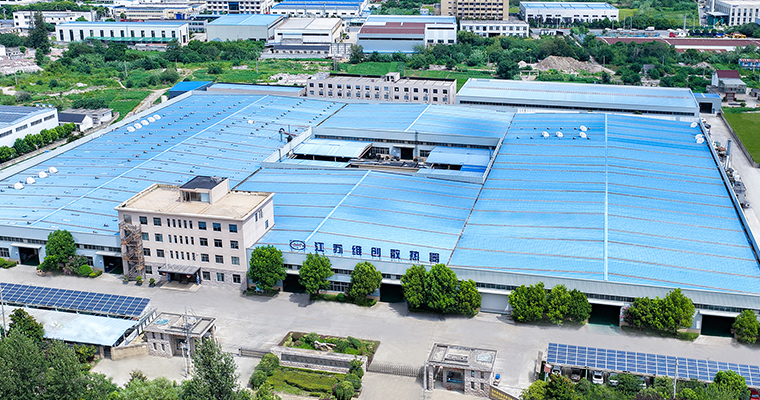
From our beginnings in generator set and radiator manufacturing in 2003, we've now expanded our business to over 30 countries with a workforce of more than 250 employees. As an established R&D and manufacturing enterprise for generator set radiators, OEM Suitable for Doosan Generator Radiators Manufacturers and Suitable for Doosan Generator Radiators Suppliers, operates two standardized production bases spanning over 60,000 square meters. With a technical team of 50+ core engineers, we have built a comprehensive industrial system covering R&D, production, and testing, achieving an annual production capacity of 150,000 units/sets. As Suitable for Doosan Generator Radiators Factory, Professional advanced sheet metal radiator manufacturing equipment to ensure the quality of the products, high efficiency and delivery guarantee.
News and Information
Industry Knowledge
Most “overheating” cases aren’t solved by simply going to a bigger core—buyers get better results by matching the radiator to the engine’s net heat rejection at the real duty point (prime vs standby), plus fan capability and enclosure losses. In practice, the hidden multipliers are intake restriction, louver pressure loss, and recirculation in compact canopies.
If you’re comparing options for Doosan generator radiators, ask for the thermal basis (ambient, altitude, coolant setpoint, fan curve). I always prefer quoting against your worst-site condition so you don’t “buy twice” after commissioning.
Air density is the unglamorous reason a radiator that behaves at 25°C struggles at 40–45°C. Higher ambient reduces the temperature difference that drives heat transfer, and altitude reduces mass airflow for the same fan speed. The practical takeaway is to specify the radiator for the site’s peak conditions, not the “catalog default.”
If you want the safer choice for harsh sites, I usually recommend selecting Doosan generator radiator configurations with verified airflow/pressure capability rather than only chasing surface area.
Air-side performance is usually where budget radiators lose value. High fin density can boost initial heat transfer but clogs faster in dusty rental fleets, mining sites, and agricultural environments. Once fouled, the effective thermal area collapses and the fan works harder (higher power draw and noise).
| Environment | What to optimize | Practical buyer note |
|---|---|---|
| Dusty / lint-heavy | Fouling tolerance | Prefer easier-to-clean fin geometry; plan for blow-out access |
| Urban / standby | Noise + efficiency | Lower restriction helps keep fan speed (and dB) down |
| Coastal / offshore | Corrosion resistance | Coatings and material choices matter as much as core size |
A radiator can look “bigger” and still underperform if coolant-side restriction is too high for the water pump’s available head. Excess pressure drop reduces flow, elevates metal temperatures, and can accelerate localized boiling—especially during load acceptance.
When we quote replacements, I like to validate both thermal and hydraulic margins—small details here are what separate a smooth commissioning from recurring alarms.
Salt-laden air attacks fins first, while coolant chemistry attacks tube walls and joints. If your installation mixes metals (aluminum core, steel frame, copper/brass components elsewhere), galvanic coupling can accelerate failures unless isolation and coolant control are handled correctly.
Brand- and model-labeled radiators can differ in shroud depth, fan-to-core clearance, and mounting geometry. Even small deviations can cause recirculation, blade tip losses, or vibration-induced fatigue cracking over time.
If you’re sourcing Doosan generator radiators for fleet standardization, these fit details are usually the difference between one SKU and five “almost the same” SKUs.



 English
  русский
  Français
  Indonesia
  عربى
عربى  中文简体
中文简体