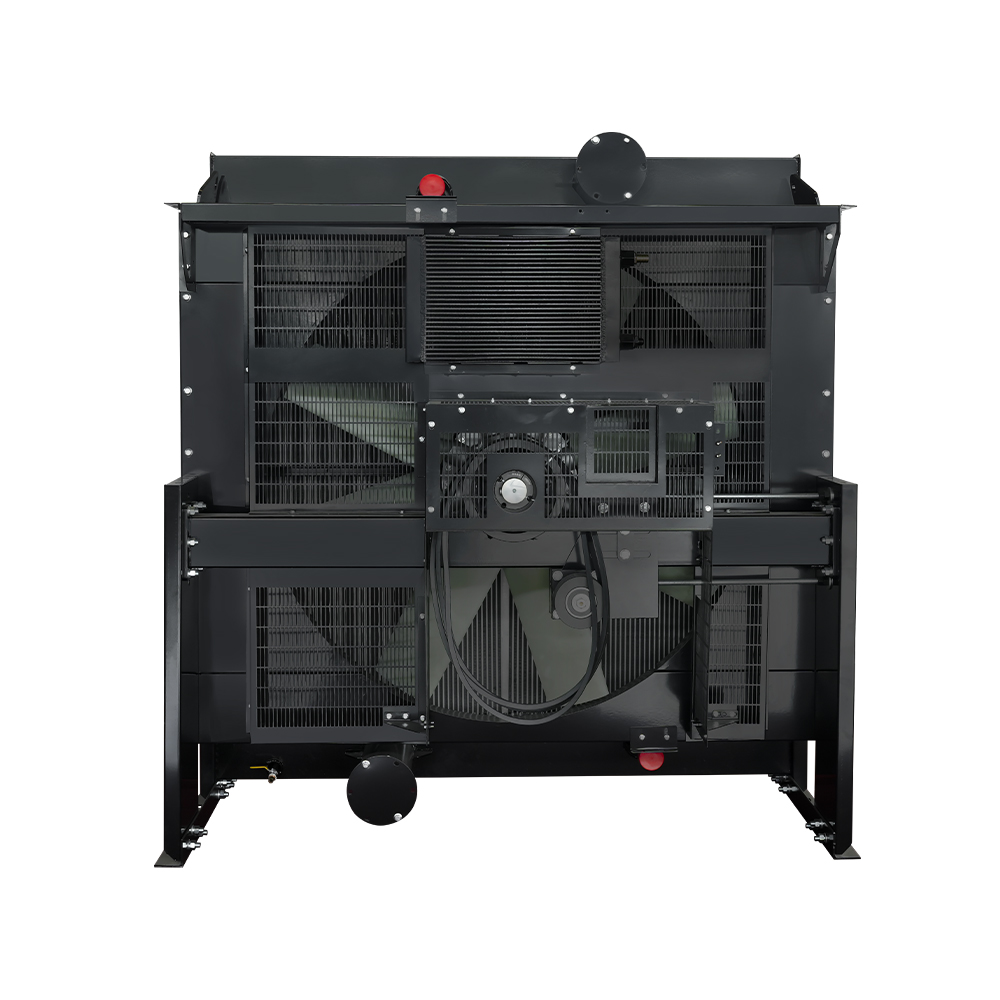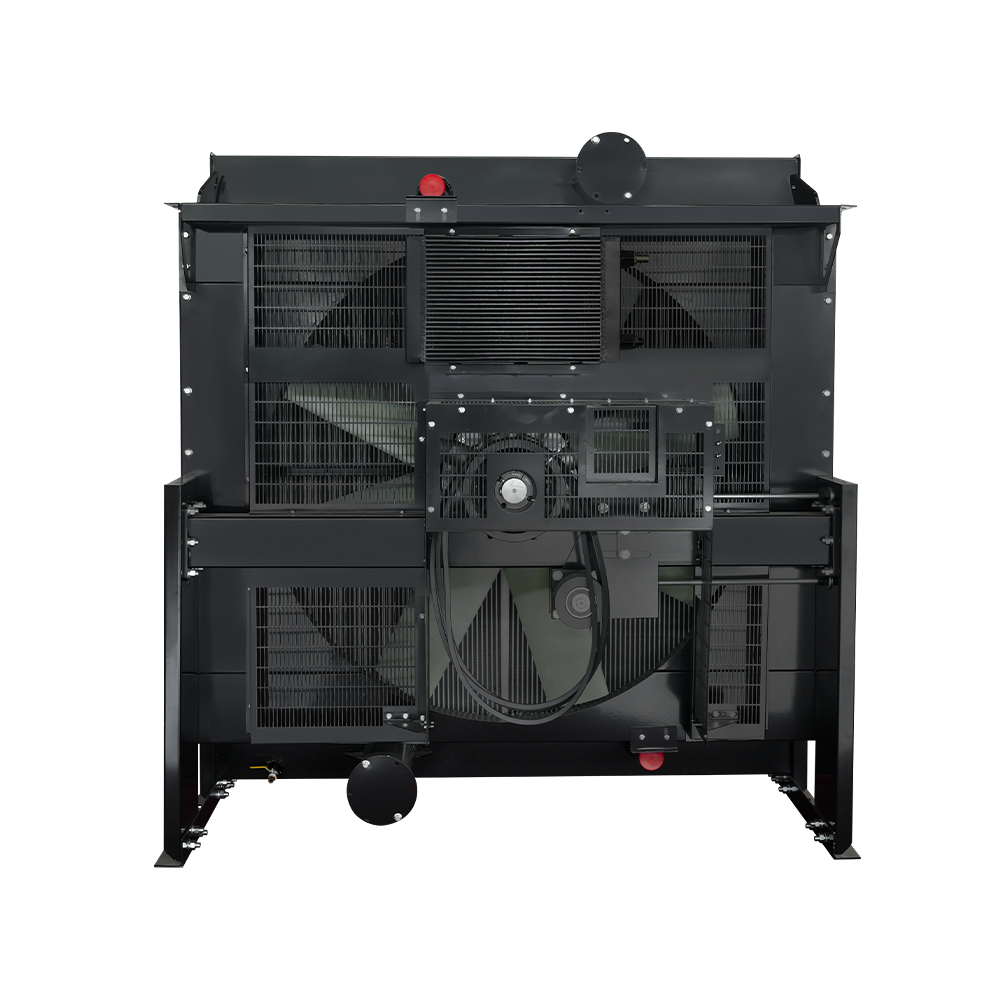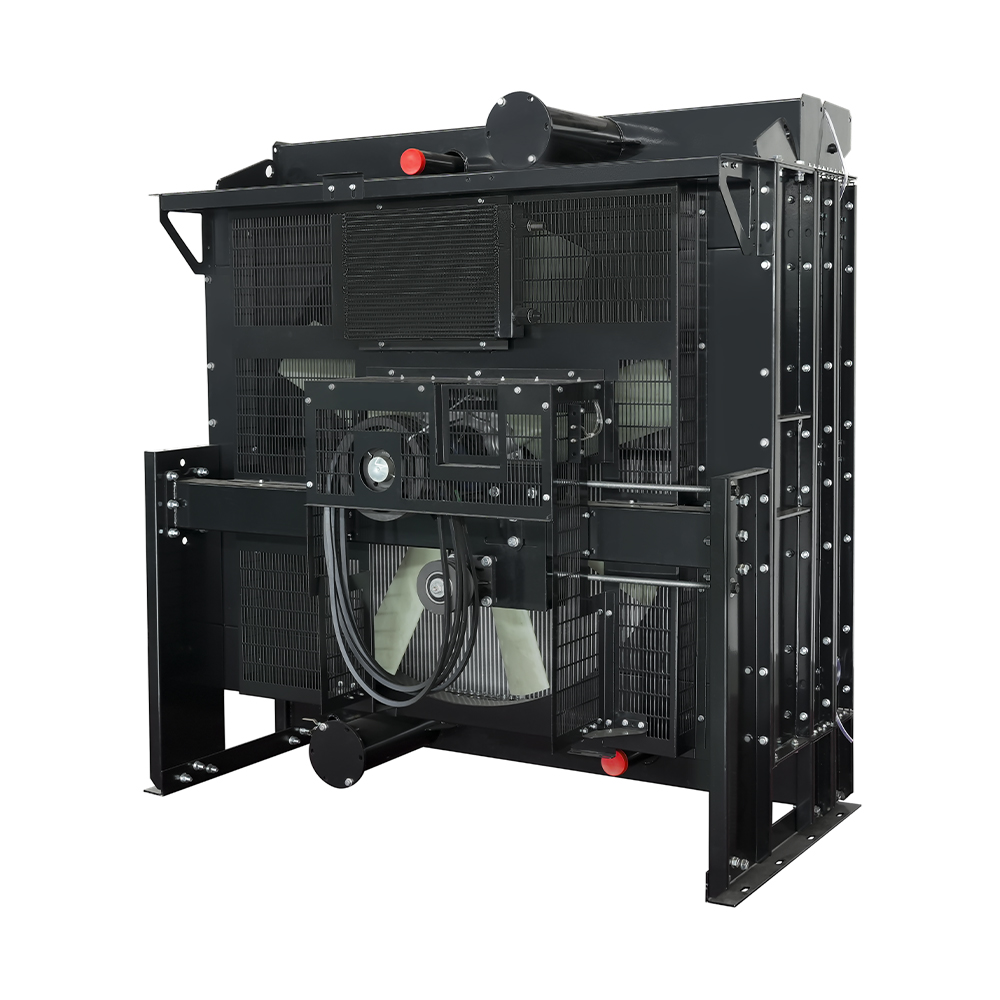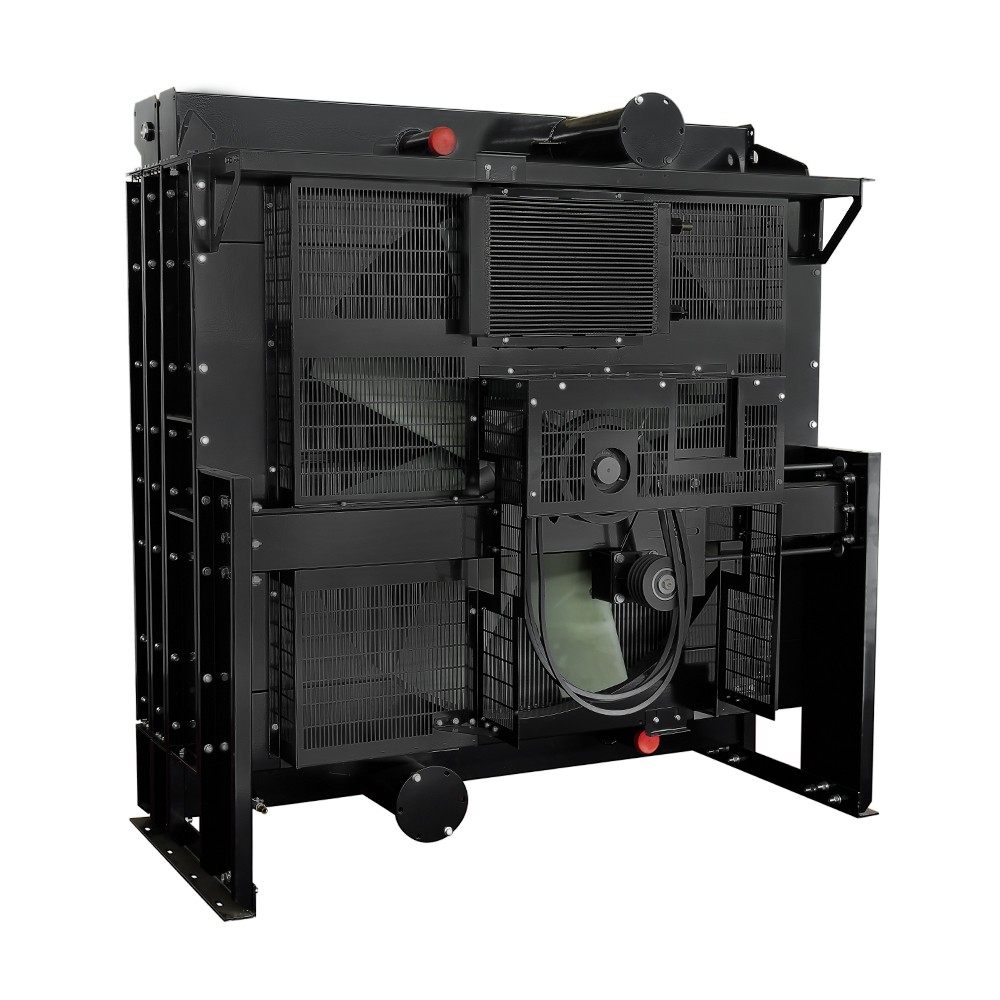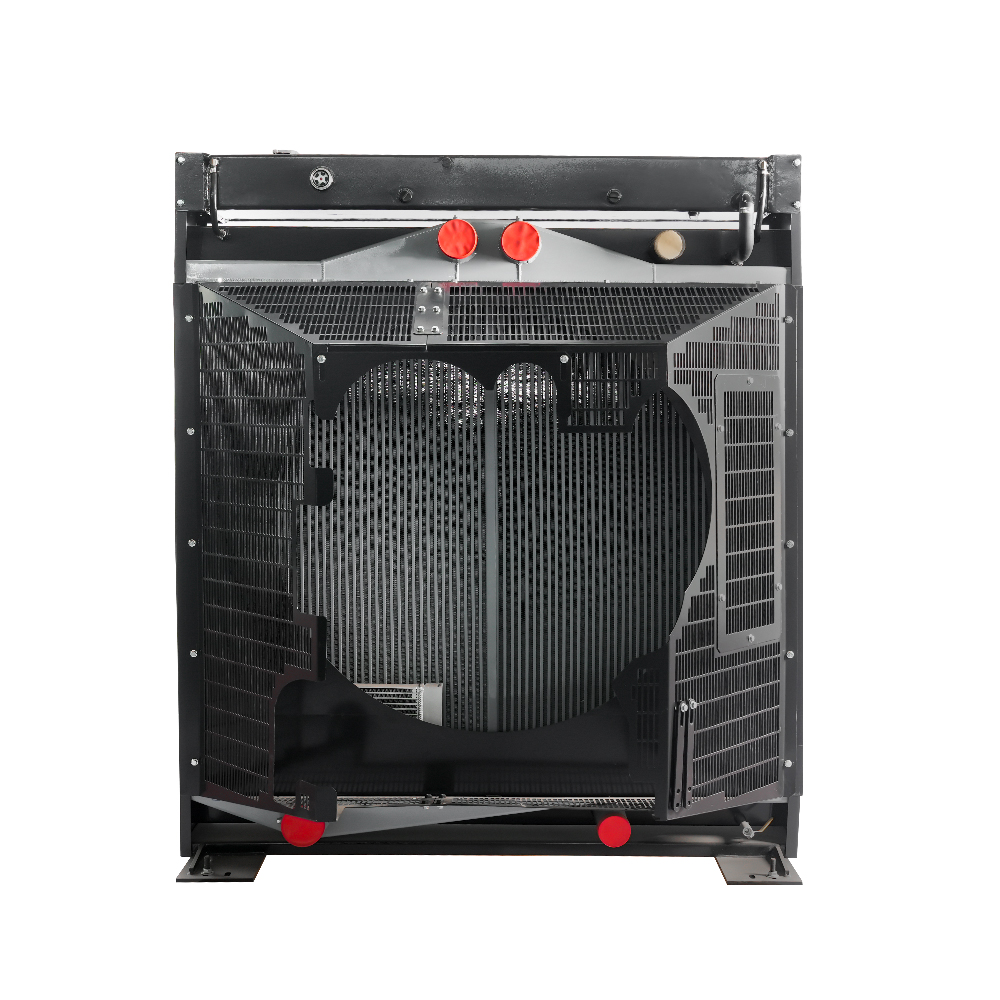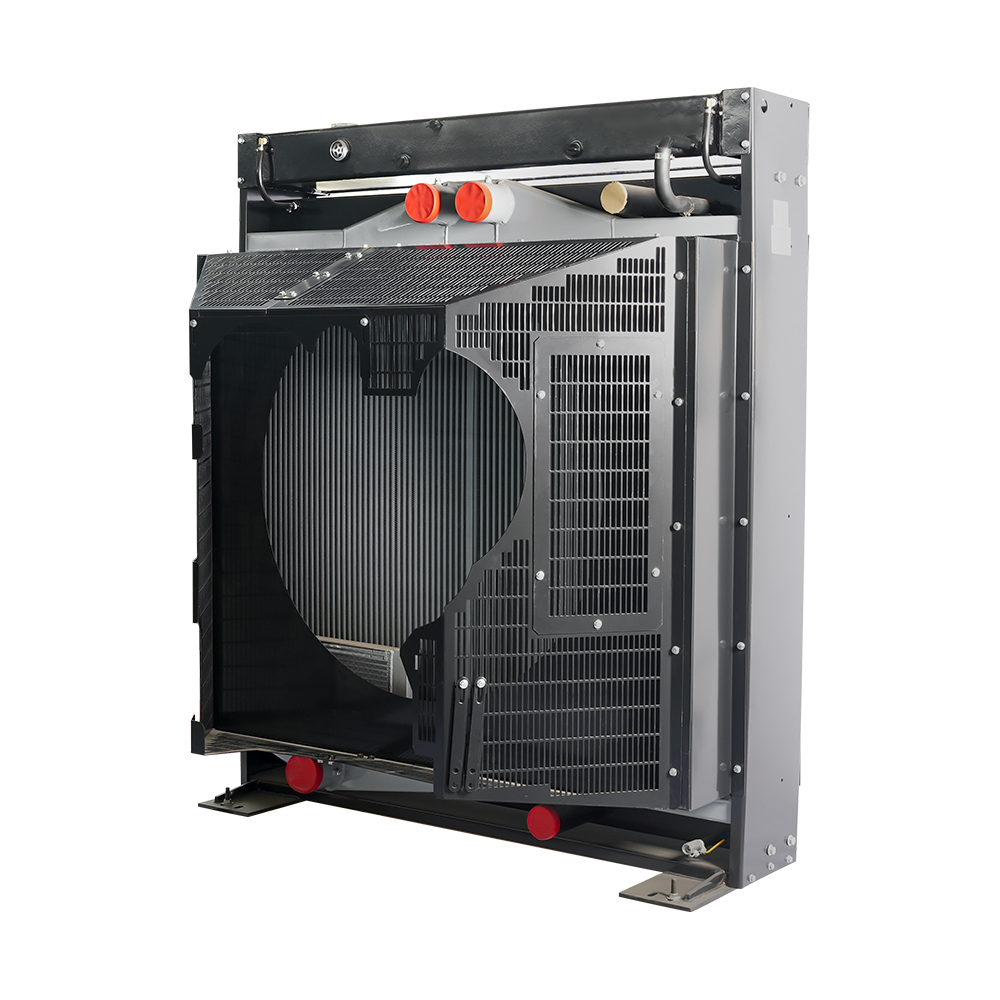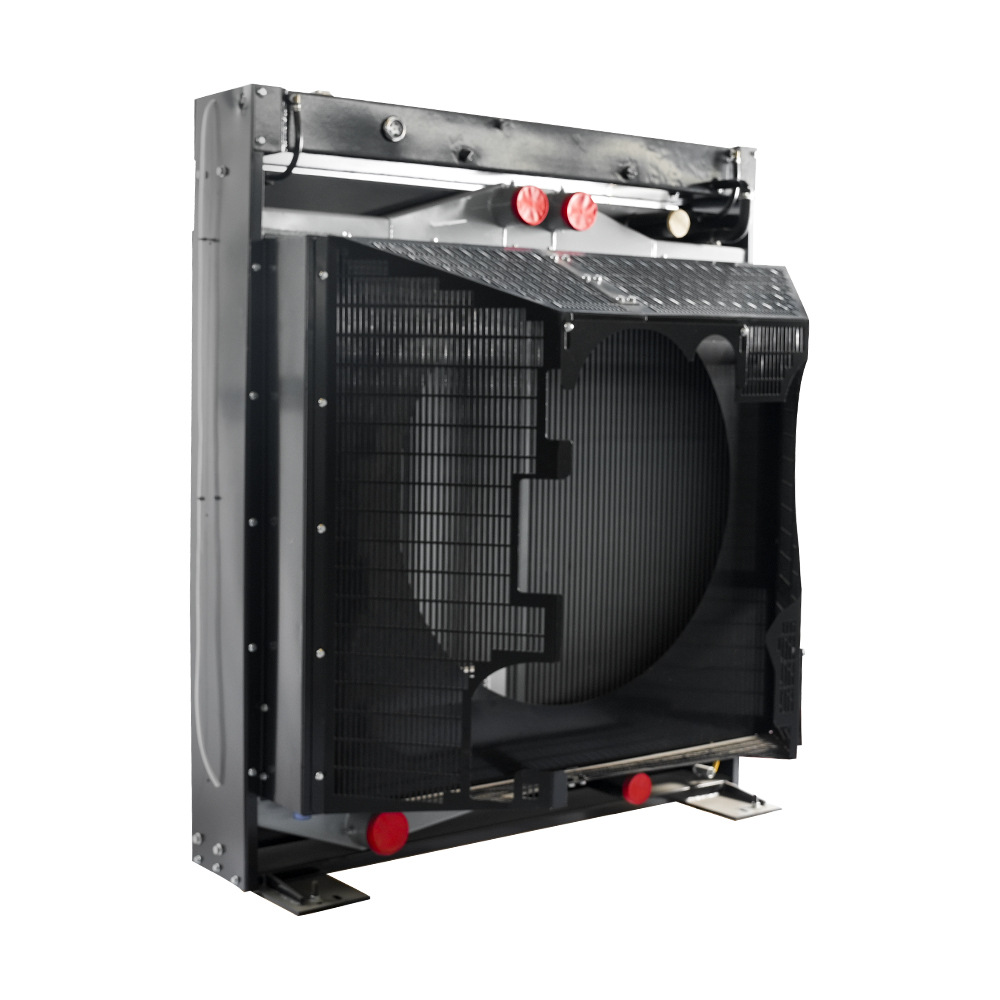
Radiator compatible with Perkins engine.
| No. | Model | Installation Dimensions Diameter*Center Height |
Radiator Dimensions Height*Width*Thickness |
Water Capacity (L) |
Weight (KG) |
Heat Dissipation Area (M²) |
| 1 | 403D-11G-1 Aluminum-plastic | Φ350*395mm | 755*390*377*270mm | 4.1 | 11.6 | |
| 2 | 403D-15G-1 Aluminum-plastic | Φ350*395mm | 689*432*293*165mm | 4.1 | 21 | 11.6 |
| 3 | 404D-22G-1 Aluminum-plastic | Φ350*395mm | 689*432*322*165mm | 4.1 | 20 | 11.6 |
| 4 | 404D-22G-51 | Φ470*388mm | 731*603*295*170mm | 6 | 28 | 14.8 |
| 5 | 404EA-22 | Φ410*435mm | 735*536*233mm | Purchased core | Purchased core | |
| 6 | 1006TAGE | φ648*448mm | 932*766*400*320mm | 13.5 | 31.7 | |
| 7 | 1006TG1A-1 | Φ610*429mm | 932*700*415245mm | 11.6 | 22 | |
| 8 | 1104C-44TA | Φ586*414mm | 842*716*439295mm | 12.2 | 56 | 25.3 |
| 9 | 1106A-70TAG | Φ701*523mm | 1115*930*580mm | Heat exchanger | Heat exchanger | |
| 10 | 2206C-E13TAG3 | φ980*818mm | 1550*1136*850*480mm | 50.5 | 145 | 126.2 |
| 11 | 2506C-E15TAG1 | Φ980*818mm | 1545*1136*850mm | 50.5 | 157 | 126.2 |
| 12 | 2806A-E18TAG2 | Φ995*864mm | 1755*1510*850mm | 60.7 | 187.4 | |
| 13 | 2806A-E18TAG2-1 All-aluminum | Φ980*865mm | 1785*1478*794*424mm | 46.6 | 157 | |
| 14 | 3012-TAG3A | Φ1180*851mm | 1640*1526*820*450mm | 51.9 | 163.6 | |
| 15 | 4006-23TAG3A-P | Φ1400*1050mm | 2044*1719*1150mm | 93.9 | 537 | 258 |
| 16 | 4008-30TAG3-P | Φ1630*1140mm | 2204*2119*1107mm | 119.2 | 680 | 338.2 |
| 17 | 4008TAG2A-P | Φ1470*1090mm | 2114*2019*1152mm | 111.7 | 658 | 246 |
| 18 | 4012-46TAG2A-P | Φ1730*1190mm | 2304*2219*1167mm | 126.9 | 682 | 308.1 |
| 19 | 4012-46TAG3A-P | Φ1730*1190mm | 2304*2219*1167mm | 132.9 | 695 | 387.9 |
| 20 | 4012-46TWG2A-P | Φ1630*1070mm | 2114*1919*977mm | 87.8 | 496 | 246.7 |
| 21 | 4016-61TRG3-P | Φ2020*1350mm | 2674*2619*1192mm | 61 | 980 | 89.2 |
| 22 | 4016TAG2A-P | Φ2020*1340mm | 2614*2269*1192mm | 152.8 | 730 | 368.8 |
| 23 | HGPBJ---4012-46TAG2A-1000 | Heat exchanger | 2270*1805*715mm | Heat exchanger | Heat exchanger | |
| 24 | HGPBJ---4012-46TAG3A-1000 | Heat exchanger | 2310*1800*715mm | 156 | 1100 | 10 |
| 25 | CHG---620L6-RQWS-1 | Horizontal water tank | 2610*2300*4501mm | Outsourcing | 1083.5 | Outsourcing |
| 26 | KT-C18-500KW-100000000 | Horizontal water tank | 1830*1178*515mm | oil cooler | oil cooler | |
| 27 | WS---1300KW-00000000GP | Horizontal water tank | 1492*4483*2086mm | 60.7 | 1200 | Purchased core |
| 28 | WS---1300KW-010302000GP | Horizontal water tank | 1500*4500*2065mm | 74 | 230 | |
| 29 | WS---1300KW-10000000GP | Horizontal water tank | 1492*4483*2086mm | 60.7 | 1200 | Purchased core |
| 30 | WS---1600KW-01140300GP | Φ1*1mm | 2040*6386*2315mm | 500 | 1200 | 500 |
| 31 | WS---2000KW-000030000LGP | Horizontal water tank | 1493*2080*3450mm | 49.4 | 1600 | 61.3 |
| 32 | WS---2000KW-10003000GP | Horizontal water tank | 1360*2210*3510mm | Heat exchanger | 1310 | Heat exchanger |
| 33 | WS---250KW-01251500GP | Horizontal water tank | 1130*1175*3340mm | 62.4 | 128.1 |
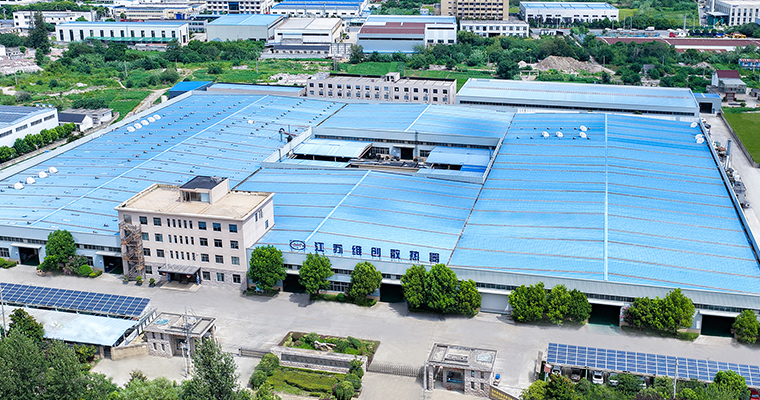
From our beginnings in generator set and radiator manufacturing in 2003, we've now expanded our business to over 30 countries with a workforce of more than 250 employees. As an established R&D and manufacturing enterprise for generator set radiators, OEM Suitable for Radiators compatible with Perkins engine Manufacturers and Suitable for Radiators compatible with Perkins engine Suppliers, operates two standardized production bases spanning over 60,000 square meters. With a technical team of 50+ core engineers, we have built a comprehensive industrial system covering R&D, production, and testing, achieving an annual production capacity of 150,000 units/sets. As Suitable for Radiators compatible with Perkins engine Factory, Professional advanced sheet metal radiator manufacturing equipment to ensure the quality of the products, high efficiency and delivery guarantee.
News and Information
Industry Knowledge
When selecting Perkins generator radiators, the practical check is heat rejection under your worst-case site conditions, not the nameplate output alone. Ask for the assumed ambient temperature, altitude, coolant mixture, fan power, and allowable coolant/air temperature rise (ΔT). A radiator that looks “adequate” at 25°C can become marginal at 40–50°C once airflow losses and derating stack up.
A constructive buyer move is to confirm the margin: aim for a measurable reserve (not a zero-sum match) so dust loading, fin aging, and belt/fan tolerances don’t push you into high coolant temperature alarms.
Core selection is a balancing act: high fin density can improve heat transfer in clean environments, but it clogs faster in dusty/agricultural sites and becomes hard to wash without fin damage. If your genset lives in real-world air (pollen, soot, sand), prioritize designs that maintain airflow when partially fouled.
In my quotes, I keep it simple: choose what you can keep clean. A slightly “less aggressive” fin spec often outperforms a dense core over the operating year.
Radiator longevity is usually limited by corrosion, vibration fatigue, or poor coolant chemistry—not by “insufficient thickness.” The buyer advantage is to align core material and tube/fin construction with your environment and service habits. If you operate in salty air or wash frequently, pay attention to fin corrosion resistance and joint integrity.
One high-value habit: insist on a coolant management plan—stable inhibitor levels reduce internal corrosion and prevent scale that insulates heat transfer surfaces.
Many overheating cases are airflow problems disguised as radiator problems. A well-matched shroud and fan spacing can unlock meaningful performance without changing the core. Conversely, a restrictive guard, tight enclosure, or long duct run can quietly erase your safety margin.
If you want an easy win, treat airflow like a system: core + fan + shroud + discharge path. I like to help buyers avoid paying for “bigger metal” when the real fix is cleaner airflow.
| Item to Confirm | Why It Matters | What “Good” Looks Like |
|---|---|---|
| Ambient & altitude assumptions | Defines derating and airflow density | Worst-case site condition used for rating |
| Airflow restrictions (ducts, louvers, guards) | Reduces fan flow and capacity | Pressure drop budget documented |
| Coolant type & mixture | Affects heat transfer and corrosion control | Compatible inhibitors, monitored intervals |
| Mounting & vibration isolation | Prevents tube fatigue and leaks | Proper isolators and aligned pipework |
| Maintenance access (wash, inspection) | Sustains performance over time | Clear wash path, fin protection plan |
If you’re sourcing a Perkins generator radiator, confirming the table items up front usually saves far more time than swapping parts later. I prefer to lock these details before production so you get a cleaner install and predictable temperatures.
A smart commissioning practice is to capture baseline temperatures at known loads (e.g., 50%, 75%, 100%) and record ambient conditions. Later, you can detect degradation early: rising coolant temps at the same load typically indicate fouling, airflow loss, or coolant-side restriction.
If you want the “quiet confidence” setup, target a commissioning outcome where stabilized coolant temperature remains comfortably below alarm thresholds at your true site ambient, not just in a lab-like day.



 English
  русский
  Français
  Indonesia
  عربى
عربى  中文简体
中文简体