English
  русский
  Français
  Indonesia
  عربى
عربى  中文简体
中文简体
information to be updated


information to be updated

Similar to a heat exchanger but optimized for specific thermal transfer requirements, offering tailored designs for unique operating environments.
| Core Material | Copper / Aluminum / Stainless Steel |
| Cooling Capacity | 20 kW – 2500 kW |
| Core Dimensions | Custom-engineered sizes |
| Fin Structure | Plate or tube construction |
| Operating Temperature Range | -25°C to +55°C |
| Pressure Rating | 3.0–6.0 bar |
| Surface Treatment | Protective coating |
| Mounting Options | Frame-mounted or integrated |
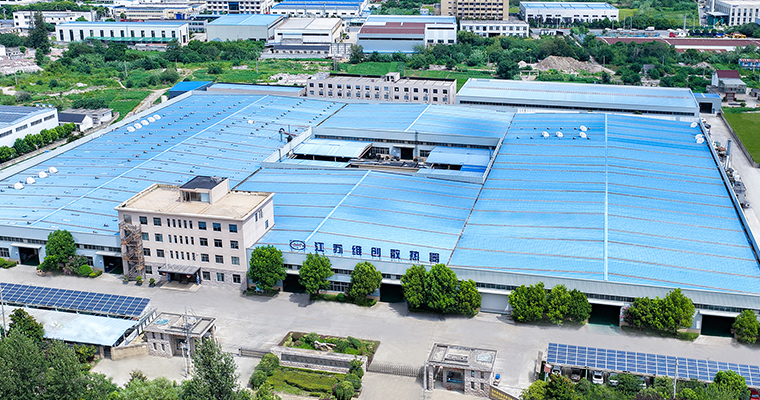
From our beginnings in generator set and radiator manufacturing in 2003, we've now expanded our business to over 30 countries with a workforce of more than 250 employees. As an established R&D and manufacturing enterprise for generator set radiators, OEM Thermal Exchanger Manufacturers and Thermal Exchanger Suppliers, operates two standardized production bases spanning over 60,000 square meters. With a technical team of 50+ core engineers, we have built a comprehensive industrial system covering R&D, production, and testing, achieving an annual production capacity of 150,000 units/sets. As Thermal Exchanger Factory, Professional advanced sheet metal radiator manufacturing equipment to ensure the quality of the products, high efficiency and delivery guarantee.
News and Information
Industry Knowledge
A Thermal Exchanger is a specialized thermal transfer device developed on the basis of conventional heat exchanger principles, with design optimization focused on specific operating conditions and performance targets. In generator and industrial power systems, thermal exchangers are applied where standard radiator solutions cannot fully meet space constraints, pressure requirements, or environmental challenges.
By tailoring core materials, internal flow paths, and fin structures, thermal exchangers enable precise control of heat dissipation efficiency and pressure stability, making them suitable for customized power generation and energy systems.
Thermal exchangers are engineered using different core materials based on thermal conductivity, corrosion resistance, and mechanical strength requirements. Material selection directly affects service life and system compatibility.
Each thermal exchanger core is custom-engineered to match the operating parameters of the generator system, including coolant type, flow rate, and ambient temperature range.
The internal structure of a thermal exchanger determines how effectively heat is transferred between working fluids. Plate and tube constructions are commonly adopted to meet different layout and performance requirements.
These structures enable thermal exchangers to operate reliably across a wide cooling capacity range, from small auxiliary systems to large-scale power generation units.
Thermal exchangers are designed to support higher pressure ratings compared with standard radiators, making them suitable for systems with demanding circulation requirements.
| Core Material Options | Copper / Aluminum / Stainless Steel |
| Cooling Capacity | 20 kW – 2500 kW |
| Operating Temperature | -25°C to +55°C |
| Pressure Rating | 3.0 – 6.0 bar |
The extended pressure range supports stable thermal transfer in closed-loop systems and integrated cooling modules operating under continuous load.
To adapt to diverse operating environments, thermal exchangers are treated with protective surface coatings. These coatings reduce the impact of moisture, salt spray, and industrial pollutants while maintaining consistent thermal performance.
The combination of material selection and surface treatment supports long-term operation in outdoor, marine, or industrial installations where environmental exposure is a key consideration.
Thermal exchangers can be supplied as frame-mounted units or integrated directly into generator assemblies, depending on system layout and installation requirements. Custom-engineered dimensions and connection interfaces support seamless integration with existing power equipment.
Supported by established R&D and production capabilities, Weichuang provides thermal exchanger solutions developed through controlled manufacturing processes, performance testing, and application-oriented design, supporting consistent quality and adaptability across different power generation projects.