


 English
 русский
 Français
 Indonesia
 عربى
 中文简体


Generator cooling system: Applications, Selection Criteria, and Practical Guidance
Content
A generator cooling system is sometimes treated as a radiator, a fan, and a few hoses. In practice, it is a small thermal network that decides whether a generator runs comfortably or slowly cooks itself. For most diesel generator sets, the engine cooling loop and the alternator air path do most of the work. For very large power plant generators, water and hydrogen cooling may enter the picture. The principles are similar: absorb heat, move it away, and reject it to the surrounding air or water without creating new problems.
What a Generator Cooling System Has to Remove
Heat in a generator set comes from several places at once. Combustion in the engine produces the largest heat load. Engine oil carries heat away from bearings and moving parts. Charge air may be cooled after turbocharging. The alternator also produces heat as current flows through its windings, and the enclosure can trap that heat unless air has a clear path in and out.
The cooling system has to manage these loads under very different conditions: a cold morning start, a long prime-power run, a dusty construction site, or a salt-laden coastal installation. A radiator that performs well on a test bench can still struggle if the fan is undersized, the airflow is blocked, or the coolant mixture is wrong. That is why cooling is not a single part decision. It is a system decision.
The Main Cooling Paths in a Generator Set
Packaged generator sets usually rely on two everyday cooling paths, with a third path reserved for larger power generation equipment.
Liquid cooling for the engine
A water pump circulates coolant through the engine block, cylinder head, oil cooler, and sometimes the charge-air cooler. The thermostat opens as the coolant warms, allowing flow to the radiator. The fan pulls air through the core, and the heat leaves through the fins. Pressure cap, hoses, clamps, and expansion tank all matter because a small leak or a weak cap can lower boiling point and invite overheating.
Air cooling for the alternator and enclosure
Many alternators use a shaft-mounted fan to move air across the windings. In an open set, that air may come from the room. In a soundproof canopy, it must come through carefully placed inlet and outlet louvers. If hot air recirculates back into the enclosure, the alternator runs hotter even when the engine radiator looks fine. Cleaning screens, checking louver clearance, and keeping the hot-air outlet away from the inlet are simple but valuable habits.
Water and hydrogen cooling in large power plant generators
Large turbine-driven generators often use water for stator cooling and hydrogen for rotor cooling. These are specialized systems with their own purity, pressure, and safety requirements. They are not the same as a diesel generator radiator loop, but they follow the same logic: heat must be transferred through a medium and then rejected through a heat exchanger. For most standby, prime, industrial, and rental generator sets, the practical focus remains coolant and airflow.
| Cooling path | Main heat source | Typical hardware | What to watch |
|---|---|---|---|
| Engine liquid cooling | Combustion, oil, charge air | Radiator, fan, pump, thermostat, hoses | Coolant level, pressure cap, airflow, leaks |
| Alternator air cooling | Winding and bearing losses | Fan, ducts, louvers, screens | Blocked screens, hot-air recirculation |
| Large generator water or hydrogen cooling | Stator and rotor losses | Heat exchangers, pumps, gas systems | Purity, pressure, flow, specialist service |
Radiator Sizing Is Where Experience Matters
A radiator is not selected by engine horsepower alone. The heat rejection requirement depends on ambient temperature, altitude, coolant mixture, airflow resistance, fan power, and the duty cycle of the set. A radiator that is generous in a mild climate may be marginal in a desert summer. A core with the right face area but poor fin spacing may clog quickly in a dusty environment. A low-profile core may fit the canopy but leave too little room for service access.
In our experience building generator radiators, the useful questions come before the drawing: Where will the set run? How often? What is the highest expected ambient temperature? Is the enclosure restrictive? Will the machine be serviced in the field with basic tools? When the answer falls outside a standard catalog range, a custom core, fan shroud, or mounting arrangement is often the cleaner solution. You can review the range of customized generator radiator options when a standard replacement does not fit the duty or the space.
Matching Cooling to the Application
Application has a strong influence on cooling design. An industrial generator running in a plant room has different airflow needs from a rental unit that moves between sites. A desert installation may need extra core area and a cleaning plan. A coastal site may need corrosion protection on the core, frame, and fasteners. A silent canopy needs careful inlet and outlet paths so sound attenuation does not become a heat trap.
 Industrial Generator Radiators for Demanding Power ApplicationsHeavy-duty radiators for continuous industrial generator sets, with configurable cores and anti-dust treatment to support predictable cooling and maintenance.View Product →
For industrial sites, the goal is usually predictable performance and easy maintenance. Guards, drain points, and accessible fan belts matter as much as heat rejection. For hot, dry locations, oversized cores and wide fin spacing can help the radiator keep its capacity after dust builds up.
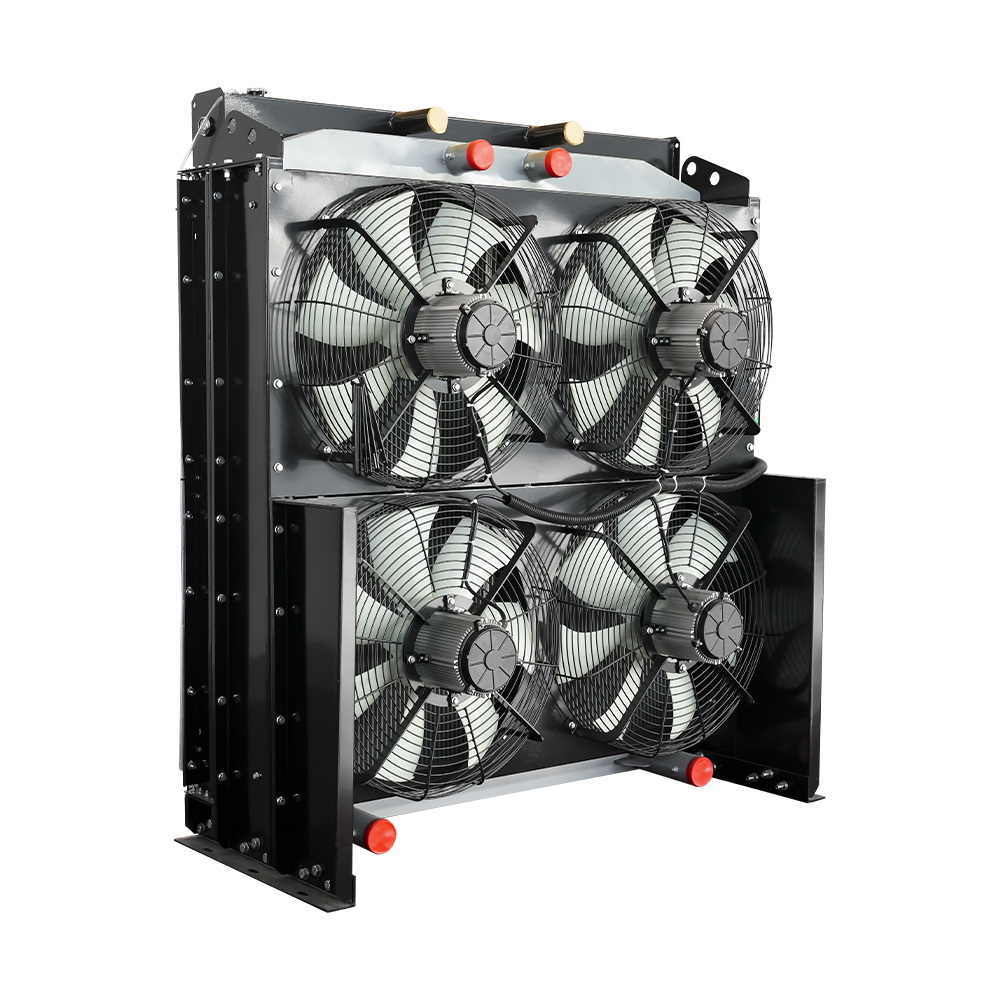 Desert High-Temperature Generator Radiators for Extreme HeatRadiators with enlarged cores, high-capacity fans and sand-resistant fin spacing for generator sets facing ambient temperatures above 50°C.View Product →
For soundproof sets, the radiator must work with the canopy rather than against it. Recirculation is a common hidden fault: hot air exits, curls around the enclosure, and returns through the inlet. Fixing the ducting or adding a baffle often does more than changing the core.
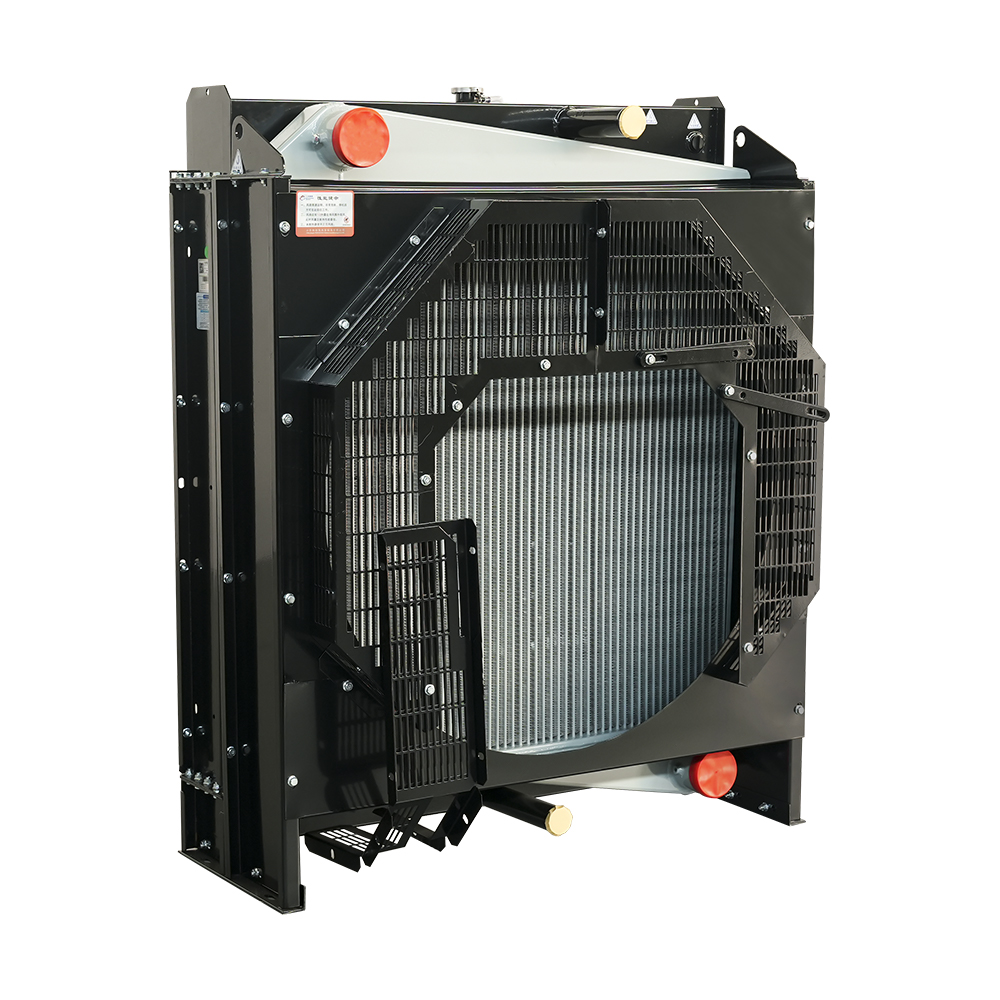 Silent Generator Radiators for Soundproof EnclosuresCompact low-noise radiators for acoustic generator canopies, designed to maintain engine temperature while supporting quiet operation in urban and residential applications.View Product →
Warnings, Maintenance, and a Practical Checklist
Overheating rarely appears without warning. Coolant may be low, but the cause might be a worn hose, a sticking thermostat, a failing pressure cap, a clogged core, a slipping belt, or a fan that is moving air in the wrong direction. A temperature gauge that climbs under load is telling you to look at the whole path, not just the radiator.
Routine checks should be simple enough to actually happen. Before the set starts, look for leaks, loose clamps, and debris on the screens. At service intervals, clean the core from the fan side, check the coolant mixture, inspect the belt, and confirm that the enclosure vents are clear. After any repair, run the set under load and watch the temperature rather than trusting a short no-load run. Our generator cooling and radiator FAQ covers several of the practical questions that come up during maintenance and replacement.
- Check coolant level and strength when the engine is cold.
- Inspect hoses, clamps, and the pressure cap for signs of wear.
- Clean radiator fins and enclosure screens without bending them.
- Confirm fan rotation, belt tension, and unobstructed airflow.
- Watch temperature under realistic load, not just idle speed.
- Record repeat faults so a small leak is not treated as a mystery.
A generator cooling system does not need to be complicated, but it does need to be matched to the machine and the place it works. The engine, alternator, radiator, fan, and enclosure all share the same thermal budget. When one part is changed without considering the others, the result is often a hotter set, a shorter component life, and maintenance that repeats itself. A careful review of the cooling load and the site conditions is usually the most economical first step.

- Product Categories
- Contact Us
-
- wcradiator@jswcsrq.com
- +86-514-400-180-4088
- +86-15152759383
- +86-15152759383
- No. 6 Road, Shaobo Industrial Concentration Zone, Jiangdu District, Yangzhou City, Jiangsu Province, China

