


 English
  русский
  Français
  Indonesia
  عربى
عربى  中文简体
中文简体

Generator Radiator Cross Reference: OEM, Size & Brand Match Guide
Content
- 1 Why Cross-Reference a Generator Radiator?
- 2 Method 1: Direct OEM Part Number Matching
- 3 Method 2: Dimensional Cross-Reference — The Five Critical Measurements
- 4 Method 3: Application-Based Cross-Reference — Environment Changes Everything
- 5 Generator Radiator Cross-Reference: Brand-by-Brand Guide
- 6 Common Cross-Reference Mistakes and How to Avoid Them
- 7 When Cross-Reference Fails: Custom Radiator Solutions
A single wrong radiator purchase can idle a 2-megawatt generator for three weeks. That downtime costs mining operations roughly $180,000 in lost productivity before a single wrench turns. Yet field technicians routinely order replacement radiators armed with nothing more than a faded OEM sticker and crossed fingers. The reality of generator radiator cross reference work is harsher than most realize: part numbers get superseded, dimensions shift between production years, and two radiators that look identical from ten feet away can have inlet positions that differ by four critical inches. Getting this right demands more than a database lookup.
Generator radiator cross referencing sits at the intersection of three variables: the OEM part number you have in hand, the physical dimensions of the core and connections, and the actual operating environment where that radiator must perform. Rely on just one of these and you risk a mismatch. Use all three and you eliminate nearly every common failure point. This guide walks through each method independently, then shows how they combine into a verification system that works across Cummins, Perkins, Weichai, and other major genset brands.
Why Cross-Reference a Generator Radiator?
Three scenarios drive nearly all radiator cross reference work. The first is simple: the OEM part number has been discontinued or superseded, and the original manufacturer no longer stocks a direct replacement. The radiator itself might be fifteen years old on a generator that still runs daily. The second scenario is cost-driven. OEM radiator assemblies for industrial generators frequently carry price tags two to three times higher than equivalent aftermarket units built to the same core specifications. Fleet managers running mixed-brand generator parks know this math intimately. The third scenario is fleet standardization. When a rental power company operates thirty generators split across four brands, maintaining separate radiator inventories for each brand creates logistical chaos. Cross-referencing allows consolidation to one or two radiator models that cover the entire fleet.
Each of these scenarios shares a common requirement: the replacement radiator must match the original in every performance-critical dimension. Cooling capacity cannot be estimated. Inlet and outlet positions cannot be approximated. A cross reference that ignores even one parameter creates a radiator that fits on paper but fails in service.
Method 1: Direct OEM Part Number Matching
Direct OEM part number matching remains the most accurate cross reference method when it works. You take the original part number stamped on the radiator core or listed in the generator service manual, and you match it against a database of known equivalents. Accuracy approaches 100% when the database is current and the part number is unambiguous. The problem surfaces when databases lag behind supersessions, or when the same part number maps to multiple variants depending on the generator's production year.
Start by locating the OEM number. On generator radiators, this is typically stamped into the top or side tank, or printed on a metal tag riveted to the core frame. Perkins and Cummins both use alphanumeric formats that can run 8 to 15 characters. Once you have the number, cross-check it against at least two independent sources. Relying on a single database introduces risk; a second source confirms that the listed equivalent is not a near-match that misses one critical specification.
This method excels when you need a direct, factory-spec replacement with zero dimensional variation. It fails when the OEM part number has been retired without a published successor. In those cases, you shift to dimensional cross-referencing.
| Factor | OEM Number Matching | Dimensional Cross-Reference |
|---|---|---|
| Accuracy potential | Very high (database-dependent) | High (measurement-dependent) |
| Time required | 5 to 15 minutes | 30 to 60 minutes |
| Skill level needed | Low — basic lookup | Moderate — precise measurement |
| Works for discontinued parts | Only if supersession recorded | Yes — fully independent |
| Risk of fitment error | Low (if database verified) | Moderate (user measurement error) |
Method 2: Dimensional Cross-Reference — The Five Critical Measurements
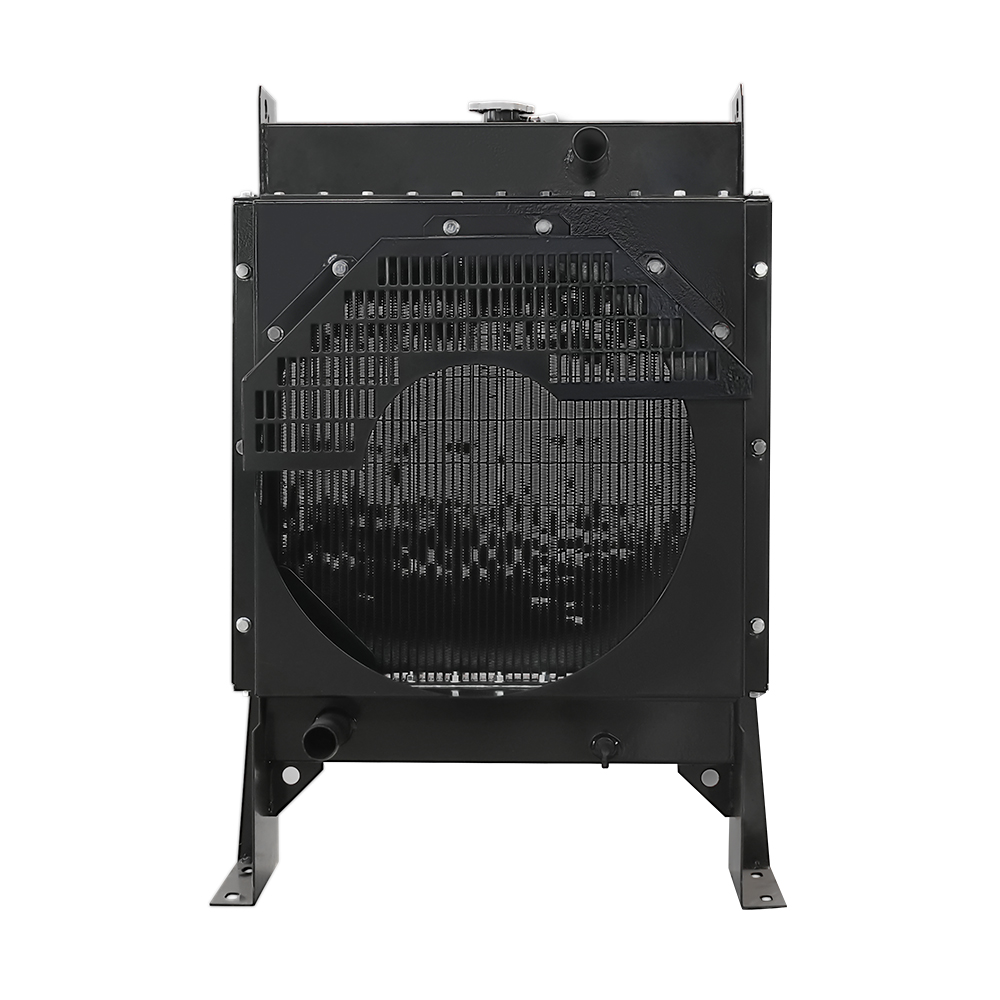
When the OEM number leads nowhere, dimensional cross-referencing becomes the primary method. This approach treats the radiator as a set of physical parameters rather than a catalog entry. The logic is straightforward: if the core matches in size, the connections land in the same positions, and the mounting points align, the radiator will fit regardless of what part number it carries.
Five measurements matter above all others. Miss one and the radiator may bolt in but fail to circulate coolant properly, or worse, not bolt in at all.
- Core width, height, and thickness. Measure the finned area only — not the tanks or mounting flanges. Core dimensions determine the radiator's total heat rejection capacity. A core that is 10% smaller may run adequately in mild climates but overheat in ambient temperatures above 40 degrees Celsius.
- Inlet and outlet diameter and position. Record the internal diameter of both hose connections and measure their location relative to the core edges. An outlet shifted two inches left on a Perkins 4000-series radiator will prevent the standard hose from reaching without an awkward and failure-prone adapter.
- Mounting bracket spread and bolt-hole diameter. Generator radiators use side-mounted or base-mounted brackets. Measure center-to-center distance across bolt holes. Brackets that are 10mm off will require slotting or drilling — modifications that void most warranties.
- Overall radiator height including the pressure cap neck. The filler neck often extends above the top tank. In containerized generator sets, this extra inch can prevent the enclosure door from closing.
- Core construction material. Identify whether the original is aluminum-core with plastic tanks, all-aluminum welded, or copper-brass. Material choice affects weight, corrosion resistance, and repairability. An all-aluminum radiator offers different long-term durability characteristics than a plastic-tank unit, especially in high-vibration generator applications.
Use a digital caliper for all diameter measurements. Tape measures introduce enough error to cause fitment issues. Photograph every measurement with the caliper reading visible. This creates a record you can reference if the replacement arrives and something does not align.
Method 3: Application-Based Cross-Reference — Environment Changes Everything
Two generators running identical engines can require entirely different radiators if one sits in a temperature-controlled indoor plant and the other operates on an open-pit mining bench at 45 degrees Celsius ambient. Application-based cross-referencing accounts for these environmental demands. The engine model tells you the baseline cooling requirement. The operating environment tells you how much additional capacity the radiator needs.
For example, a Cummins QSK60 in a prime power application at sea level requires a specific core face area and coolant flow rate. The same engine used for emergency standby in a coastal data center might use a slightly smaller radiator because it runs only during outages. But put that QSK60 in a mining site generator at 3,000 meters elevation, and you now need a radiator with 20 to 30% greater heat rejection capacity due to reduced air density. The OEM part number alone will not capture this distinction.
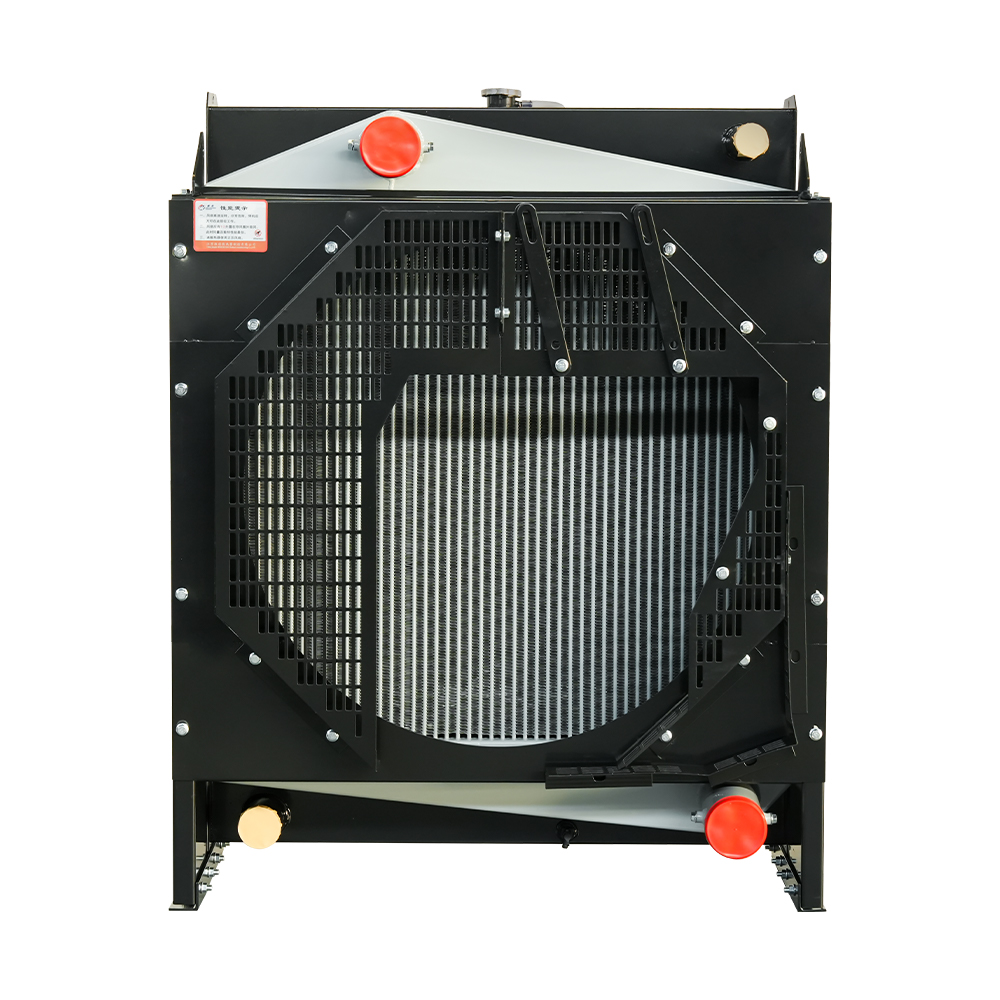
Three environmental factors directly affect radiator cross reference decisions. Altitude reduces air density and thus the radiator's ability to shed heat — every 1,000 meters of elevation reduces cooling efficiency by roughly 9 to 11%. Ambient temperature sets the temperature differential between coolant and incoming air; a radiator sized for 35 degrees Celsius will struggle at 50 degrees Celsius. Airborne contaminants like dust, salt spray, or chemical fumes dictate fin spacing and material coatings. A radiator with 8 fins per inch works well in clean conditions but clogs rapidly in dusty environments, where 6 fins per inch with wider spacing survives far longer between cleanings.
| Parameter | Standard Indoor | Desert / Mining | Coastal / Marine |
|---|---|---|---|
| Core thickness | 4-row standard | 6-row high-capacity | 5-row with coating |
| Fin spacing | 8 FPI | 6 FPI (anti-clog) | 7 FPI with epoxy coat |
| Material | Aluminum/plastic | All-aluminum welded | Cupro-nickel or coated Al |
| Fan shroud | Standard clearance | Extended high-flow | Corrosion-resistant |
| Pressure cap rating | 10 psi | 15 psi | 13 psi |
Generator Radiator Cross-Reference: Brand-by-Brand Guide
Generator radiator interchangeability varies significantly by brand. Some manufacturers standardize core dimensions across multiple engine families; others change radiator specifications between production batches of the same engine model. Understanding these patterns accelerates cross reference work and helps you avoid assumptions that produce mismatches.
Cummins Generator Radiators
Cummins power generation radiators for the QSK and KTA series share core platform dimensions across certain power nodes. The QSK38 and QSK50, for example, often use the same core face dimensions with different thicknesses to accommodate varying heat rejection requirements. A radiator built for a QSK38 in a standby application may physically bolt into a QSK50 prime power generator, but it will underperform under continuous load. When cross-referencing Cummins generator radiators, confirm both the engine series and the duty rating — standby radiators are typically sized smaller than prime power units for the same engine block.
Perkins Engine Radiators
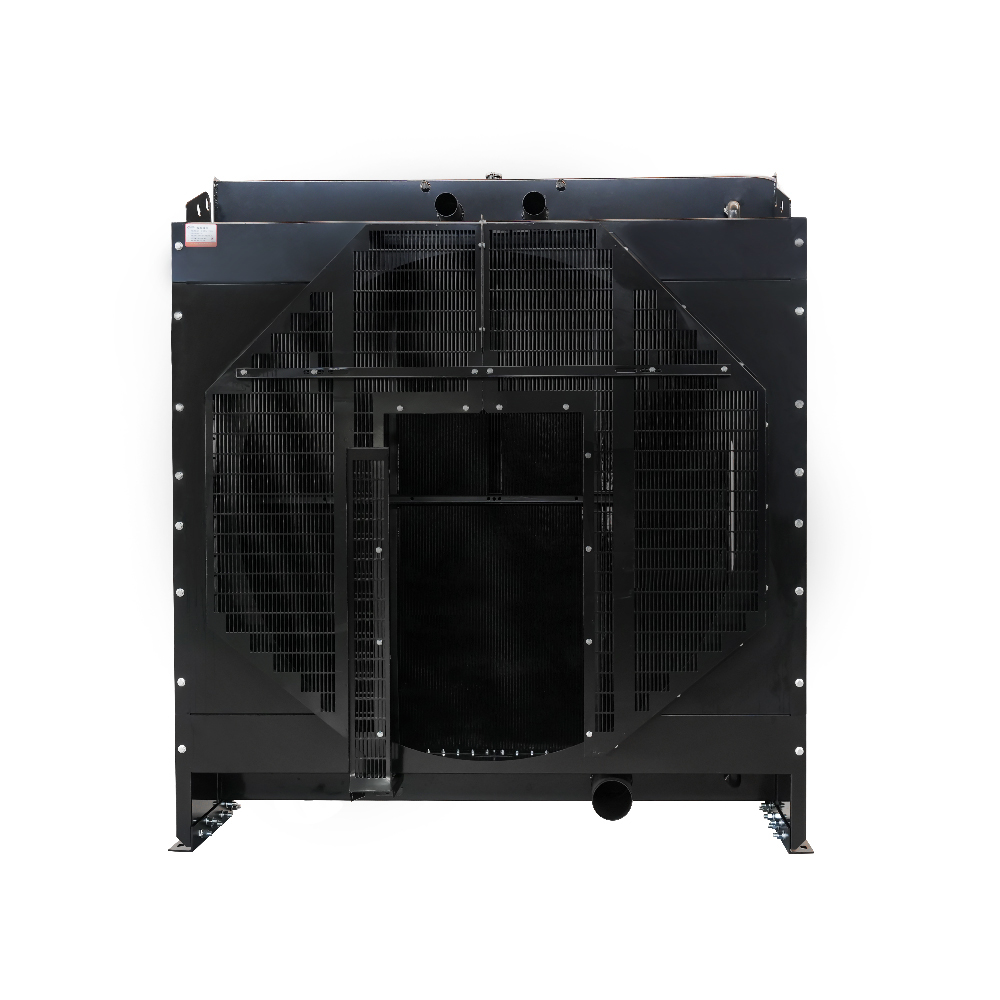
Perkins radiators for the 4000, 2000, and 1100 series follow more rigid model-specific designs. Cross-referencing between series is rarely successful due to differing hose connection angles and bracket placements. However, within a series — particularly the 4006 and 4012 models — radiators often interchange when the power output falls within a 15% band. A Perkins 4006-23TAG2 radiator frequently cross-references to the 4006-23TAG3 with no modification, but always verify the inlet position: Perkins occasionally relocates the water inlet between the left and right tank on consecutive production years. Our Perkins Engine radiator catalog documents these year-over-year changes for accurate matching.
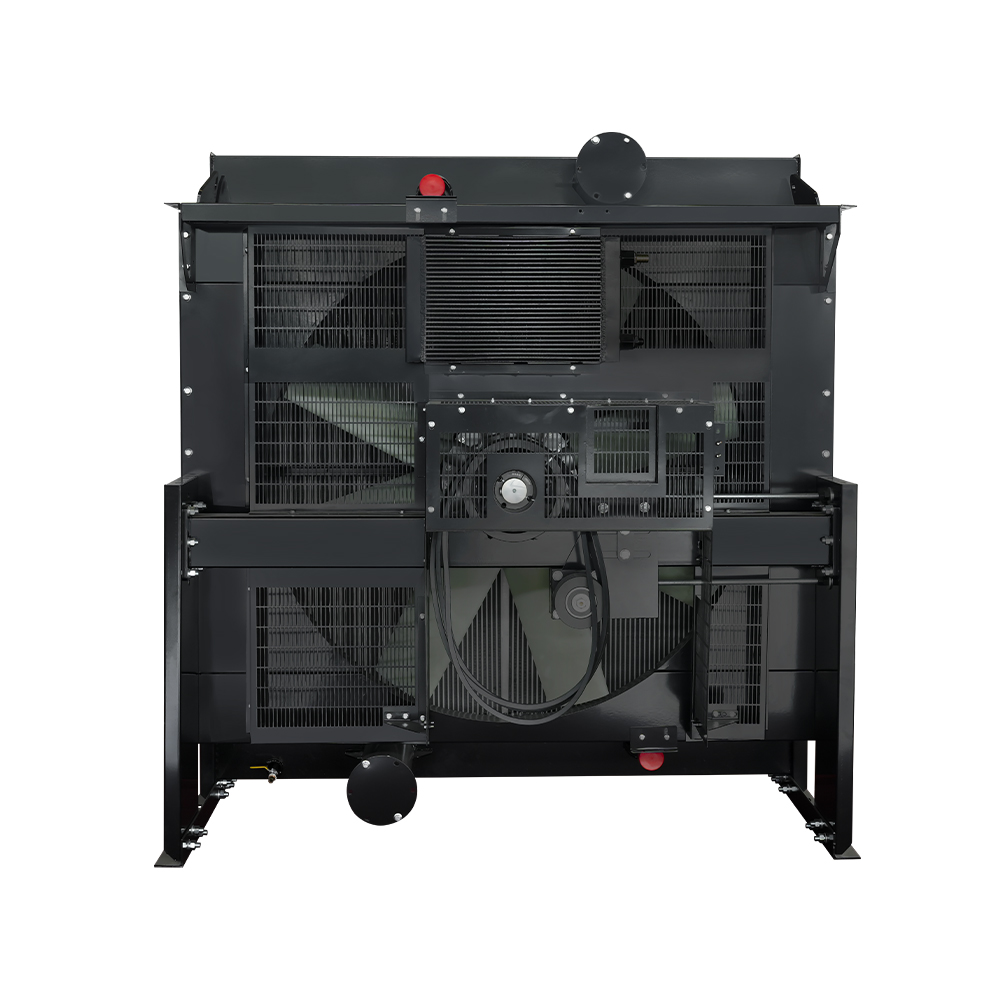
Weichai and Baudouin Generator Radiators
Weichai radiators present a unique cross-reference challenge because many Weichai-powered generator sets are assembled by third-party packagers who source radiators independently from the engine. Two generator sets using the same Weichai WD12 engine may have completely different radiator models depending on which packager built the enclosure. Cross-referencing Weichai radiators therefore requires dimensional verification even when the engine model matches. Baudouin engines follow a similar pattern in the 6M21 and 12M26 series, where the marine variant and the land-based variant use different radiator connection configurations despite sharing the block.
Common Cross-Reference Mistakes and How to Avoid Them
Most radiator cross reference failures trace back to three errors. Each is preventable with a specific verification step.
- Trusting a single-source database match without physical verification. Online cross reference tools can return results based on incomplete or outdated data. A match that appears correct in the database may reference a radiator variant that was superseded three years ago. Always confirm the critical dimensions on the replacement unit before installation. A ten-minute measurement session prevents a two-week downtime event.
- Ignoring the pressure cap specification. Generator cooling systems operate under pressure to raise the boiling point of the coolant. Radiators designed for 7-psi systems will not function correctly on engines requiring 15-psi caps. The pressure rating is stamped on the filler neck or the original cap. Cross-reference that number, not just the core size.
- Assuming same-brand interchangeability across all models. Just because two generators wear the same manufacturer's badge does not mean their radiators swap freely. Engine displacement, turbocharging configuration, and aftercooler presence all shift heat rejection requirements. Treat each engine model as a separate cross reference case.
Add one final check: measure the clearance between the installed radiator core and the fan blade tip. A replacement radiator with a thicker core can reduce this gap to dangerous levels. Minimum clearance should be no less than 5% of the fan diameter. A 600mm fan needs at least 30mm of clearance from the core face. Less than that and blade flex under load will contact the radiator fins.
When Cross-Reference Fails: Custom Radiator Solutions
Not every radiator need can be met through cross-referencing. Generators that have been modified with larger turbochargers, relocated within custom enclosures, or operated in extreme environments sometimes require radiators that no off-the-shelf unit can satisfy. In these cases, the cross reference process transitions into a custom specification exercise.
Custom radiator manufacturing becomes viable when you can supply five data points: the engine make and model with rated power output, the available physical envelope (maximum width, height, and depth measured from the mounting points), the hose connection diameters and preferred positions, the ambient operating temperature range including altitude, and the cooling medium (standard coolant, water-glycol mix, or specialized fluids). A complete specification package enables a custom radiator build in two to four weeks, which compares favorably against the indefinite downtime of searching for a discontinued part.
| Data Point | Example | Why It Matters |
|---|---|---|
| Engine model and power | Cummins QSK60, 2000 kVA | Determines baseline heat rejection |
| Maximum envelope dimensions | 1800mm W x 2200mm H x 400mm D | Constrains core size and tank design |
| Connection specs | Inlet 89mm top-left, Outlet 89mm bottom-right | Ensures hose compatibility |
| Operating environment | 45 degrees Celsius, 1200m altitude, high dust | Drives extra capacity and fin spacing |
| Coolant type | 50/50 ethylene glycol-water | Affects material and seal selection |
The cross reference process, executed properly, solves the majority of radiator replacement needs. When it cannot produce a match, the same dimensional and application data you gathered feeds directly into a custom build specification. Either way, the generator returns to service faster than if you had relied on guesswork alone.

- Product Categories
- Contact Us
-
- wcradiator@jswcsrq.com
- +86-514-400-180-4088
- +86-15152759383
- +86-15152759383
- No. 6 Road, Shaobo Industrial Concentration Zone, Jiangdu District, Yangzhou City, Jiangsu Province, China

