


 English
  русский
  Français
  Indonesia
  عربى
عربى  中文简体
中文简体


Diesel Generator Maintenance Schedule: Cooling System Tasks That Prevent Overheating
Content
- 1 Why Maintenance Intervals Are Not One-Size-Fits-All
- 2 Daily Checks: The Five-Minute Basics
- 3 Weekly Exercise: Less Than an Hour, Big Payoff
- 4 Monthly Cooling System Inspections: The Heart of the Schedule
- 5 Quarterly and Semi-Annual Tasks
- 6 Annual Maintenance: The Non-Negotiable Deep Service
- 7 Load Bank Testing and Wet Stacking Prevention
- 8 What Changes Your Maintenance Interval?
- 9 Keeping Records and Planning Replacements
- 10 Summary Table of Recommended Intervals
Start with the interval that actually protects your asset: the cooling system should be inspected monthly, even if the generator only runs a few hours. Most diesel generator maintenance schedules list oil and filter changes, but the radiator and cooling circuits are where a single missed check can become a full shutdown. If the engine overheats, it is not the coolant that fails first; it is the cylinder head, gasket, or bearings that pay the price. A practical schedule must therefore be built around running hours, calendar time, and the environment in which the generator sits.
Why Maintenance Intervals Are Not One-Size-Fits-All
The diesel generator maintenance schedule you follow cannot be based on hours alone. A standby unit that runs 50 hours per year still needs coolant changes, belt inspections, and radiator cleaning on a calendar basis because time degrades rubber and chemicals. A prime-power unit that runs 2,000 hours per year needs oil and filter service far more often than the standby machine. Most OEMs provide a basic interval of 250 to 500 running hours or every six months for professional service, but the cooling system often needs attention sooner when the environment is dusty, hot, or salty.
For the operator, the practical consequence is that a static schedule is a baseline, not a guarantee. The radiator, coolant, and fan drive need a dedicated checklist that crosses over the engine maintenance plan. If you only change oil when the hour meter says so, you can still face an overheating failure because a blockage in the radiator core or a degraded coolant mixture increases engine temperature without warning.
Daily Checks: The Five-Minute Basics
Before starting a generator, check the engine oil level and coolant level with the engine cold. A sudden drop in coolant level is not just a top-up issue; it indicates a leak in the radiator, hose, or water pump. Look at the floor under the unit for signs of coolant or oil. Inspect the fan belt side by side: a belt that shows cracks or glazing is dangerous.
- Check the coolant sight glass or reservoir level.
- Inspect around the radiator for leaves, dirt, or debris.
- Look for wet spots under the water pump, hoses, and radiator drain.
- Verify that the temperature and warning lights function when the key is on.
Weekly Exercise: Less Than an Hour, Big Payoff
Run the generator with no load for 15 to 30 minutes each week. This exercise keeps the engine warm, circulates the coolant, and charges the batteries. Listen for a squealing belt at startup; if the belt slips, the water pump speed drops and cooling suffers. Watch the coolant temperature gauge: it should rise smoothly and stabilize within the normal range. If the temperature climbs to the high alarm during a no-load run, the cooling system has a problem that needs attention before the next real outage.
Monthly Cooling System Inspections: The Heart of the Schedule
Monthly inspection starts with the radiator exterior. Dust, cottonwood seeds, and grass can plug the fins in less than a month on a construction site. Use a soft brush or compressed air, but do not use a pressure washer directly against the fins because the aluminum can bend. Check the coolant concentration with a refractometer; a 50/50 mix of ethylene glycol and water offers freezing protection and corrosion inhibition down to about -37 degrees Celsius.
When the electrolyte level is low, top up with the same mix, not plain water. Look at the hoses: if the surface is cracked or the connection feels spongy, replace it. The cooling fan belt should be checked for wear and tension; excessive deflection causes slippage at load, while overtightening can damage the water pump bearing.
These conditions are exactly where a remote-type radiator with a wider fin pitch pays off.
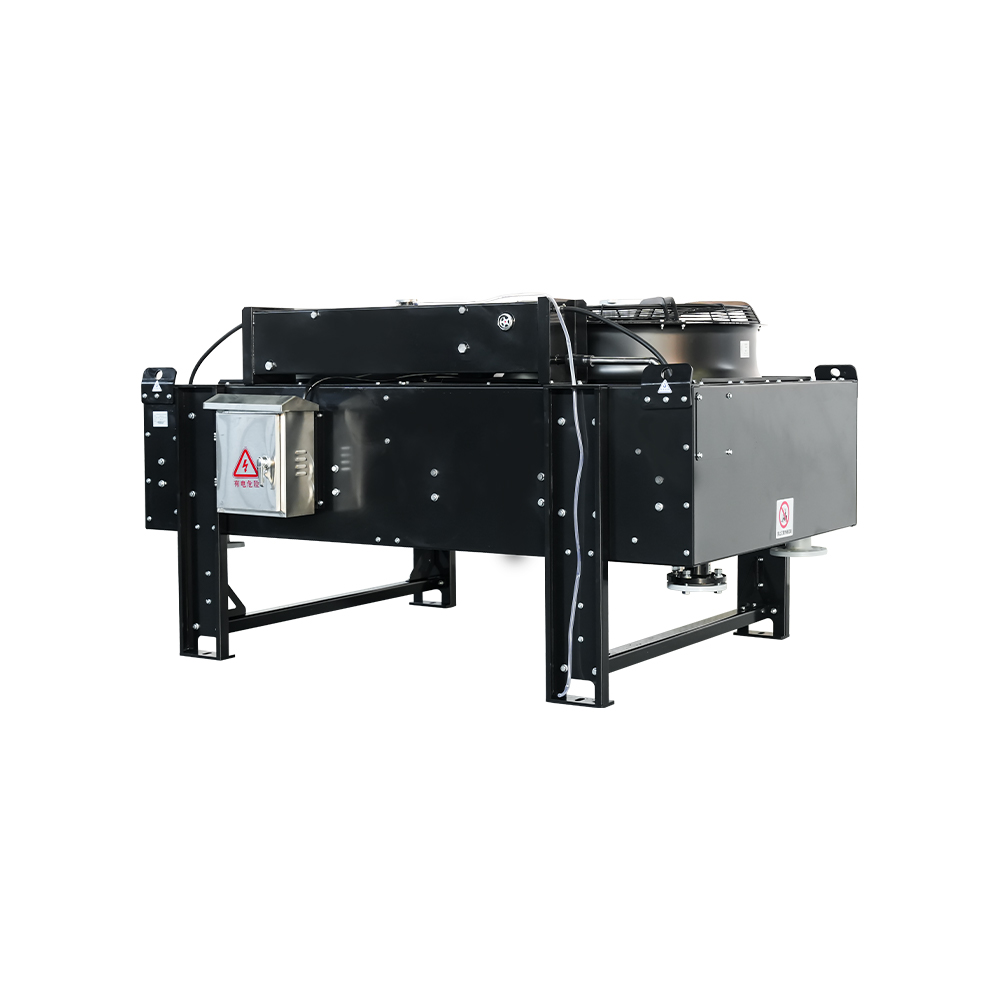 Remote-Type Generator Radiator with Flexible Installation OptionsDesigned for installs away from the genset, this remote radiator connects via coolant piping to suit constrained or acoustically sensitive sites. Available in multiple core sizes and airflow configurations, it supports flexible placement while keeping heat and noise outside.View Product →
Quarterly and Semi-Annual Tasks
Every quarter, inspect the fan shroud, radiator mounting brackets, and the drive belt for alignment. The radiator should not vibrate excessively with the engine. Every six months, perform a cooling system pressure test and check the antifreeze freeze point. This is also the time to review your full record set. A detailed radiator maintenance guide can help you compare fin condition, coolant chemistry, and belt tension against recommended standards.
Annual Maintenance: The Non-Negotiable Deep Service
Once a year, or at the OEM hour interval, the maintenance plan moves beyond inspections. Drain and replace engine coolant, inspect the pressure cap, and pressure test the cooling system to identify internal leaks. Remove the radiator cap and inspect for scale or rust; heavy deposits indicate that the corrosion inhibitor has been depleted or that the system has been filled with tap water. Flush the cooling system if the coolant is discolored.
If the radiator fins show severe corrosion or the core cannot achieve the designed heat transfer even after cleaning, replacement is more cost-effective than a temporary patch. For standby generators that must start instantly during a grid failure, the radiator is a reliability component, not a service accessory.
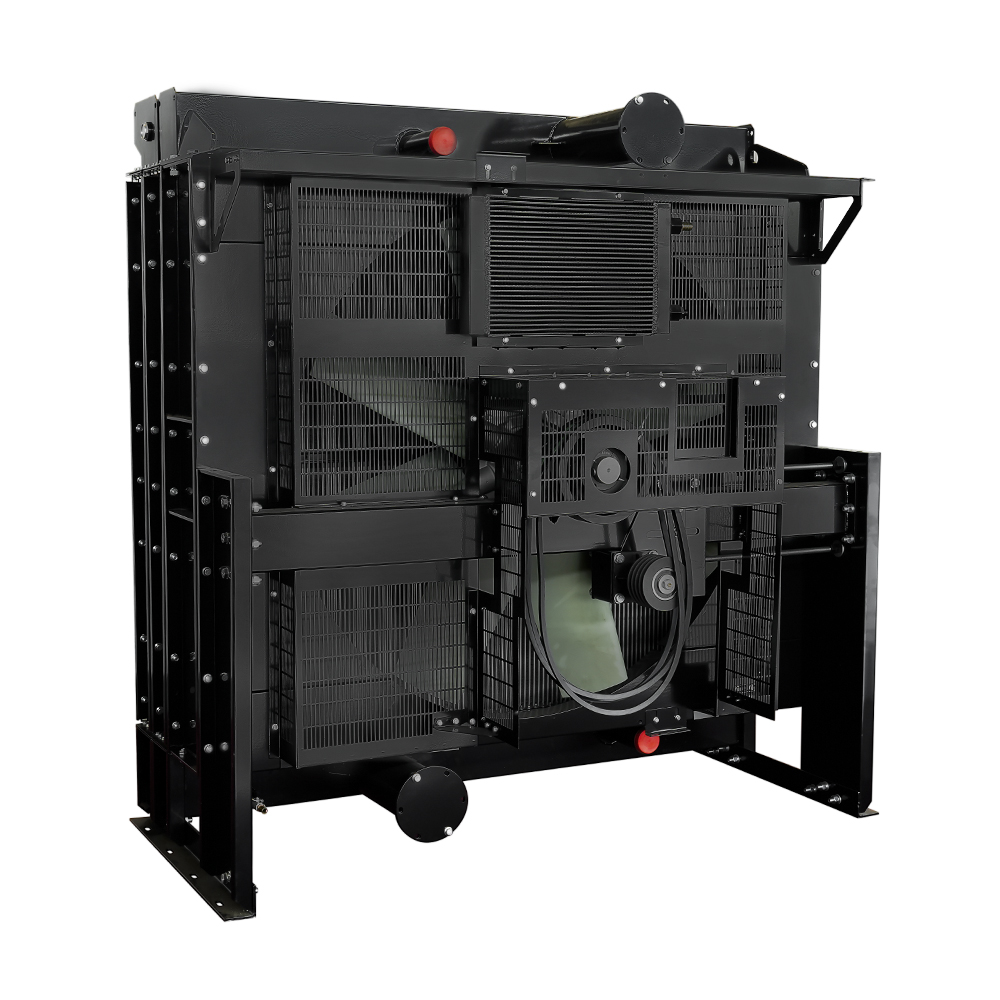 Emergency Standby Generator Radiator for Reliable Backup PowerBuilt for backup power systems in hospitals, data centers, and telecom facilities, this radiator ensures quick heat dissipation during outages. High-strength aluminum or copper cores offer durability and low maintenance for critical reliability.View Product →
Load Bank Testing and Wet Stacking Prevention
Diesel generators that only run unloaded or at low load can develop wet stacking: unburned fuel accumulates in the exhaust and oil dilution follows. A monthly load bank test at full or near-full load for at least 30 minutes helps burn off deposits and exercises the cooling system to its design point. During the test, the radiator must handle the heat load; if the fan runs at maximum and the fluid temperature still rises, the radiator air flow is insufficient or the coolant has lost its properties.
What Changes Your Maintenance Interval?
Environment is the biggest variable. A desert installation may need more frequent fin cleaning due to sand; a coastal installation faces salt spray that attacks the radiator fins from the outside. In corrosive environments, use an epoxy or powder-coated fin surface, and plan to inspect the cooling core at least every six months. High ambient temperatures also reduce the thermal margin; if the engine rides near the high-temperature alarm during summer, the radiator may be undersized or blocked.
In coastal installations, salt spray and high humidity accelerate fin corrosion. A coastal-environment radiator with a protective coating is a preventive upgrade.
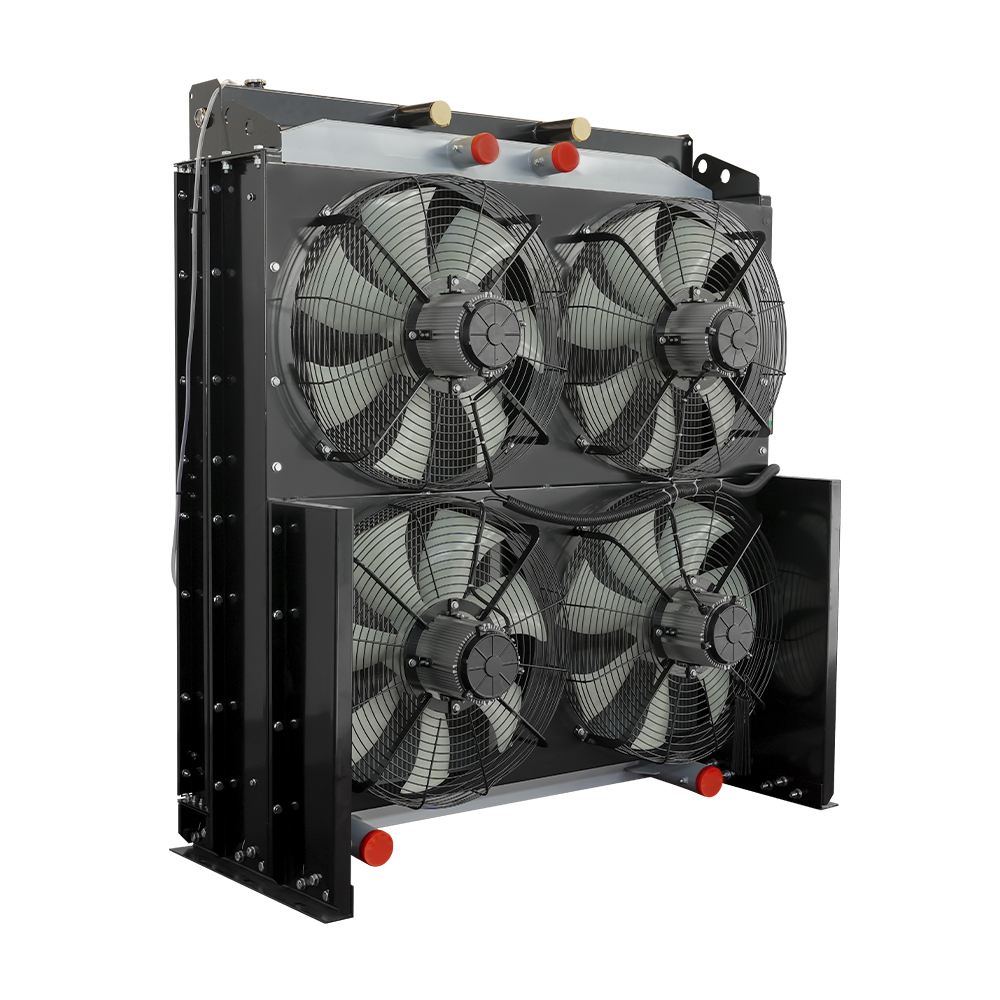 Coastal Environment Radiator with Anti-Corrosion ProtectionEngineered with salt-resistant materials and protective coatings, this radiator performs in humid, saline settings like ports and island plants. It helps prevent fin corrosion, extending service life in aggressive coastal conditions.View Product →
Keeping Records and Planning Replacements
Write down every check, including coolant concentration, belt tension, and radiator fin condition. Trends matter more than individual readings. If you clean the radiator every two months, the environment is more aggressive than the standard maintenance plan assumes. A radiator that fails to hold pressure after repeated cleaning is a candidate for replacement. Scheduling a replacement before a failure reduces downtime and avoids secondary damage to the engine.
Summary Table of Recommended Intervals
| Frequency | Key Actions | Cooling System Focus |
|---|---|---|
| Daily | Check coolant level, look for leaks, verify gauges | Visual inspection |
| Weekly | Run 15-30 minutes, listen for belt noise | Coolant temperature stability |
| Monthly | Clean radiator fins, test coolant concentration, inspect hoses | Radiator airflow and fluid condition |
| Quarterly | Inspect fan shroud, brackets and belt alignment | Mechanical integrity |
| Semi-Annual | Pressure test cooling system, check antifreeze | Leak-free operation and freeze point |
| Annual | Replace coolant, deep clean radiator, load bank test | Heat transfer capacity |

- Product Categories
- Contact Us
-
- wcradiator@jswcsrq.com
- +86-514-400-180-4088
- +86-15152759383
- +86-15152759383
- No. 6 Road, Shaobo Industrial Concentration Zone, Jiangdu District, Yangzhou City, Jiangsu Province, China

