


 English
 русский
 Français
 Indonesia
 عربى
 中文简体


Industrial Radiator Service for Generator Sets: Repair, Re-Core or Replace
Content
Most industrial generator radiators do not fail overnight. They weep a little at a seam, run a few degrees warmer each season, or collect a film of dust that nobody notices until the load climbs. The trouble is that these small signals are easy to live with while the set keeps carrying power, right up to the afternoon when the coolant temperature rises faster than the alarm can be acknowledged. Industrial radiator service is really about catching that curve early, while the answer is still a repair rather than an emergency replacement in the middle of a working week.
What Industrial Radiator Service Covers in Practice
Radiator service is not one job. On a generator set it is a cluster of small, unglamorous tasks that together keep the cooling package doing what the engine expects of it:
- Air-side cleaning. Dust, oil mist, insects and seed fluff pack into the fins and quietly reduce airflow. Cleaning restores the heat rejection you already paid for.
- Pressure testing. A wet test under pressure finds the leak you can see and the one you cannot, before it becomes a warranty conversation.
- Targeted leak repair. Seam welds, tube ends and header joints can often be repaired with the core in place or on the bench.
- Re-coring or replacement. When the leak path is wide or the fins have gone brittle, a new core or a complete unit is the honest answer.
- Protective coating. For salt air, coastal humidity or aggressive dust, coating decisions belong in the service plan rather than in a later emergency.
- Mounting and plumbing checks. Cracked isolators, rubbed hoses and loose fan shrouds cause failures that look like radiator failures but are not.
Repair or Replace: Reading the Symptoms Honestly
The hardest conversation in radiator service is the one where a customer wants a repair and the core is telling you something else. Age alone is not a verdict, and a weep is not automatically a death sentence. What matters is how much sound metal is left around the problem. If you prefer to work through it step by step, our repair-versus-replace walkthrough sets out the full decision path.
| What you are seeing | Repair usually wins | Replacement usually wins |
|---|---|---|
| Leak location | One seam, one tube end, one header joint | Weeping along several rows or both tanks |
| Fin condition | Clogged or bent but still springy | Brittle, eroded or missing over a wide area |
| Tanks and gaskets | Weeping gasket on a sound core | Crimp distorted or header corroded through |
| Service history | First repair, plenty of hours left | Second or third repair on the same core |
| Downtime tolerance | A repair window can be scheduled | Load cannot wait for bench work |
The Checks We Run Most Often
Cleaning the air side before condemning anything
An overheating complaint is very often a dirt complaint. Before a core is tested or replaced, the fins should be cleaned from the fan side outward and inspected with a light behind them. If you can see daylight through the block, airflow is probably not the issue. If you cannot, no amount of new hardware will fix the temperature.
Pressure testing and locating the leak properly
A radiator that holds pressure cold may still leak hot, so testing conditions matter. We pressurise, watch the gauge, and mark every wet trail rather than only the obvious one. Chasing a single visible leak while ignoring a second weep two rows away is how a repaired unit comes back a month later.
Vibration, mounts and the parts nobody inspects
Cracked isolators, worn fan belts and misaligned shrouds all load the core in ways it was not designed for. These items are cheap and quick to check during a service visit, and they prevent a surprising share of repeat failures.
 Industrial Generator Radiator Range for Demanding SitesCompare heavy-duty radiator options for generator sets, with tube-and-fin and plate-and-fin structures suited to different service conditions and space constraints.View Product →
Choosing a Replacement Core That Actually Fits the Job
When replacement is the right call, the next decision is structural. Tube-and-fin cores remain the workhorse for most industrial generator sets: they tolerate vibration well, repair cleanly, and are familiar to any workshop that will service them later. Plate-and-fin cores pack more heat rejection into the same face area, which helps where space is tight or the ambient is unforgiving, but they are less forgiving of a hard knock.
Material choice follows the same logic. All-aluminium packages are lighter and resist corrosion differently from aluminium-plastic structures, and the correct answer depends on coolant chemistry, operating pressure and how the set is stored between runs. Matching the original core by size alone is rarely enough; core thickness, fin pitch and fan position all affect whether the installed unit actually cools.
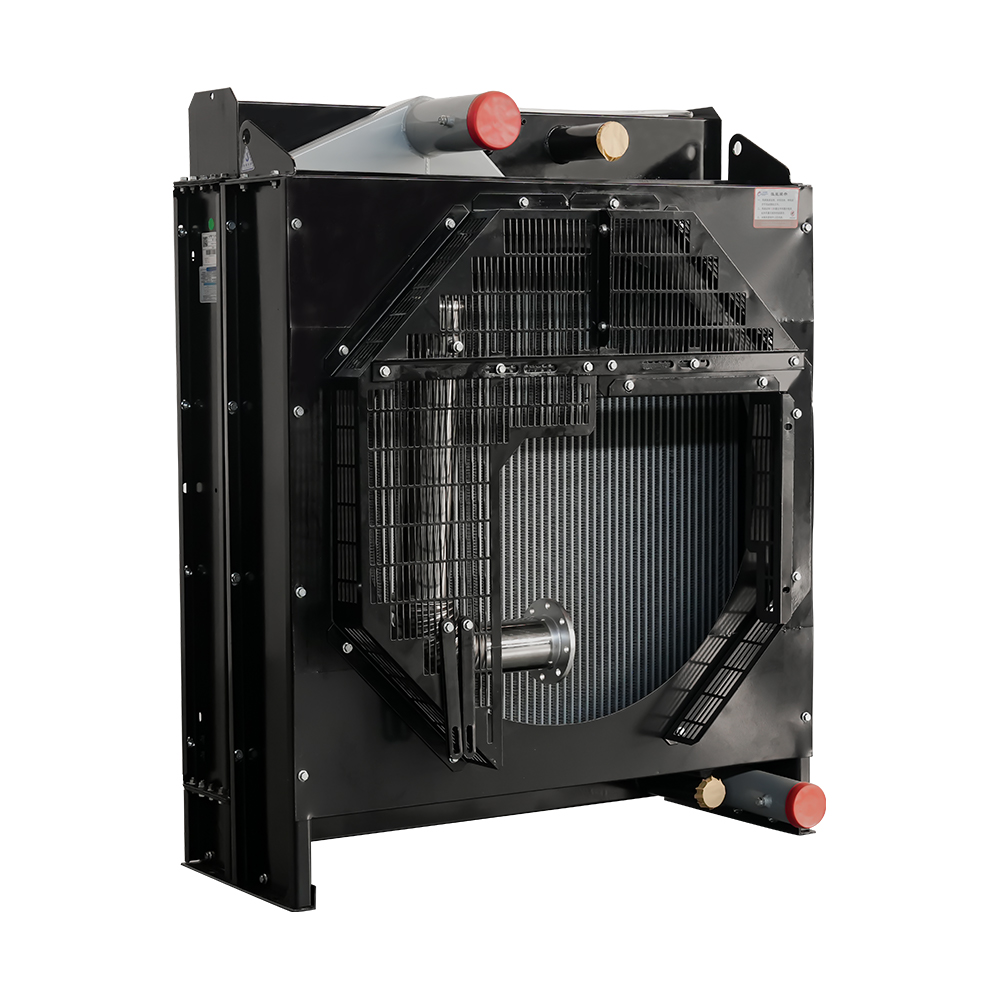 Tube-and-Fin Generator Radiator Replacement RangeClassic tube-and-fin radiator range for generator sets, offering maintainable heat exchange across sizes; check core thickness, fin pitch and mounting fit.View Product →
When the Site Sets the Service Plan
Two identical generator sets can need completely different service intervals because of where they stand. A unit tucked inside a clean plant room is a different proposition from one on a coastal dock where salt settles on every surface, or one on a desert site where fine dust loads the fins within weeks. Salt air attacks from the outside in, eating coating and header material; heat and dust attack performance first, corrosion second.
In those conditions, service intervals shorten and coating choices stop being cosmetic. A core specified for coastal duty, with the right protective finish and a realistic cleaning rhythm, will outlast a generic replacement every time.
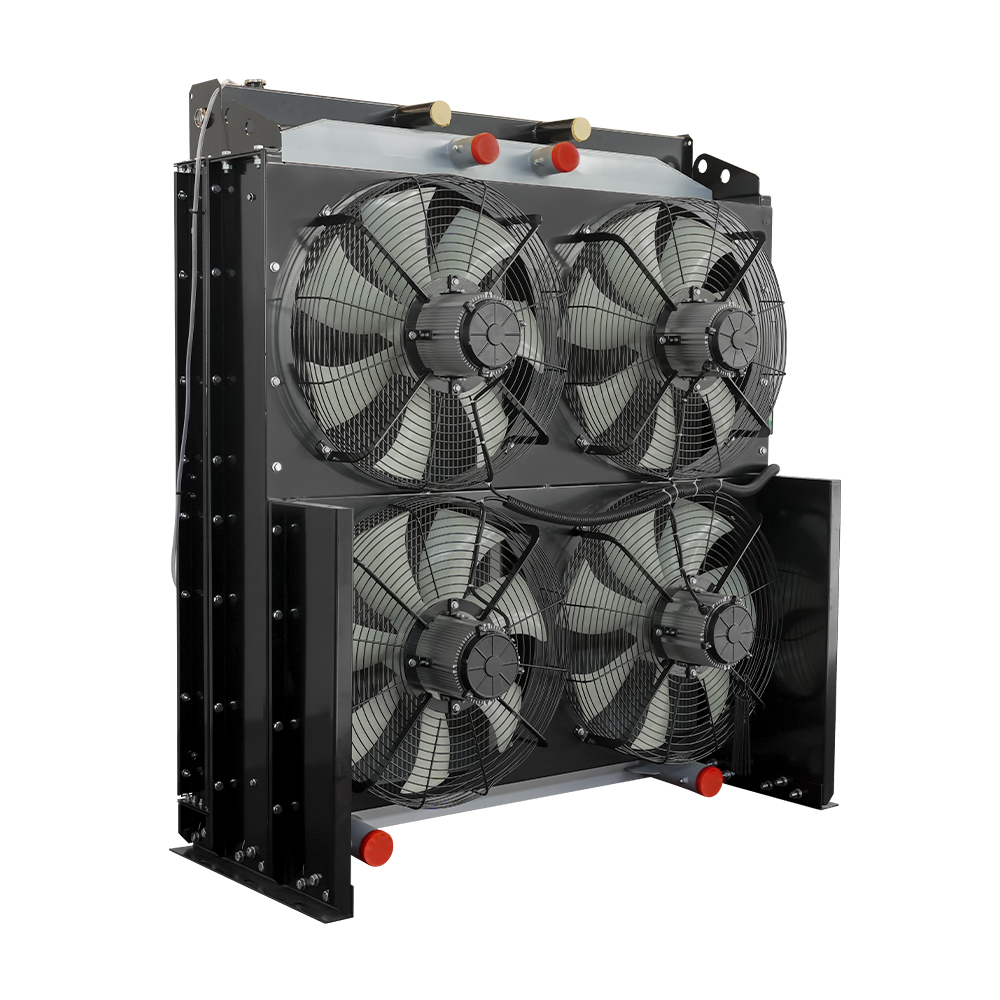 Coastal Generator Radiators for Salt-Air ConditionsRadiators built for humid, saline sites, with anti-corrosion coatings and reinforced structures; compare coastal duty options before specifying a replacement.View Product →
Planning Service Around Load Profiles
A standby set and a prime power set age in completely different ways. The standby unit may run a hundred hours a year and still corrode quietly in the corner, while the prime power unit accumulates heat cycles that fatigue every joint. Service windows should follow that reality rather than the calendar. For owners weighing a fresh unit against keeping an older one alive, our end-user replacement path is a sensible place to compare the two routes before committing budget.
A Service Routine Worth Keeping
The routines that survive on real sites are short enough to actually be done. Ours tends to look like this:
- Record the running hours and the last coolant temperature trend before touching anything.
- Clean the air side and inspect the fins with a light behind the core.
- Check hoses, clamps, belts and isolators for wear and alignment.
- Pressure test and mark every leak, not just the visible one.
- Review coolant condition and top-up practice; mixed coolant is a slow killer.
- Decide repair or replace while the set is still online, not after a shutdown.
Written down and repeated, these six steps catch most failures months before they would otherwise appear on a fault log.
Radiator service is unglamorous work, and that is exactly why it pays. A generator set is judged on the day it is needed, and the cooling package is one of the few systems that gives clear warning before it lets you down. Whether the answer turns out to be a clean, a weld, a re-core or a complete new unit, the earlier the decision is made with real inspection behind it, the cheaper and calmer the outcome tends to be.

- Product Categories
- Contact Us
-
- wcradiator@jswcsrq.com
- +86-514-400-180-4088
- +86-15152759383
- +86-15152759383
- No. 6 Road, Shaobo Industrial Concentration Zone, Jiangdu District, Yangzhou City, Jiangsu Province, China

