


 English
 русский
 Français
 Indonesia
 عربى
 中文简体


Radiator Core Replacement for Gensets: When to Recore, Replace, or Upgrade
Content
A radiator core replacement is often treated as a simple parts swap, but on a generator set it is really a cooling-system decision. The core is the part that transfers heat from the coolant to the air. When it is clogged, cracked, corroded, or damaged by vibration, the engine can run hot even when the rest of the cooling system looks normal.
For generator owners and maintenance teams, the practical question is not only “Which core fits?” but “Why did this one fail, and what is the most sensible repair path?” This guide walks through the signs of core failure, the choice between repair, recore, and full replacement, and the details that help a new core last.
How a Radiator Core Fails on a Generator Set
Generator radiator cores live a harder life than many people expect. They sit in a fixed installation, but they still see vibration from the engine, thermal cycling from load changes, and long idle periods. They may also be exposed to dust, salt, humidity, or poor coolant maintenance. Over time, tubes can crack, seams can weep, fins can corrode, and deposits can block the small passages that make heat transfer possible.
Common causes include vibration fatigue at the core-to-tank joint, repeated overheating, incorrect coolant chemistry, air pockets, a weak pressure cap, and external blockage from dust or debris. In coastal or industrial sites, corrosion can become the dominant problem. In dusty or desert environments, fins may pack solid and lose their ability to move air.
- Coolant loss with no obvious hose leak, especially wet streaks near the core headers or tanks.
- Overheating under load while the engine behaves normally at idle.
- Rusty, cloudy, or sludgy coolant that suggests internal blockage or poor maintenance.
- Bent, missing, or corroded fins that reduce airflow and heat rejection.
- A system that fails a pressure test, or repeated top-ups with no clear external leak.
A core problem can also look like something else. A weak pressure cap, a stuck thermostat, a failing water pump, a fan belt issue, or air trapped in the system can all produce similar symptoms. Before condemning the core, pressure-test the system, check the cap, confirm fan operation, and inspect the coolant. The extra diagnosis is usually cheaper than replacing the wrong part.
Recore, Repair, or Replace: A Practical Comparison
Not every failed core needs a complete radiator. A recore can be a sensible option when the tanks, frame, and mounting points are sound. A targeted repair may work for a small, accessible leak. A full radiator replacement is often the better choice when the tanks are cracked, the frame is corroded, the mounting points are damaged, or the set needs a cooling upgrade for a new duty cycle.
In general, repair suits a minor leak on an otherwise healthy radiator. Recore suits a sound radiator structure with a failed core and a known, repeatable specification. Replacement suits a radiator with multiple problems, uncertain history, or a need for better cooling margin. The right answer depends on the cost of downtime as much as the price of the part.
| Option | Best when | Watch-outs |
|---|---|---|
| Repair | A small, accessible leak and the core still cools well under load. | The repair may be temporary if corrosion or vibration caused the leak. |
| Recore | Tanks and frame are sound, and the original core dimensions are known. | Hidden tank damage or poor core matching can cause a repeat failure. |
| Replace | The radiator has multiple faults, corroded tanks, or needs more cooling capacity. | Verify mounting, hose positions, fan spacing, and heat rejection before ordering. |
For a more detailed decision framework, see this guide to industrial radiator service: repair versus replacement. It helps separate a simple leak from a system-level cooling problem.
What to Check Before Ordering a Replacement Core
Once you decide to replace the core, measure and document more than the outside dimensions. A core that “looks close” can fit the frame and still fail to cool the set under load. Generator radiators are matched to engine heat rejection, coolant flow, fan performance, and the space available in the enclosure or skid.
Core geometry and heat rejection
- Core type, such as tube-and-fin, plate-and-fin, or another structure used by the original radiator.
- Core thickness, tube rows, fin density, and the position of inlet and outlet connections.
- Coolant flow direction and the size of the top and bottom tanks.
- Any integral oil cooler, heat exchanger, or transmission cooler that shares the cooling package.
Tanks, seals, and mounting
- Condition of the tanks, side frames, mounting brackets, and vibration isolators.
- Fan diameter, fan-to-core clearance, shroud condition, and airflow direction.
- Pressure cap rating, drain points, sensors, and any vent or deaeration lines.
- Available space for service access, not just space for installation.
Photos of the old core, the radiator mounting, and the engine data plate are useful. So are the engine rating, standby or prime duty, ambient temperature, and any site conditions such as salt air, dust, or altitude. These details help avoid the common trap of fitting a core that is dimensionally correct but thermally too small.
Matching the Replacement to the Genset and Its Environment
Generator radiators are not one-size-fits-all. The same engine can be installed in a standby enclosure, a rental trailer, or a remote power house. Each application changes airflow, maintenance access, vibration, and corrosion risk. The replacement core should match the real duty, not just the old part number.
For a standard industrial generator set, a replacement radiator should prioritize fit, airflow, and straightforward service access. A standard industrial generator radiator is often the right starting point when the set runs in a factory, warehouse, or similar sheltered environment.
 Industrial Generator Radiators for Sheltered Generator SetsReplacement radiators for factory or warehouse gensets, prioritizing fit, airflow, and service access across models from 50 to 3000 kW.View Product →
Higher-output units need more cooling margin. If the old radiator was already marginal, or if the set has been upgraded, a high-power generator radiator is a more sensible match than a like-for-like core with no extra capacity.
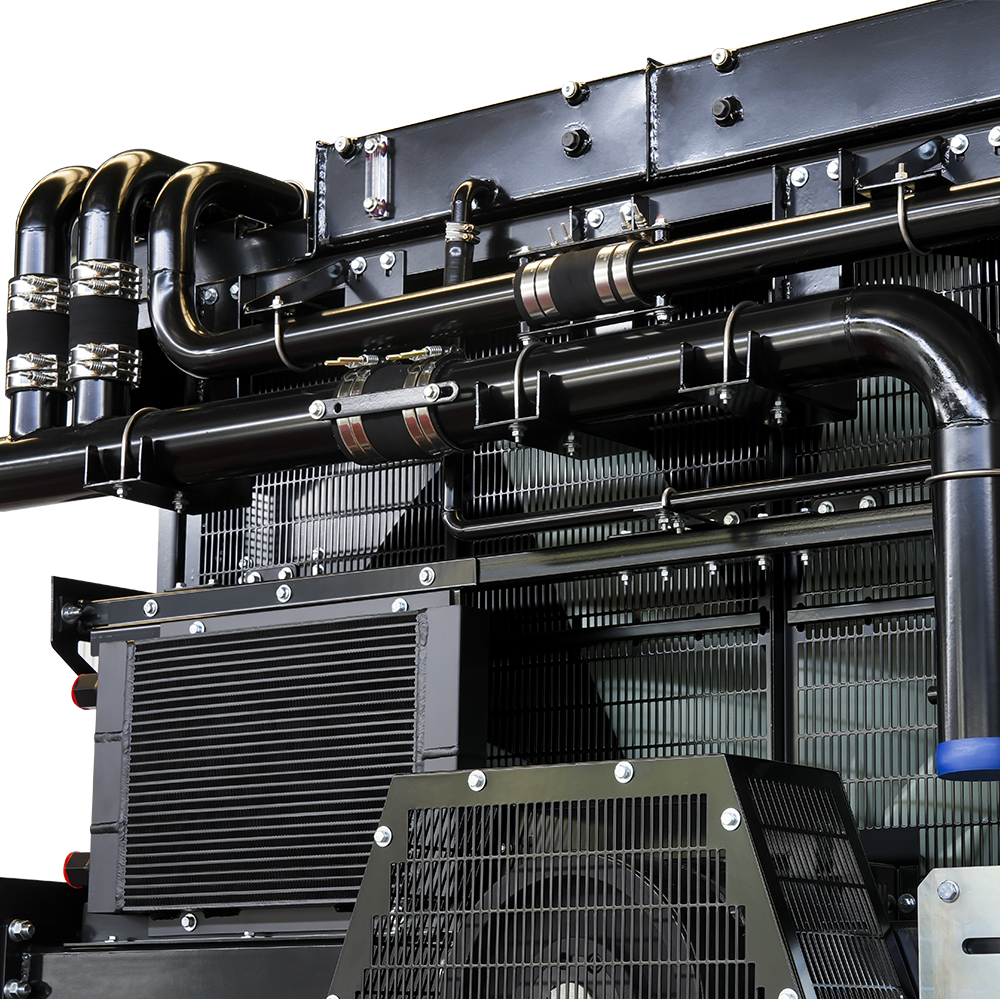 High Power Generator Radiators for Large Generator SetsRadiators for generator sets above 1 MW, with reinforced cores and heavy-duty frames for continuous high-load cooling in data centers and plants.View Product →
Remote or unattended sites add another layer. Maintenance visits may be infrequent, so the radiator needs good resistance to vibration, debris, and coolant loss. A remote-type generator radiator can help when reliability and service intervals matter as much as cooling capacity.
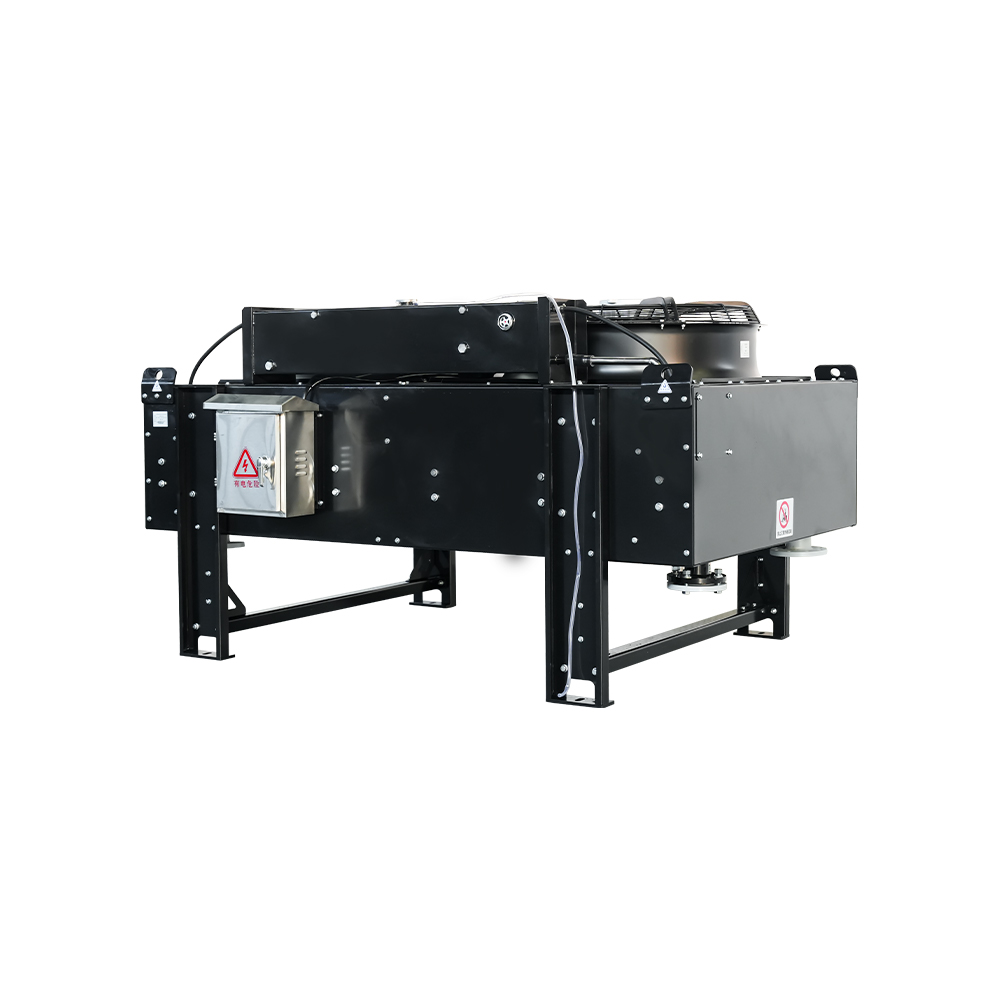 Remote Type Generator Radiators for Flexible InstallationRadiators installed away from the genset via coolant piping, suited to indoor rooms and constrained sites with varied core sizes and airflow configurations.View Product →
Environmental factors deserve attention too. Coastal sites need corrosion protection. Hot, dusty sites need fins that can be cleaned and airflow paths that do not trap debris. Enclosed sets need enough static pressure capability from the fan. A core replacement is a good time to correct these details rather than repeat a known weakness.
Installation and First Start-Up
A replacement core should be installed as a cooling-system repair, not just a parts exchange. Start with a clean, drained system, label hoses and wiring before removal, and inspect the fan, shroud, belts, thermostat, and pressure cap while access is open.
- Drain the coolant and capture it for proper disposal. Do not let old coolant drain onto the ground or into a storm drain.
- Disconnect hoses, sensors, and mounting hardware carefully. Keep nuts and brackets with their original positions.
- Clean the mounting area and inspect the frame for cracks or corrosion before fitting the new core.
- Check that the new core matches the old unit in connection size, mounting points, and fan clearance.
- Reconnect hoses with suitable clamps. Avoid over-tightening, which can damage the radiator neck or hose.
- Refill with the correct coolant mixture for the engine and site conditions. Fill slowly and vent the system as specified.
- Pressure-test the system before a full load run, then check for leaks after the engine reaches operating temperature.
After reassembly, run the set at no load, then apply load in stages. Watch coolant temperature, fan operation, leaks, and unusual vibration. A new core that still runs hot often points to trapped air, a faulty cap, a stuck thermostat, or incorrect fan spacing rather than a defective core.
Maintenance Habits That Protect a New Core
A new core is a good opportunity to correct the habits that shortened the old one’s life. Keep coolant chemistry within specification, top up with the same coolant type, and fix small leaks before they become corrosion sites. Check the pressure cap and thermostat at the recommended intervals, and keep the exterior fins clean.
- Inspect hoses, clamps, and cap seals during routine service.
- Clean dust, salt deposits, and debris from the fins with care so they are not bent or flattened.
- Check fan belts and fan clearance after any radiator work.
- Record operating temperatures and coolant top-up amounts to catch slow changes early.
- Use the correct coolant and water quality; mixing incompatible coolants can create sludge.
If the set is due for a planned upgrade, or if the original radiator is no longer economical to repair, it may be worth reviewing end-user replacement solutions before the next outage. A planned replacement is usually easier than an emergency one during peak demand.
Radiator core replacement is not only about finding the lowest-cost part. It is about restoring heat rejection, protecting the engine, and reducing the chance of a repeat failure. Match the core to the engine rating, duty cycle, enclosure, and environment. Inspect the whole cooling system while access is open. Install it carefully, vent it properly, and test under load before the set returns to service.
If you are uncertain, share the engine rating, duty, ambient conditions, and photos of the old core with a radiator specialist. A short conversation before ordering is often cheaper than a second replacement after start-up.

- Product Categories
- Contact Us
-
- wcradiator@jswcsrq.com
- +86-514-400-180-4088
- +86-15152759383
- +86-15152759383
- No. 6 Road, Shaobo Industrial Concentration Zone, Jiangdu District, Yangzhou City, Jiangsu Province, China

