


 English
  русский
  Français
  Indonesia
  عربى
عربى  中文简体
中文简体


All Aluminum Radiator Guide for Generators: Materials, Core Design & Selection
Content
A generator that suddenly runs hot is never a scheduled event. On a coastal power barge, the maintenance crew found pinhole leaks between the brass tubes and copper fins of a decade-old radiator. The supervisor was tired of repair patches. He wanted a replacement that would survive salt spray, engine vibration, and continuous running. After checking the heat rejection curve, the intake air temperature, and the mounting envelope, the choice came down to an all-aluminum radiator. This guide explains when that choice works, where it can fail, and how to specify an all-aluminum radiator for genset duty without relying on guesswork.
What an All-Aluminum Radiator Actually Means for a Generator Set
An all-aluminum radiator is a heat exchanger whose core tubes, fins, header plates, and liquid tanks are all made from aluminum alloys, typically joined by controlled-atmosphere brazing. Common alloys include 3003 for tubes and headers and 1100 or 3003 for fins. This combination delivers good thermal conductivity, about half the weight of a comparable copper-brass unit, and a corrosion profile that is very different from copper.
All-Aluminum Versus Aluminum-Plastic
The label “aluminum radiator” is often used for hybrid designs. Aluminum-plastic radiators use an aluminum core with plastic side tanks. They are cheaper and lighter, but plastic tanks become brittle after years of heat cycling, and the tank gasket is a frequent leak point. All-aluminum construction removes the gasket problem entirely. If the electrolyte compatibility and expansion tank design are handled correctly, an all-aluminum unit has fewer sealed joints to fail over the equipment’s life.
All-Aluminum Versus Copper-Brass
Copper-brass radiators dominated heavy equipment for decades because they are simple to repair and tolerate imperfect coolant. Copper, however, corrodes faster in chloride-rich coastal or industrial air, and the solder joints that connect the tubes to the header degrade with thermal cycling. Aluminum behaves differently. Its surface oxide forms a self-limiting protective film, which slows further corrosion in most atmospheres and coolants. The practical result is that a properly coated all-aluminum radiator often outlasts copper in coastal, desert, and rental applications.
| Attribute | Copper-Brass | Aluminum-Plastic | All-Aluminum |
|---|---|---|---|
| Core and tank material | Copper tubes, brass tanks | Aluminum core, plastic tanks | Aluminum throughout |
| Relative weight | Heaviest | Lightest | Lighter than copper |
| Coastal corrosion resistance | Moderate, tube pitting common | Moderate, tank gasket risk | Good with protective coating |
| Heat transfer capability | Excellent | Good | Good to excellent |
| Repairability in the field | High | Low | Moderate |
| Typical first failure point | Solder joint fatigue and tube pitting | Tank cracking or gasket leaks | Brazed joint fatigue if undersized |
The table reflects real field behavior, but it is not a substitute for a proper heat rejection calculation. An all-aluminum core that is too small will fail faster than a larger copper unit even if the material is more corrosion-resistant.
Where All-Aluminum Radiators Earn Their Keep
All-aluminum radiators are not the right answer for every installation, but they shine in the conditions that most commonly punish copper and plastic.
- Desert high-temperature sites: high ambient temperatures reduce the temperature difference that drives heat transfer. Aluminum’s light weight allows a larger face area and deeper cores without exceeding the genset frame’s load limits.
- Coastal and offshore installations: salt-laden air attacks copper and solder. Modified epoxy or polyurethane coating on an aluminum core is a proven defense.
- Rental fleets: units are moved often, and vibration during transport attacks soldered joints. All-aluminum brazed cores handle vibration fatigue better.
- Prime power plants: continuous duty requires consistent waste heat rejection over long intervals. A correctly sized all-aluminum core holds its performance without the maintenance overhead of periodic solder repairs.
For these environments, manufacturers offer purpose-specific designs. A good example is the desert high-temperature generator radiator, which uses oversized cores and additional rows to maintain cooling when intake air temperature exceeds 45°C.
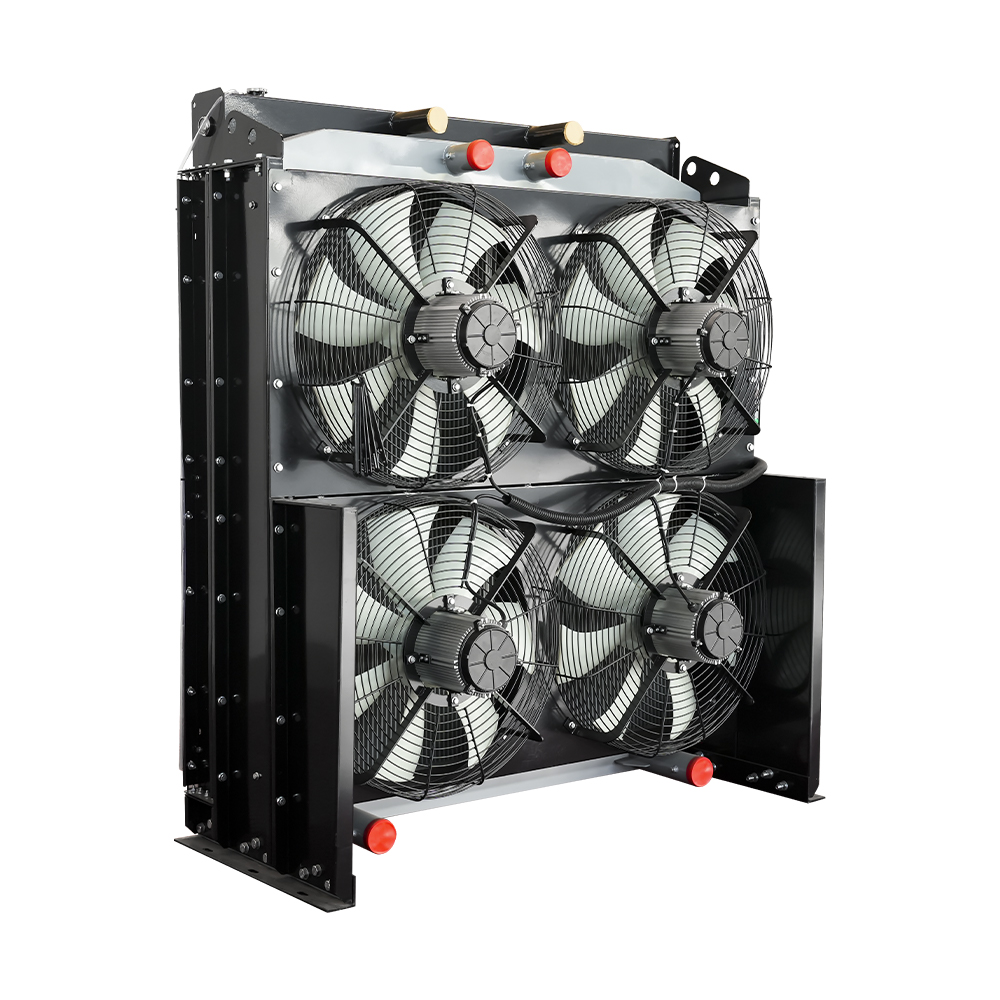 Desert High-Temperature Generator Radiators Manufacturers, Suppliers, FactoryAs OEM Desert High-Temperature Generator Radiators Manufacturers, Desert High-Temperature Generator Radiators Suppliers and Factory in Ch...View Product →
Core Construction Matters as Much as Material
Aluminum is the raw material; core architecture is the design. Two core families dominate generator cooling: tube-and-fin and plate-and-fin. Choosing between them changes the airside pressure drop, the coolant-side flow, the structural strength, and the way the radiator performs in dusty or vibration-heavy sites.
Tube-and-Fin Cores
Tube-and-fin cores use flattened oval aluminum tubes with fins bonded between them. They offer strong resistance to pressure spikes, easier cleaning, and a proven track record in generator sets. This architecture is the default for most heavy-duty gensets because it handles coolant flow variation and field maintenance well. The tube-and-fin generator radiator category is where most OEM and replacement inquiries start.
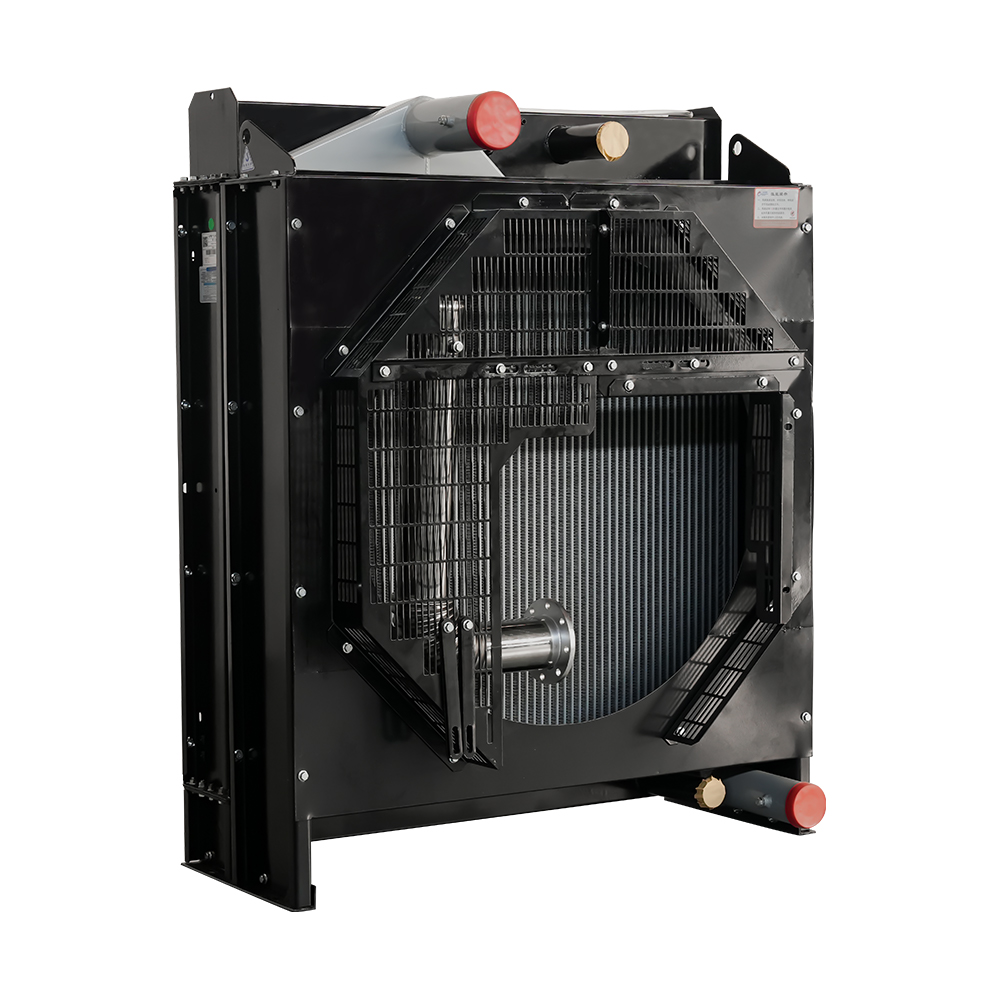 Tube-and-Fin Generator Radiators Manufacturers, Suppliers, FactoryAs OEM Tube-and-Fin Generator Radiators Manufacturers, Tube-and-Fin Generator Radiators Suppliers and Factory in China, Weichuang offer C...View Product →
Plate-and-Fin Cores
Plate-and-fin cores stack aluminum plates with internal fins, creating a larger heat transfer surface in a compact volume. They work well for higher heat density applications and silent enclosures where space is tight. The tradeoff is a higher airside pressure drop and a structure that is more sensitive to external damage.
Core count is a frequent source of confusion. A four-core copper radiator does not automatically beat a two-core all-aluminum design. Tube width, tube pitch, fin density, and core depth determine total heat transfer, not the number of rows alone. For detailed comparisons and sizing logic, the tube-and-fin versus plate-and-fin core sizing guide walks through the calculation side of this decision.
How to Select an All-Aluminum Radiator: Five Checks That Matter
The selection process starts with numbers, not with pictures. Work through these five checks before issuing a purchase order.
- Heat rejection at rated load. Use the engine manufacturer’s cooling heat rejection figure at the generator’s rated output. Do not size off the alternator rating.
- Design ambient temperature. A radiator that works at 25°C will struggle at 45°C. Always specify the highest expected intake air temperature for the site.
- Coolant flow and pressure drop. More fins per inch add surface area, but they also raise airside resistance. If the fan cannot deliver enough airflow through the core, the larger surface works against you.
- Mounting and vibration. Verify header thickness, tank bracket design, and expansion tank material. An all-aluminum system should be matched to the existing mounting frame without improvised adapters.
- Corrosion protection. Specify the exterior coating for the actual environment. Coastal and desert sites require different coating strategies; interior protection depends on using the recommended coolant inhibitor mixture.
A related decision is whether to stay with all-aluminum or accept an aluminum-plastic hybrid. If tanks, gaskets, and end caps appear in the cross-reference, the aluminum-plastic structure corrosion guide shows which design stands up to the environmental conditions of the site.
Custom Sizes, OEM Fit, and Replacement Realities
Not every genset has a standard rectangle waiting for a catalog radiator. Replacement projects often face a narrower frame, a different fan shroud, or a horizontal versus vertical core arrangement. Custom fabrication is routine in this industry, but the details affect lead time and cost.
When a fleet standardizes on a structural family — for example, all-aluminum generator radiators — spare parts become predictable and maintenance training stays consistent. The same logic applies to OEM programs that need a specific core size across multiple engine ratings. For a breakdown of what affects price and delivery, the custom aluminum radiator specifications, costs, and lead times overview is a practical starting point.
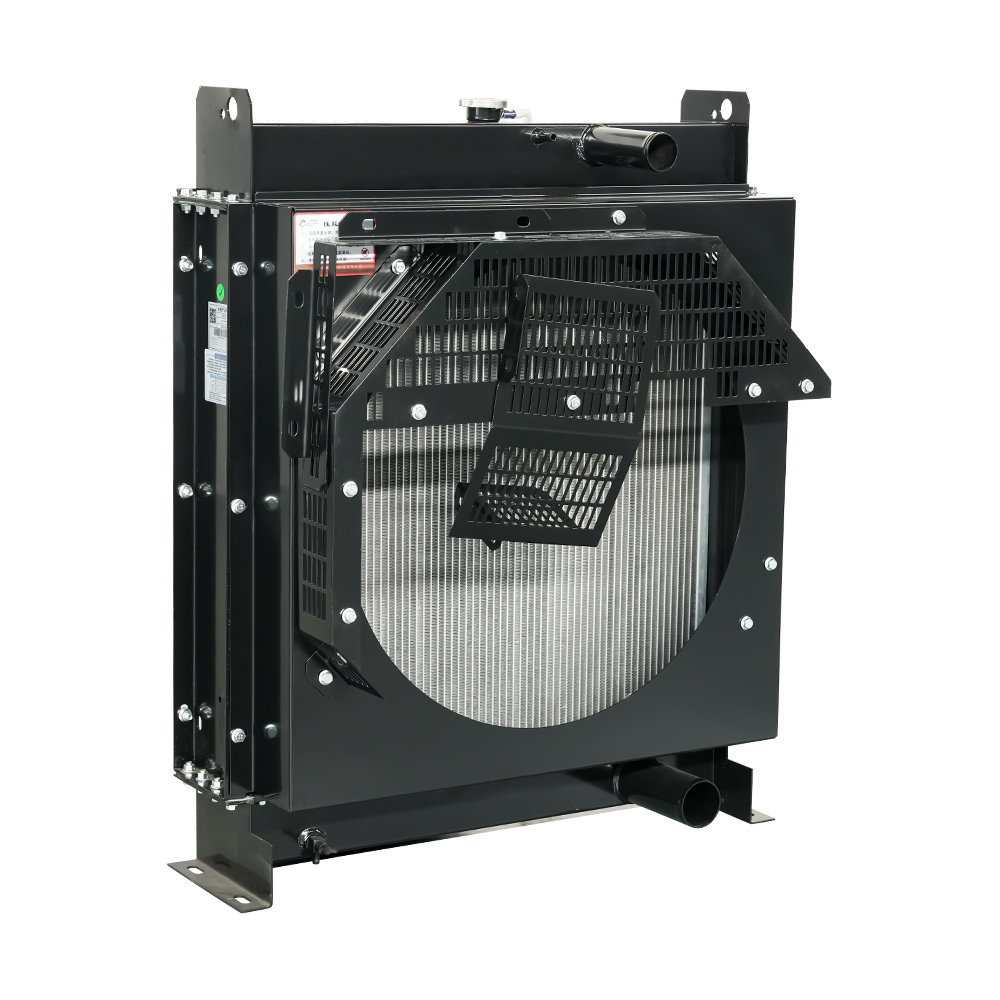 All-Aluminum Radiators Manufacturers, Suppliers, FactoryAs OEM All-Aluminum Radiators Manufacturers, All-Aluminum Radiators Suppliers and Factory in China, Weichuang offer Custom All-Aluminum R...View Product →
The Bottom Line
Start with the heat rejection number, define the highest ambient temperature, choose a core architecture that the fan can actually push air through, and specify a coating matched to the site. If those four conditions are met, an all-aluminum radiator is a durable, serviceable upgrade for most generator sets. If any of them remains vague, no material choice — aluminum, copper, or anything else — can compensate for an undersized core.

- Product Categories
- Contact Us
-
- wcradiator@jswcsrq.com
- +86-514-400-180-4088
- +86-15152759383
- +86-15152759383
- No. 6 Road, Shaobo Industrial Concentration Zone, Jiangdu District, Yangzhou City, Jiangsu Province, China

